

The findings were set out in GAO’s July 2026 report, “Navy Ship Modernization: DOD Needs Comprehensive Strategy to Field Hypersonic Missile Capability”. The watchdog said the programme faces linked risks across ship modernisation, missile testing, production capacity and long-term sustainment.
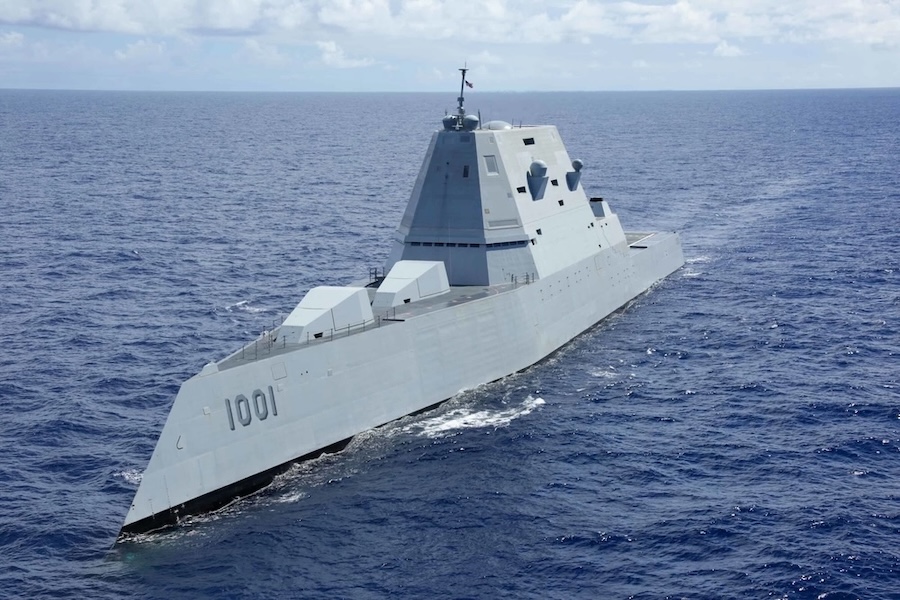
The Zumwalt class consists of USS Zumwalt, USS Michael Monsoor and USS Lyndon B. Johnson. The Navy once planned to procure 32 ships, but cut the class to three after costs rose sharply.
The ships were originally designed as multi-mission surface combatants focused on land attack and operations in shallow coastal waters. In 2017, the Navy shifted the class toward offensive surface strike, and in 2022 selected it as the first host for the Conventional Prompt Strike hypersonic missile.
The modernisation work is substantial because Conventional Prompt Strike installation requires changes to the hull and several ship systems. Huntington Ingalls Industries is carrying out the work through Build Yard Modernisation Periods for the two in-service ships and a Mission Systems Activation period for DDG 1002.
The package includes installation of Large Missile Vertical Launch Tubes, Conventional Prompt Strike weapons control equipment and related ship changes. It also includes removal of the Advanced Gun System, software upgrades, reliability work, crew-quarter improvements and conversion of ballast tanks to fuel tanks to extend range and endurance.
USS Zumwalt was 94% complete with its modernisation work as of January 2026, but remained behind schedule because of unplanned work. The Navy now expects to complete the ship’s yard period in the fourth quarter of fiscal 2026, roughly 10 months later than the earlier September 2025 target.
The cost estimate for upgrading all three ships has risen from $1.8 billion to at least $2 billion. In August 2025, the Navy added 230,000 hours of unplanned work to the Huntington Ingalls contract at a cost of $20 million.
GAO said much of that additional work involved cabling after more wiring than expected was removed from the forward section of USS Zumwalt during launch tube installation. The report also cited delays from shutting down and restarting key Zumwalt systems for the first time, including failures in the class’s complex electrical system.
USS Michael Monsoor has not yet begun its Build Yard Modernisation Period after conducting fleet operations during its first deployment in 2025. The ship is scheduled to enter that period in February 2027.
USS Lyndon B. Johnson remains in activation before delivery, which is expected in 2028. GAO said its combat systems activation was 96% complete and its mission systems activation, including Conventional Prompt Strike installation and testing, was 54% complete as of January 2026.
The Conventional Prompt Strike missile schedule has also moved to the right. The Navy originally planned to begin flight testing from the DDG 1000 class in 2025, but the first launch from USS Zumwalt is now planned for the third quarter of fiscal 2027.
GAO said programme officials revised the test plan to reduce risk to the ship and crew and to add incremental test events before launch. Those officials still described the schedule as largely optimistic because it depends on successful development and test outcomes.
Conventional Prompt Strike is a boost-glide hypersonic weapon intended for surface ships and submarines. It uses a missile to carry a glide body to the edge of space, after which the glide body separates and manoeuvres towards its target.
The Navy’s sea-launched version uses a cold-gas launch system that ejects the missile from a canister before the solid rocket motor ignites above the ship or submarine. The Army uses the same missile and glide body for its Long-Range Hypersonic Weapon, but fires it from a land-based hot-launch system.
The economics remain a major issue. GAO said the Navy’s lifecycle cost estimate for Conventional Prompt Strike rose from about $31 billion for 262 missiles in 2020 to about $41 billion for 224 missiles in 2024.
As of April 2026, Conventional Prompt Strike unit costs were estimated at $63 million to $71 million per missile, with an average estimate of about $67 million. GAO said costs could change once missile procurement begins in fiscal 2027 because of design maturity, inflation, technology upgrades and final quantities.
Production capacity is another constraint. GAO said Lockheed Martin, the missile body prime contractor, can currently produce six to seven rounds a year, below the 12-round annual rate needed to stabilise production.
The report cited labour-intensive assembly, coating challenges, complex work instructions, inspection problems, incomplete assembly kits and workforce turnover. Lockheed Martin has increased manufacturing personnel, but officials told GAO it can take about a year before new workers operate independently.
The Zumwalt ships also face sustainment risks because they use systems found nowhere else in the Navy’s surface fleet. GAO pointed to the class’s SPY-3 radar, Total Ship Computing Environment and Zumwalt Operating Environment as systems that are expensive and difficult to maintain.
Replacing those unique systems with Navy-standard equipment could cost another $1 billion to $2 billion for all three ships. GAO said the Navy has not documented a full analysis explaining why those replacements were excluded from the current modernisation plan.
That omission matters because the Navy intends to operate the Zumwalt class through a 35-year service life, extending at least into the 2050s. GAO said the service has not clearly shown how it balanced faster Conventional Prompt Strike integration against the long-term cost of sustaining a three-ship class with specialised systems.
Reliability remains a separate concern. GAO said the integrated power system has generated multiple category 3 or 4 casualty reports since the ships were accepted, indicating degraded capability or failures that prevented mission performance.
The Navy has also taken parts from DDG 1002 to support the two in-service ships. GAO said those parts must be returned or replaced before the donor ship can deploy, and officials cited the practice as one factor delaying DDG 1002’s activation.
GAO recommended that the Department of Defense develop and regularly review a comprehensive strategy for coordinating Conventional Prompt Strike investment decisions across the Navy and Army. The department concurred, leaving the Zumwalt effort as a test of whether the Pentagon can field a sea-based hypersonic missile while controlling costs, production risk and sustainment pressure.