The project began about two years ago with a decision to explore artillery as a means of launching hypersonic test articles. The approach was developed to reduce the cost and complexity associated with rocket-based testing while still exposing hypersonic components to relevant flight conditions.
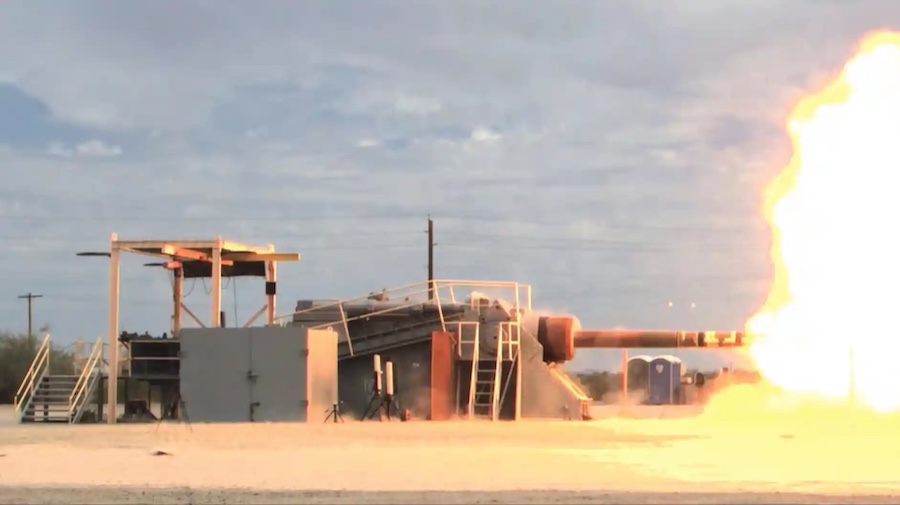
The cannon used in the test is believed to have been the Heavy Artillery Test System, or HATS, associated with the suspended Strategic Long Range Cannon programme. The source did not provide official confirmation of the weapon used for the firing.
Lawrence Livermore National Laboratory personnel worked with the U.S. Army Combat Capabilities Development Command Armaments Center to develop a warhead suitable for cannon launch. The teams produced a sub-calibre effector, integrated an electronic fuze and assessed the effects of ballistic dynamics on the warhead.
The programme also included technical reviews intended to verify the safety of individual components before complete ammunition was assembled. Preliminary firings without the full hypersonic effector were conducted to validate the concept ahead of the final test.
For the latest trial, personnel first checked instrumentation and prepared the target area before the hypersonic effector was brought to the firing position. The fuze was armed, and the projectile and propellant charge were then loaded into the cannon.
After the weapon was prepared, the gun crew withdrew to a protective shelter and the test director authorised the firing. The reported success demonstrated that a hypersonic warhead could be integrated with a cannon-based launch system.
The result provides the Army with a potential alternative method for evaluating hypersonic technologies without relying exclusively on more expensive rocket launches. According to the source, the concept has attracted interest from officials responsible for several U.S. hypersonic weapons programmes.