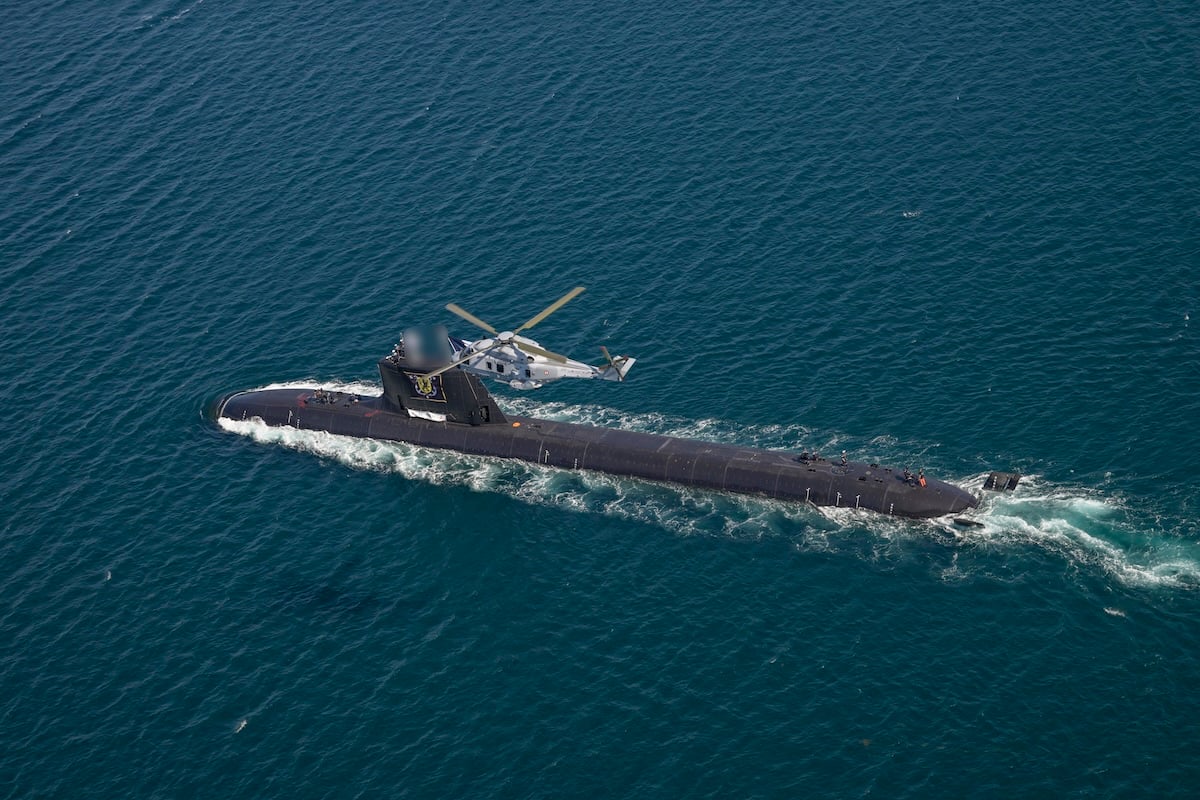
Admiral Christophe Cluzel, the navy’s chief of staff, announced the submarine’s entry into service on 20 November 2026, confirming that it was fully operational. Its acceptance followed sea trials that began off Cherbourg in February and included operations in both polar and warm waters.
De Grasse is one of six submarines ordered by the French defence procurement agency, DGA, under the Barracuda programme. The boats will replace six Rubis-class attack submarines dating from the 1980s, offering greater speed, endurance and versatility.
The principal differences between De Grasse and the first three Suffren-class submarines are in its electronic equipment. New software adds functions to the SYCOBS combat management system, alongside the introduction of the updated electronic warfare system.
The class is armed with Naval Group F21 heavyweight torpedoes, MBDA Exocet SM39 Block 2 anti-ship missiles and MBDA MdCN cruise missiles, launched through four 533 mm torpedo tubes. The Barracuda boats are the first French submarines capable of employing cruise missiles.
The submarines can also lay FG-29 bottom mines and support covert special forces missions. Each has a crew of 63 and accommodation for 15 special forces personnel.
Operations with D-19 unmanned underwater vehicles, based on heavyweight torpedo designs, are envisaged for the future. These would add to the class’s existing weapons and special operations capabilities.
Each boat measures 99.5 metres long and 8.8 metres in beam, with displacement of 4,700 tonnes on the surface and approximately 5,100 tonnes submerged. The class has a stated submerged speed above 25 knots and a diving depth beyond 350 metres.
Endurance is given as 70 days. Annual availability is stated at 260 days at sea.
De Grasse was rolled out of its assembly hall in late May 2025, and its nuclear reactor was started for the first time that December. Before sea trials, equipment and systems were tested in the assembly hall and in a dry dock, both before and after flooding.
The subsequent test deployment included visits to Tromsø in Norway and Norfolk in the United States. In Norfolk, the crew participated in commemorations of the 1781 Battle of the Chesapeake.
The submarine is named after François Joseph Paul, Comte de Grasse, the French naval officer known for his victory over the Royal Navy in that battle. The engagement took place during the American War of Independence.
De Grasse joins Suffren, which entered active service in June 2022, Duguay-Trouin in April 2024 and Tourville in July 2025. The final two boats, Rubis and Casabianca, remain under construction, with deliveries scheduled through the end of 2030.