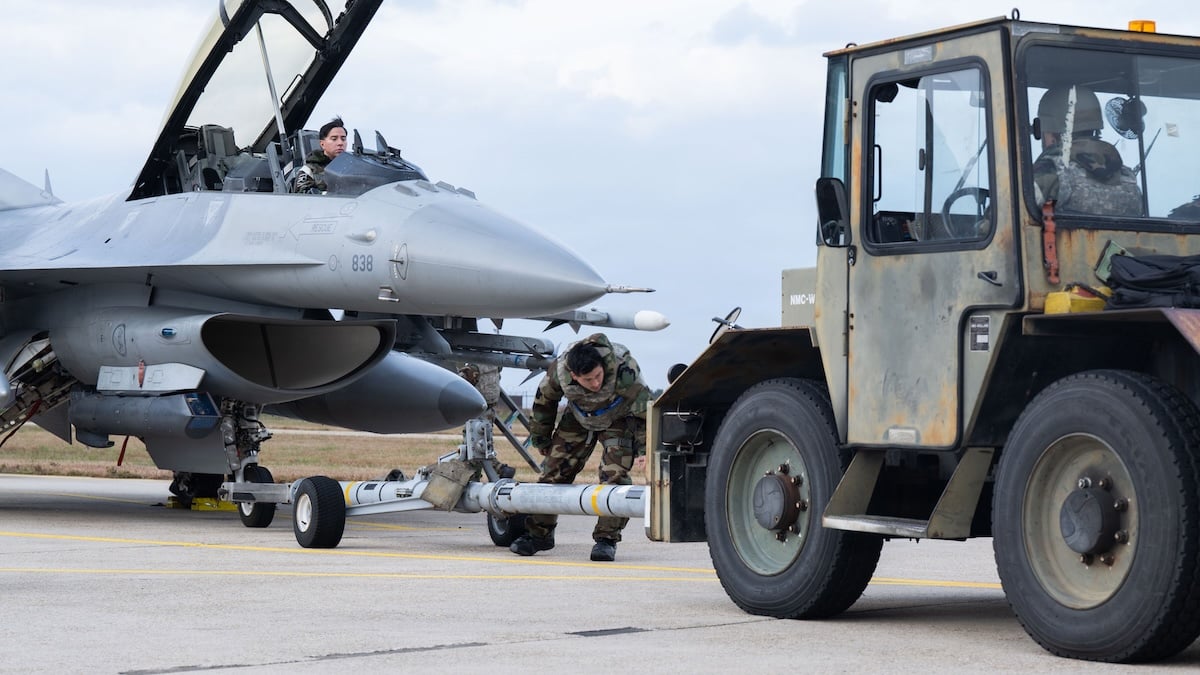
The November 16–20, 2026, exercise combined F-16 sortie generation and weapons arming with base defense, counter-drone tactics and energy resilience. It was the latest in Kunsan’s routine Ability to Survive and Operate exercises, which test defensive responses and the wing’s ability to execute its mission rapidly.
“Beverly Sentinel 27-1 is a demonstration of the Wolf Pack’s readiness and robust training regime,” said Col. John “Wolf” DeLion, commander of the 8th Fighter Wing. “We’re continuously honing our tactics, procedures and skills, ensuring our ability to generate combat airpower and execute our mission at a moment’s notice.”
Tech. Sgt. Christopher Brimage, an 8th Maintenance Group quality assurance inspector, said the exercise added obstacles to routine maintenance. Alarms and changes in Mission-Oriented Protective Posture levels could interrupt work, forcing personnel to adapt while maintaining mission effectiveness.
“We must act together and decisively. Effective and accurate communication is crucial to ensuring thoughtful planning and preventing unnecessary actions,” Brimage said.
“Despite our limited manpower, we have many individuals who take pride in doing their part and contributing to the mission. We must continue working together and prepare for potential threats in our theater,” he said.
Security scenarios included simulated ground attacks, responses to small unmanned aerial systems, tactical combat casualty care and armored vehicle patrols. Each was designed to test base security procedures under realistic conditions.
First Lt. Nathan Krueger, the 8th Security Forces Squadron’s plans and programs officer in charge, served as a patrol lead during the exercise. He coordinated security personnel responding to simulated opposing-force attacks and helped his team adapt to wartime pressures.
“As a defender, we have to work in both peacetime and in contested environments. The major difference during Beverly Sentinel is that we have the extra pressure and stress from all the little things,” Krueger said.
“So that lack of power, lack of water, lack of food, and lack of sleep that we don’t normally continue with on a normal day-to-day just adds a little extra spice to make the exercise more interesting,” he said. The additional pressures were part of the effort to prepare personnel for operating in a contested environment.
The Air Force said reliable F-16 sortie generation was essential to projecting combat airpower, maintaining air superiority and defending the Korean Peninsula. It said Beverly Sentinel reinforced contingency response skills and gave personnel practice in adapting to uncertainty, making decisions and communicating effectively.