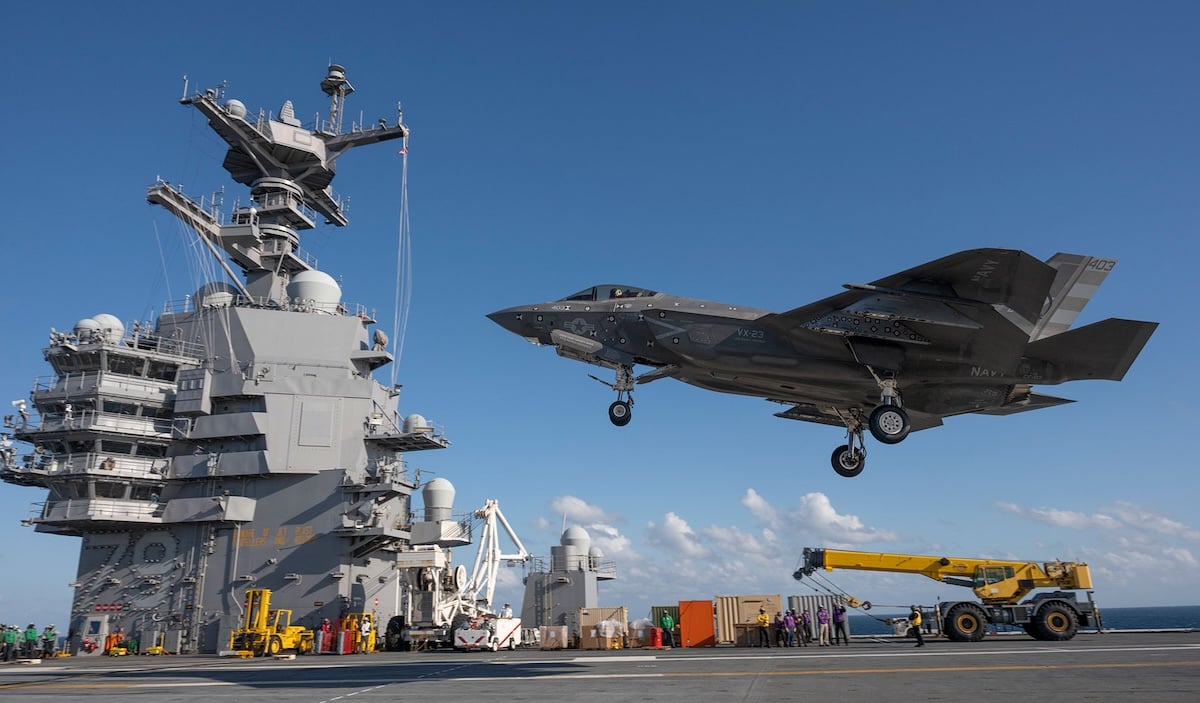
Two aircraft from Naval Air Station Patuxent River, Maryland, flew 34 flights over 11 days, completing 122 catapult launches and 122 arrested landings.
They used Kennedy’s Electromagnetic Aircraft Launch System, known as EMALS, and Advanced Arresting Gear, or AAG.
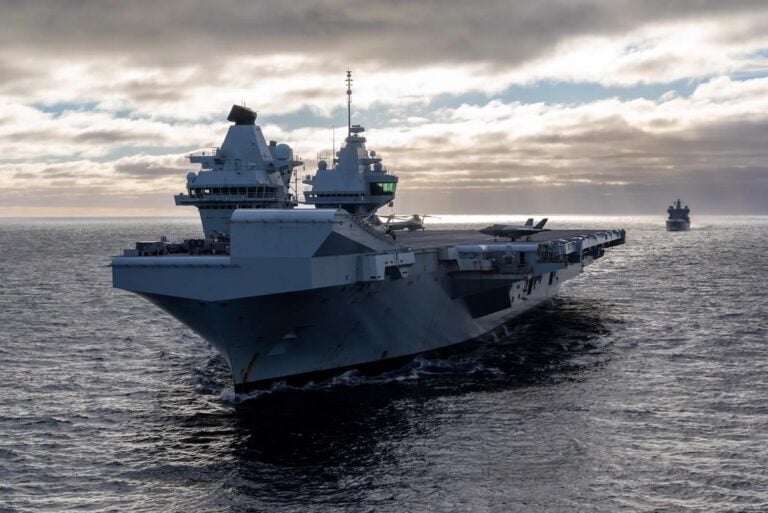
The first F-35C recovery aboard Kennedy, designated CVN 79, took place on October 13, the Navy’s 251st birthday. The sea trials followed shore-based testing conducted between January 2024 and May 2025.
“This is a critical event for the F‑35C, Kennedy, and the United States Navy,” said Sean Jackson, vice president of Lockheed Martin’s F-35 Development Program. “For the first time, the aircraft has demonstrated launch and recovery operations from a Gerald R. Ford-Class flight deck, advancing the integration of fifth-generation fighter capability with the world’s most advanced carrier technology.”
“With the completion of this test phase, the Navy has now cleared the F-35C for operations across its entire fleet of aircraft carriers,” Jackson said. The company described completion of the tests as progress toward full operational integration aboard the newest carriers.
The campaign included initial use of Block 4 software in a carrier environment, allowing the team to assess mission-systems software stability. Engineers also collected data to verify EMALS and AAG software and shipboard installations and validate the aircraft’s launch and recovery loads and structural models.
Ford-class carriers introduce a different operating environment through their launch and recovery equipment and redesigned flight deck and island. EMALS provides smoother, more precisely controlled launches, while AAG is designed to support a broader range of aircraft recovery conditions, according to Lockheed Martin.
Changes to the flight deck and island also affect airflow, exhaust dynamics and deck operations. The test findings will support development of Aircraft Launch Bulletins and Aircraft Recovery Bulletins for Ford-class carriers.
The team also assessed the aircraft’s supportability in the new carrier environment. Lockheed Martin said the F-35C’s stealth, advanced sensors and data-sharing capabilities would provide a foundation for future maritime and joint-force operations.