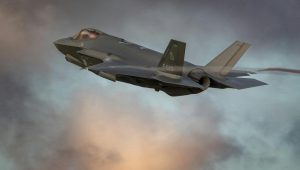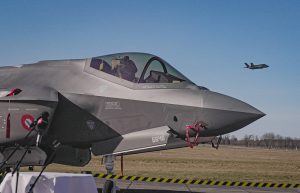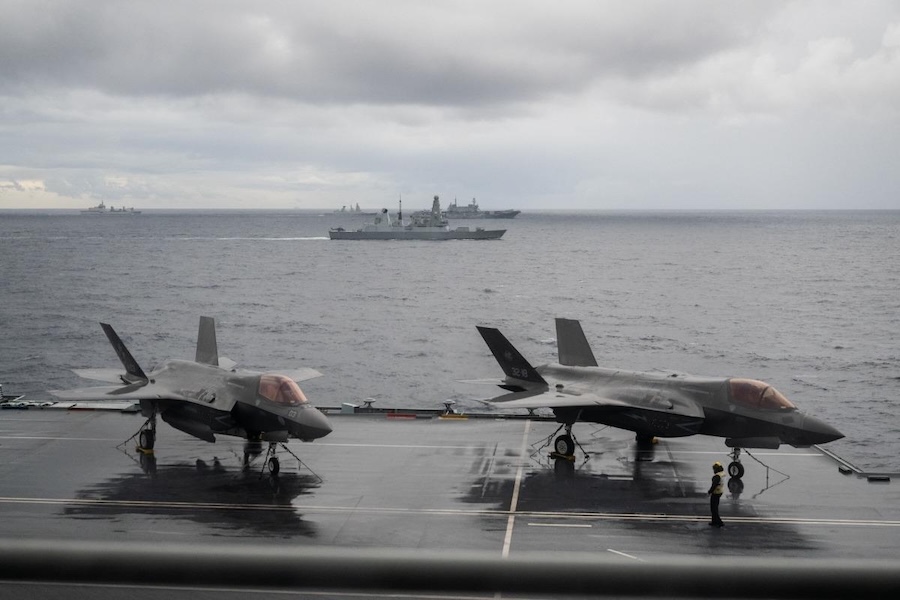



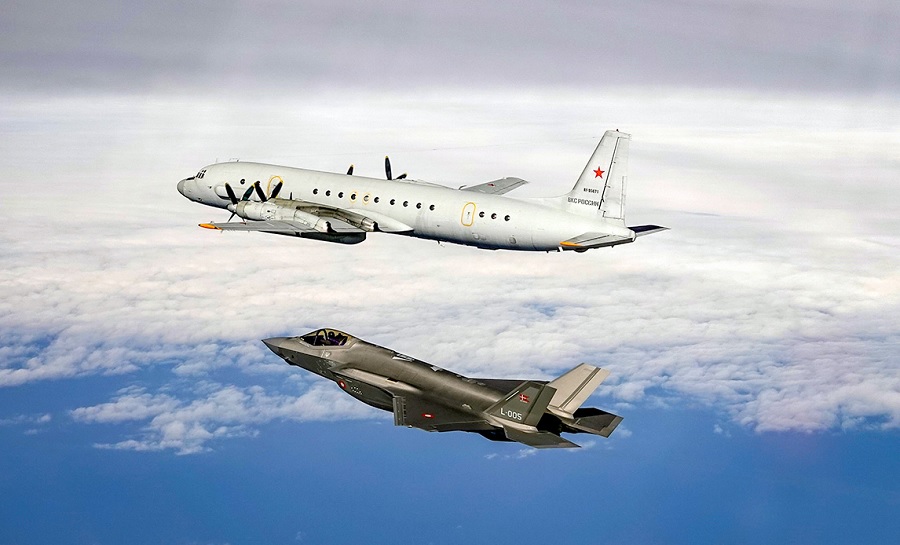
The F-35s were scrambled from Fighter Wing Skrydstrup and successfully identified the aircraft as a Russian IL-20 COOT-A, a platform designed for surveillance and intelligence gathering. The Russian plane had been tracked by ground-based radar before the visual confirmation by the Danish pilots.
The interception occurred in international airspace near the island of Bornholm, within an area of Danish interest. After completing the identification, the Danish jets returned to their base in Southern Jutland.

“It is absolutely crucial that Danish fighter jets assert Danish sovereignty when Russian military aircraft approach our airspace,” said Defence Minister Troels Lund Poulsen. “With the F-35s, we have acquired a state-of-the-art capability that strengthens Denmark’s combat readiness and contributes to NATO’s collective deterrence and defence in the region.”
The deployment marked the first operational use of Denmark’s F-35s for national defence tasks, even before their official entry into QRA duty on 1 April. The aircraft and personnel were declared ready in late March and conducted their inaugural mission ahead of schedule.
“We have reached a point in the integration of the F-35 where it is no longer solely about training and education,” said Jan Dam, Commander of the Royal Danish Air Force. “Now the aircraft can contribute to the operational tasks required of Danish fighter jets, and I am, of course, proud of that.”
For the time being, both F-35 and F-16 aircraft will be used to maintain Denmark’s QRA capability. The gradual transition allows F-35 crews to continue training for more complex mission scenarios while the F-16s support ongoing operations.
The Danish Armed Forces aim to fully phase out the F-16 fleet by the end of 2025. By then, the F-35 will have completely taken over all Quick Reaction Alert responsibilities.