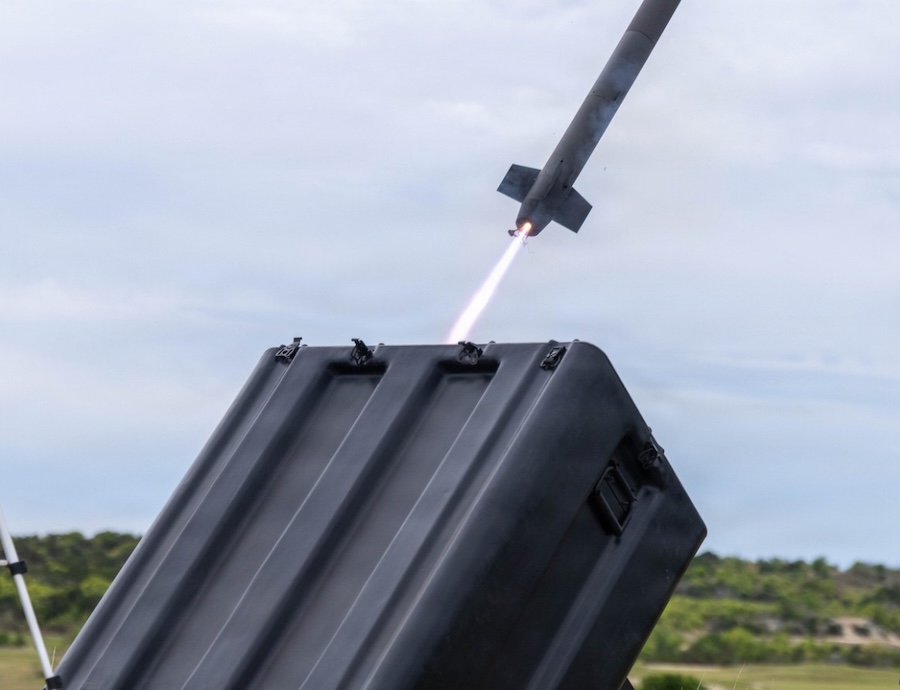
Germany announced a €4 billion military support package for Ukraine, the largest element of which is a delivery of several hundred PAC-2 GEM-T missiles for Patriot air defence systems, valued at €3.2 billion. The package also includes 36 launchers for IRIS-T SL air defence systems worth €182 million, as well as €300 million in investment to develop Ukraine’s long-range strike capabilities.
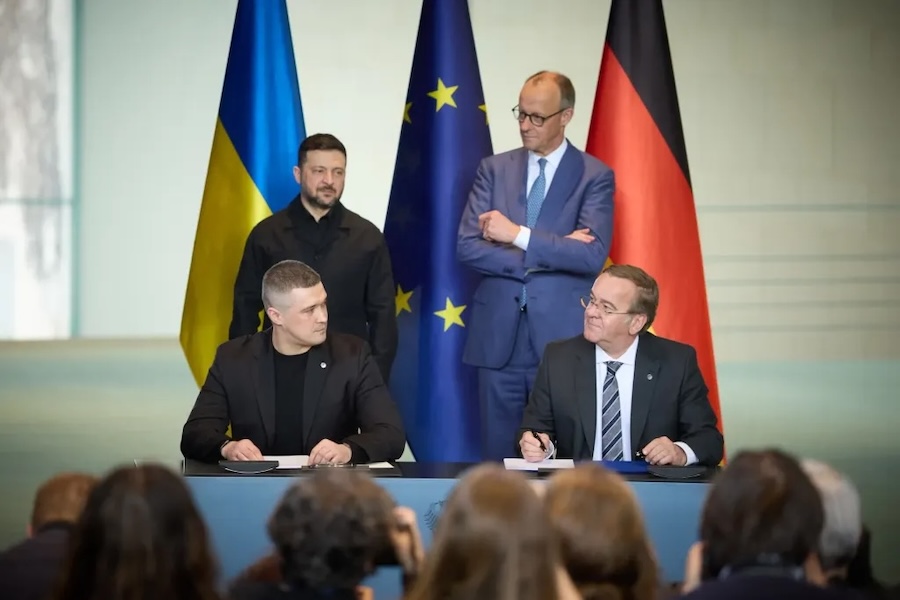
On the margins of the consultations, representatives of the defence industries of both countries signed six memoranda of cooperation. These provide for the establishment of two joint venture companies in the field of interceptor drones, joint production of medium-range drones, and three projects relating to the development of cruise and ballistic missiles.
Particular attention was devoted to battlefield data analysis, with a dedicated agreement providing for the development of a joint system. The arrangement envisages analysis of German weaponry in Ukrainian service, combined with the transfer by Ukraine of data from its DELTA battlefield coordination system and other digital platforms, to be used in developing artificial intelligence models and analytical tools.
The strategic partnership declaration confirmed Germany’s support for Ukraine’s territorial integrity within its internationally recognised borders, as well as its freedom and sovereignty. The overarching goal stated in the fifteen-page document is the achievement of a lasting peace for Ukraine, underpinned by what the declaration describes as strong, credible and legally binding security guarantees.
The two sides committed to conducting regular high-level strategic consultations on security, defence and the defence industry, involving both their foreign and defence ministries. A German-Ukrainian Working Group on the Defence Industry is to be established, alongside a separate working group between the interior ministries of both countries focused on exchanging experience in countering unmanned systems.
Germany confirmed its support for Ukraine’s integration into the European Union, with the pace of accession to be linked to Kyiv’s progress in implementing reforms. Berlin also expressed support for building consensus within NATO on the question of Ukrainian membership.
According to data from the Kiel Institute for the World Economy, Germany is the second-largest provider of overall support to Ukraine since 2022, after the United States, with total assistance estimated at more than €25 billion. In 2025 alone, Berlin allocated approximately €9 billion in military aid to Kyiv, covering air defence systems, ammunition, drones, and financing for the production of long-range weapons on Ukrainian territory.
President Zelensky was accompanied to Berlin by six ministers, covering defence, foreign affairs, social policy and development, energy, economy, and environment and agriculture. The consultations formed part of a broader European diplomatic tour by the Ukrainian president, who subsequently visited Norway, Italy and the Netherlands, with the stated aim of mobilising partners to sustain support for Ukraine’s war effort, particularly in the area of air defence systems and missiles.
The next round of German-Ukrainian intergovernmental consultations is scheduled to take place in Ukraine in one year’s time. The depth and scope of the agreements reached in Berlin reflect what the strategic partnership declaration describes as Germany having become, in 2026, Ukraine’s most important bilateral partner in the security domain.