

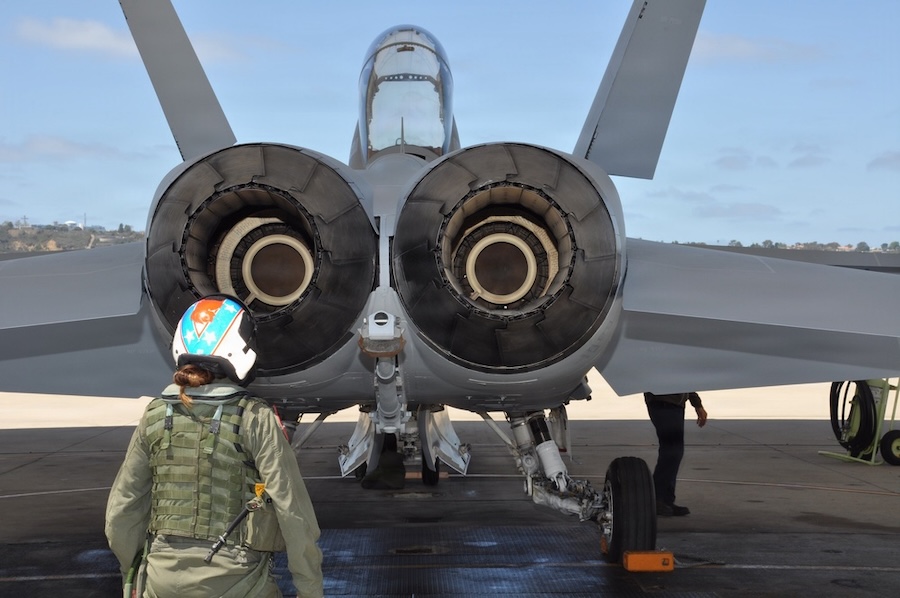
The work was carried out entirely by U.S. military engineers and artisans for the first time. The effort reflects a broader push to enhance capability while reducing reliance on external support.
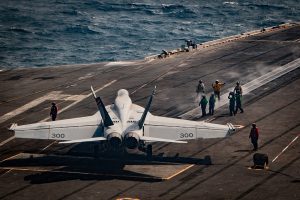
The Block III upgrade is the most advanced phase of the Super Hornet Service Life Modification program. It follows earlier efforts focused on extending the aircraft’s structural lifespan and enhancing mission systems.
The modernization includes installation of an Advanced Cockpit System and a new large-area display. It also involves comprehensive avionics upgrades, improved networking capability and electrical system enhancements.
Officials said the cockpit transformation introduces modern, user-friendly interfaces for pilots. The upgrade is intended to bring fourth-generation aircraft closer to fifth-generation performance at lower cost.
The modification focuses on improving avionics and mission systems rather than extending structural life. Together with earlier structural upgrades, it is designed to keep the aircraft operational into the 2040s.
The process is one of the most complex avionics upgrades undertaken at the facility in over a decade. It requires removal and replacement of structural components, wiring systems and cockpit interfaces.
Teams must coordinate across multiple specialties, including avionics, engineering and quality assurance. Officials said careful sequencing is essential due to the confined working space and interdependent tasks.
The program is guided by a detailed technical directive exceeding 350 pages. Engineers work closely with Boeing and the F/A-18 program office to ensure compliance with safety and quality standards.
Unexpected issues such as corrosion or worn components are addressed during the upgrade process. These challenges add complexity but are critical to ensuring long-term aircraft reliability.
Fleet Readiness Center Southwest has reduced turnaround time for the upgrade to approximately 365 days. This is an improvement from the originally projected 15 months while maintaining safety and cost performance.
Officials said the facility has evolved into a full modernization hub for the Super Hornet fleet. The work is expected to continue into the 2030s as fleet squadrons transition to the Block III configuration.
The program is supported through close coordination across engineering, logistics and production teams. Officials said the integrated approach is key to delivering sustained combat readiness for naval aviation.