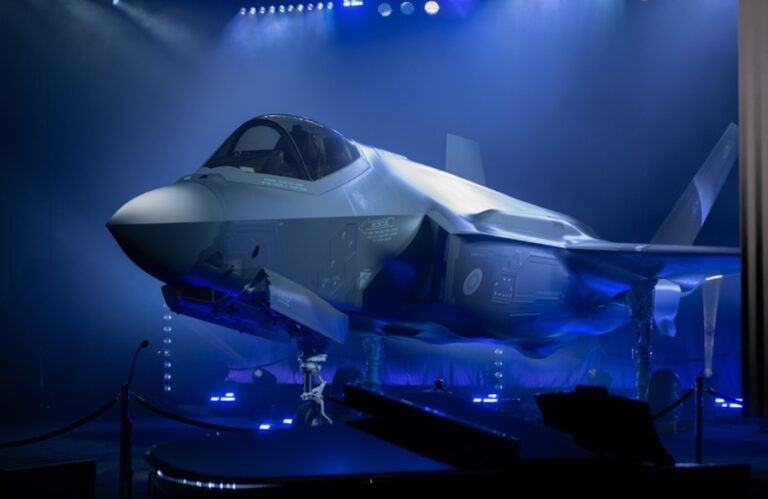

The work covers F-35 Lots 20 through 22, BAE said. The company did not say what the contract is worth, how many systems it includes or when they will be delivered.
What the system does
Known as the AN/ASQ-239, the suite lets the F-35 detect and counter threats across the electromagnetic spectrum. BAE says it pairs defensive and offensive capabilities with passive, long-range sensing, so that pilots can see a threat and act on it first.
It is built for airspace defended by enemy fighters, missiles, drones and modern integrated air defense systems. Operators can also update it quickly through software, the company said.
“We’ve been a trusted contributor since the origin of the Joint Strike Fighter program, and we’ve continuously evolved our EW hardware and software to maintain our warfighters’ decisive battlespace advantage,” said Amber Dolan, vice president of F-35 Solutions at BAE Systems. “We’re laser-focused on scaling production and delivering software-based capabilities to meet the rapid pace of conflict.”
The upgrade that slipped
Electronic warfare is a central piece of Block 4, the F-35’s long-running modernization package, which also takes in weapons and communications. Trade publications have called the electronic warfare upgrade the centerpiece of Block 4, and it depends on new processors being fitted under a companion effort called Technology Refresh 3.
Block 4 has been dogged by delays and rising costs. In September 2025, the U.S. Government Accountability Office said it was more than $6 billion over original estimates and at least five years late, and that its scope was being cut back.
Electronic warfare stayed in the plan. The auditors said the slimmed-down Block 4 was still expected to deliver it, along with weapons, communication and navigation improvements, and that combat-capable jets with the Technology Refresh 3 hardware and software were due to start arriving in 2026, three years late.
BAE has not said which version of the system it will build under the new contract. Its earlier awards offer a guide: $493 million in late 2021 to develop the Block 4 electronic warfare hardware, and $491 million in 2023 to produce it for Lot 17 jets.
Building more, faster
BAE says it has now delivered more than 1,500 electronic warfare systems for the F-35. Its earlier announcements put the total at 1,200 in the spring of 2023 and at more than 800 in mid-2021.
To speed things up, the company says it is leaning on automation, newer system designs and its supply chain, and has invested in its plants. The systems are designed and built in Austin, Texas, and in Manchester, Merrimack and Nashua, New Hampshire.
Some of that output will go into older aircraft. More than 1,230 F-35s had been delivered by September 2025, according to figures published at the time.