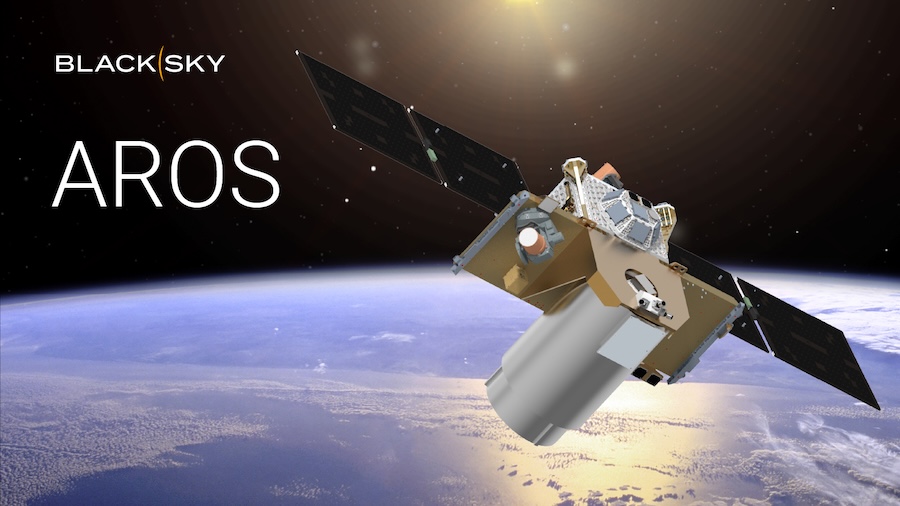
The modification funds a direct path towards a flight-ready multi-spectral, large-area mapping spacecraft and foundation data collection system in 2028. BlackSky said the work will support the development of its next generation of geospatial foundation data satellites.
“Developing BlackSky’s AROS constellation in partnership with the U.S. government cements a major step in securing U.S. global space competitiveness, resilience and maintaining critical operational continuity as commercially available foundation data becomes capacity-constrained in the coming years,” said Brian O’Toole, BlackSky CEO. “BlackSky will design, develop and field the next generation of high-performance, AI-ready geospatial foundation data satellites, leveraging the proven heritage and reliability of our advanced Gen-3 architecture and vertically integrated agile manufacturing infrastructure.”
The new satellites will be designed to support dynamic country-scale digital mapping. They will also support navigation, maritime situational awareness and 3D digital twin applications.
BlackSky said AROS will operate as an integrated extension of its existing fleet. The system will incorporate the company’s space, software and platform stack.
The company said the approach will unlock a new class of scalable artificial intelligence capabilities. It will also build on BlackSky’s Gen-3 architecture and manufacturing infrastructure.
“AROS will provide an optimal balance between leap-ahead technology capabilities at very competitive speed and economics and fill anticipated market gaps as aging commercial large area collection satellites come out of service,” O’Toole added.
Once on orbit, AROS and Gen-3 are expected to create a complementary tip-and-cue workflow. Large-area surveillance would identify activity that can drive dynamic point monitoring at national and regional scale.
BlackSky said that, as the satellites operate together, AI-enabled analytics will detect and characterise aircraft, vessels and vehicles. The company said this will provide decision makers with real-time strategic and tactical insights across broad geographic areas.
The architecture will also include a proprietary data pipeline. BlackSky said it is designed to support real-time and retrospective AI analytics, model training and decision support tools.
The system is expected to be ready for deployment and integration into customer workflows within a relatively short timeframe. BlackSky said the AROS foundation enterprise should support automated feature extraction, Earth digital twin systems and automated production of navigation safety applications.