
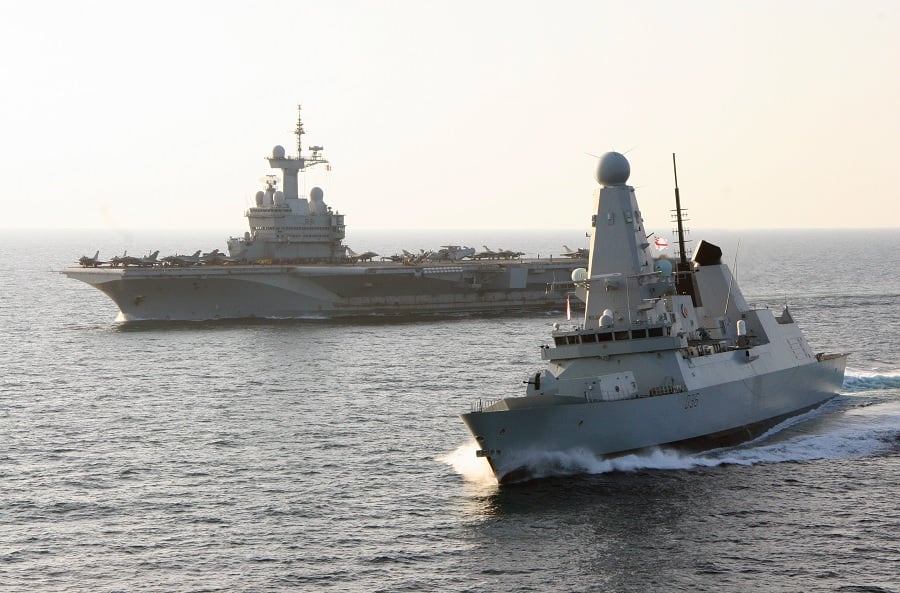
The decision reshapes the Royal Navy’s long-term shipbuilding strategy and reduces its reliance on small numbers of large crewed warships. The government said the previous model was unaffordable, did not invest sufficiently in autonomous vessels and no longer matched the modern threat environment.
The Defence Investment Plan allocates at least £1.3 billion to the Hybrid Navy Fleet over the next four financial years. A broader spending table assigns £1.5 billion to the Hybrid Navy, including related work on autonomous naval aviation.
The planned force will include Type 91 uncrewed missile platforms and Type 94 uncrewed radar platforms. Type 92 underwater surveillance systems, Type 93 extra-large uncrewed underwater vessels and a future class of Common Combat Vessels will complete the structure.
These platforms will be connected through the Maritime Fighting Web, the naval element of Britain’s wider Digital Targeting Web. The network is intended to link sensors, decision-makers and weapons across the armed forces, allowing dispersed platforms to operate as an integrated force.
The Royal Navy aims to bring its first large autonomous vessels into service by 2030. Initial capabilities are expected to include a prototype Type 91 missile platform and Type 93 underwater vessels carrying payloads produced through AUKUS.
The new maritime air-defence system is scheduled to begin entering service in the early 2030s. Type 91 missile and Type 94 radar platforms will be distributed across maritime task groups, with a Common Combat Vessel serving as the main command node for the uncrewed force.
The transition will not bring an immediate end to investment in the Type 45 fleet. Britain has allocated £600 million to the destroyers over the next four years and plans to give them an initial ballistic missile defence capability by 2028.
At least six Common Combat Vessels are planned between 2030 and 2035, forming the operational centre of the Hybrid Navy. Britain expects to invest at least £32 billion in new maritime capabilities during that period, including the expansion of autonomous surface, underwater and airborne systems.
Crewed warships will remain a central part of the fleet. The government will continue building Type 26 anti-submarine warfare frigates and Type 31 general-purpose frigates while integrating them with autonomous platforms and the forces of NATO allies.
The Hybrid Navy concept also extends to naval aviation and mine warfare. Longer-term plans include an autonomous replacement for Wildcat maritime helicopters, an uncrewed airborne early-warning system for aircraft carriers and a minehunting capability based on autonomous systems and artificial intelligence.
The plan does not name potential contractors for the Type 91 to Type 94 platforms or specify how many of each system will be procured. It also leaves the design, cost and detailed delivery schedule of the Common Combat Vessel largely open.
Replacing the Type 83 and Type 32 concepts marks a clear break with Britain’s previous approach to fleet renewal. The Royal Navy will instead build its future force around distributed weapons, sensors and digital networks operating across a mix of crewed and uncrewed vessels.