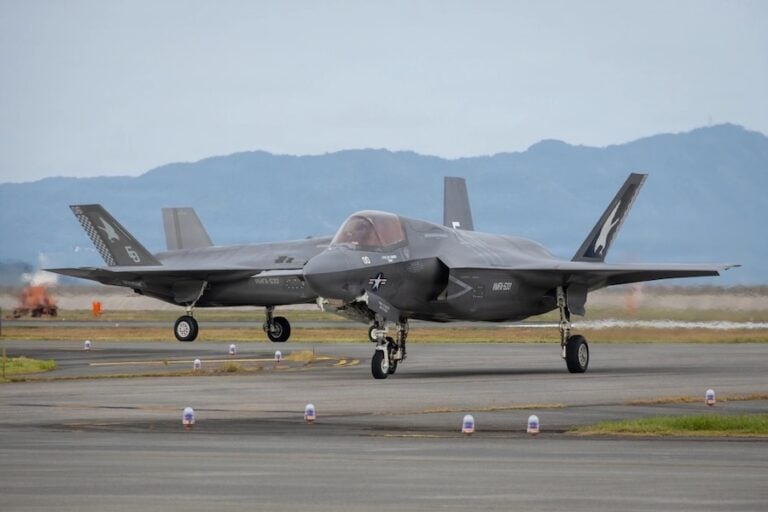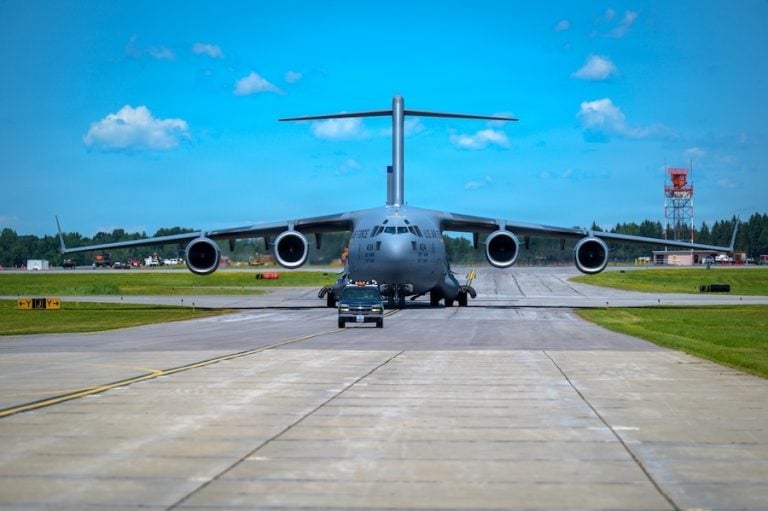

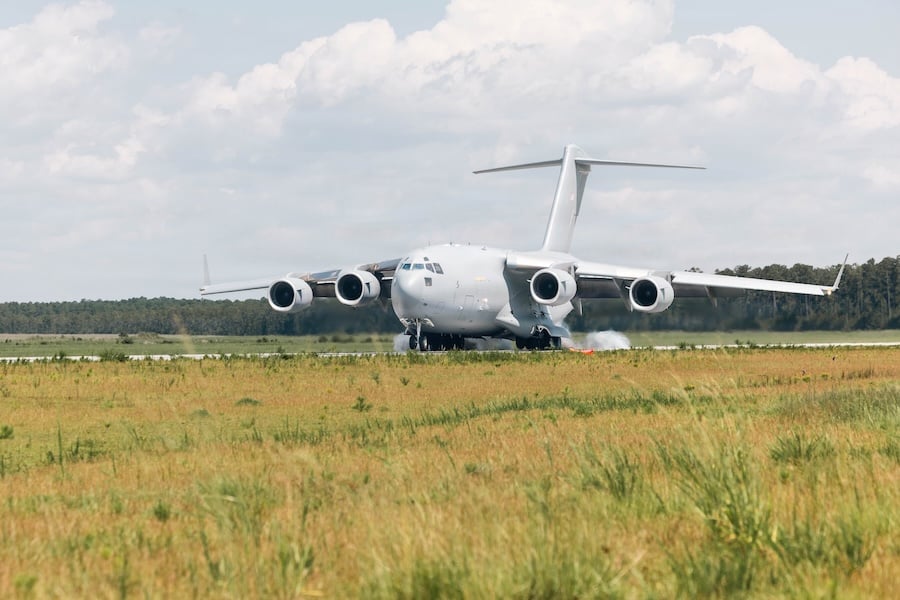
The flight followed an $11 million resurfacing project completed in 2024, with the airfield reopening in 2025. The upgraded runway can now accommodate C-130, C-17 and F-35 aircraft.
The C-17 was operated by Airmen from the 15th Airlift Squadron, 437th Airlift Wing, 21st Air Force and Air Mobility Command. The joint operation tested interoperability between U.S. and Canadian forces while giving Marine special operations personnel access to different military transport aircraft.
Designed to move troops and heavy equipment into austere airfields, the C-17 can operate from short runways. Its arrival showed how the upgraded airfield can support heavy-lift missions without relying on larger regional installations.
“Landing a C-17 and C-130s allows for units to have enhanced training by jumping out of different military aircraft,” said Tom Pieratti, range control officer, Range and Training Area Management, Range Control Branch, MCB Camp Lejeune. “Having this capability also allows for ground units to practice fly away missions or to onload/offload larger military equipment in support of operations without having to go to [Marine Corps Air Station] Cherry Point.”
Camp Davis South can host every aircraft type in the Marine Corps inventory and joint heavy-lift platforms as large as the C-17. The added capacity expands training options and expeditionary reach for the 2nd Marine Aircraft Wing, II Marine Expeditionary Force and the Joint Force.
A Marine Air Traffic Control Mobile Team led by 1st Lt. Victoria Bravo supported the operation. The unit established runway markings and provided the air traffic control services needed to recover the C-17 and C-130 aircraft safely.
The mobile team is trained to establish expeditionary air traffic control, command, control and communications in austere or hostile environments. It also conducts landing-zone assessments for Marine Air-Ground Task Force and joint operations.
“The new runway improvements at Camp Davis South open significant training opportunities to operate with aircraft that are not organic to the Marine Corps and allow us to integrate with outside agencies,” Bravo said. “Evolutions like this directly validate my team’s readiness as we prepare to execute similar high-tempo operations while at Weapons and Tactic Instructor course 1-27 and ensure we are fully prepared to deliver when supporting real-world missions while deployed with the 26th MEU [Marine Expeditionary Unit].”
The Marine Corps plans similar improvements across other training areas at Camp Lejeune. Upcoming projects include rifle-range modernization, a seaport-seizure facility and dedicated training areas for unmanned aircraft and counter-unmanned aircraft systems.