


A key asset for European strategic autonomy
The MMF initiative comprises six European nations who share costs proportionally according to the national commitment of flight hours per year defined in the Memorandum of Understanding.
The MMF initiative comprises six European nations who share costs proportionally according to the national commitment of flight hours per year defined in the Memorandum of Understanding.

"We are paying the price of the European Union not having an internal market for armament products, no common technical standards, no common export policy for arms," writes Klaus Welle, a member of the Martens Centre’s Academic Council).

Never in the EU’s 65 years of existence has the urgency for a single market for defence equipment been more evident than in the last 12 months.

The Eurodrone project aims to create a cutting-edge UAV system that can support a wide range of military missions and contribute to the EU's strategic autonomy.

“We will turn to joint procurement to deliver urgent military supplies for Ukraine, such as 155mm ammunition,” said President of the European Commission Ursula von der Leyen.
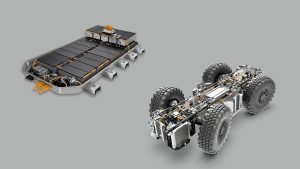
ELUVAT and LITBAT I are both prepared within EDA’s Capability and Technology Group “Ground Systems” and have been executed by […]

Germany is working to strengthen the European pillar within NATO and enhance the EU’s military capacities and capabilities, said Boris Pistorius, Defence Minister of Germany.

The Council of the European Union (Council) adopted today a decision confirming that the participation of Canada in the PESCO project ‘NetLogHubs’.

"The first and most urgent thing that a geopolitical Europe has to do, is to arm Ukraine," Josep Borrell stressed at Munich Security Conference.

President of the European Commission Ursula von der Leyen underlined that the EU has to speed up and scale up the production of standardized products like 155mm artillery ammunition.
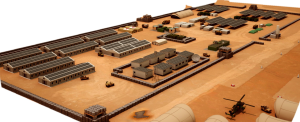
Rheinmetall is participating in the INDY project, a part of the EU Green Deal. The project is supported by the European Defence Fund.

The arrangement confirms the significance of the transatlantic partnership in security and defence and reflects the importance of a stronger and more capable European defence.
Categories: