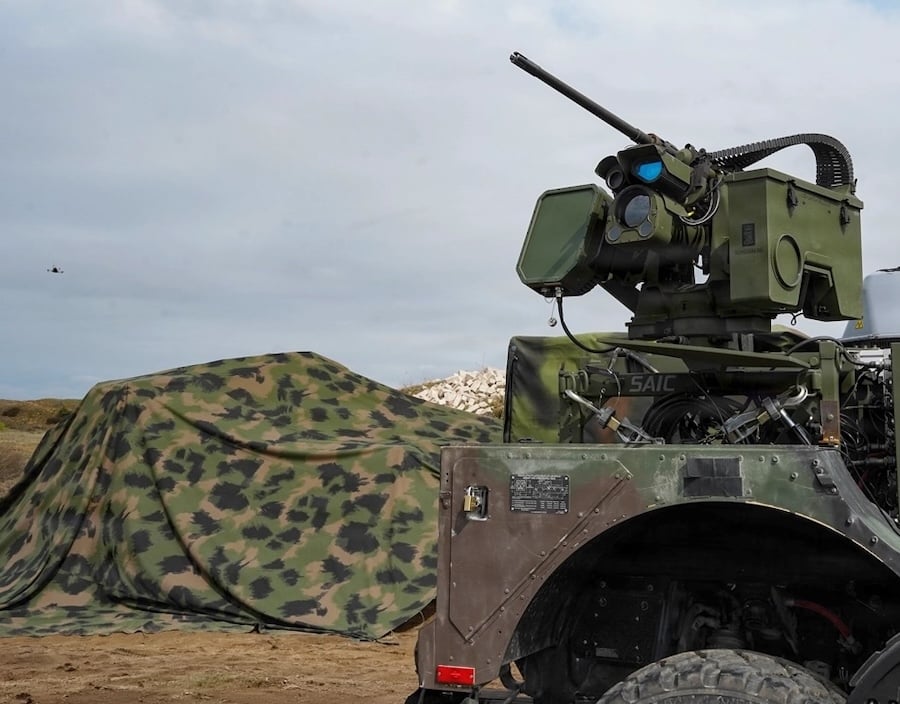
The companies are combining Kongsberg’s weapon-station architecture and Collaborative Fire Control technology with Echodyne’s compact solid-state radar. The configuration can be deployed on static sites, crewed vehicles and uncrewed platforms.
MESA provides the range, range-rate, bearing and movement data required by a fire-control system. Its low size, weight and power demands allow the radar to be added without the burden typically associated with high-performance electronically scanned arrays.
“Kongsberg has set the standard for remote weapon systems through decades of field experience, disciplined engineering and close collaboration with operators,” said Eben Frankenberg, chief executive of Echodyne. “Integrating MESA radar gives the Protector family the precise, stable and persistent tracks needed to cue the fire-control system, sustain target lock and act decisively against fast-moving, low-signature drone threats.”
The radar cues the optical fire-control system and keeps it fixed on the target. Echodyne said this can shorten the time from detection to engagement and improve accuracy against agile drones with small radar signatures.
Track quality is particularly important when Protector stations use programmable airburst ammunition. Accurate range and speed measurements help time the round to produce its effect at the correct point in the drone’s flight path.
The system can also operate within a wider sensor network. A search radar or another sensor can pass an initial threat track to the MESA-equipped weapon station for refinement and engagement.
That process allows distributed systems to share the air picture, allocate targets and redirect weapons after a threat has been defeated. It also places the local radar at the final stage of the detection-to-engagement chain.
Echodyne and Kongsberg spent several years integrating and field-testing the radar-enabled system. The work reflects Kongsberg’s approach of demonstrating new capabilities under field conditions before wider deployment.
The MESA selection extends beyond the initial Protector integrations to a range of potential air and surface applications. The companies plan further work on resilient sensing, networked fire control and scalable defenses against changing threats.