
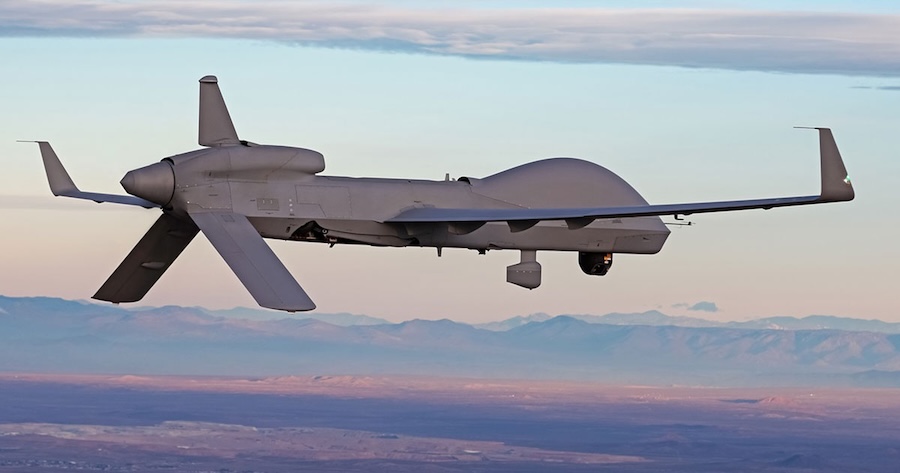
The new electronic intelligence, or ELINT, capability will enable the aircraft to detect and analyze integrated air defense systems while operating outside threat ranges. This is expected to support manned-unmanned teaming and improve survivability for crewed aircraft.
“Combining long-range detection with the range and persistence of the Gray Eagle platforms ensures that commanders always know when an adversary IADS is operating,” said David R. Alexander. “Gray Eagle’s open systems architecture makes this a simple but impactful upgrade.”
The ELINT system is designed to identify and geolocate threats critical to joint force operations. General Atomics said it will work with the Capability Program Executive Office for Intelligence and Spectrum Warfare and partner company SNC to integrate advanced radar detection and signal collection technologies.
The Gray Eagle ER platform has also been equipped with additional intelligence and communications capabilities in recent demonstrations. These include communications intelligence systems, synthetic aperture radar, moving target indicators and mobile ad hoc network radios.
The company said these upgrades highlight the aircraft’s modular open architecture, which allows rapid integration of sensors, payloads and weapons. This flexibility is intended to enable adaptation to evolving mission requirements and threats.
The platform was recently demonstrated during the U.S. Army’s Project Convergence Capstone-5 exercise. During the event, the aircraft conducted persistent detection, identification, location and reporting missions in a contested electromagnetic environment.
General Atomics said the aircraft also supported network connectivity for maneuver units, linking forces and systems across challenging terrain. The demonstration highlighted the platform’s ability to integrate multiple intelligence capabilities while maintaining resilience against electronic interference.
The company added that the Gray Eagle ER continues to evolve as a multi-mission unmanned system designed for long-endurance operations. It is part of a broader portfolio of unmanned aircraft systems developed to provide persistent situational awareness and operational support.