
The company said the radar family has been designed for new operational scenarios shaped by high-intensity conflicts. Indra said these conflicts are making the battlefield increasingly transparent because of improved adversary detection and response capabilities.
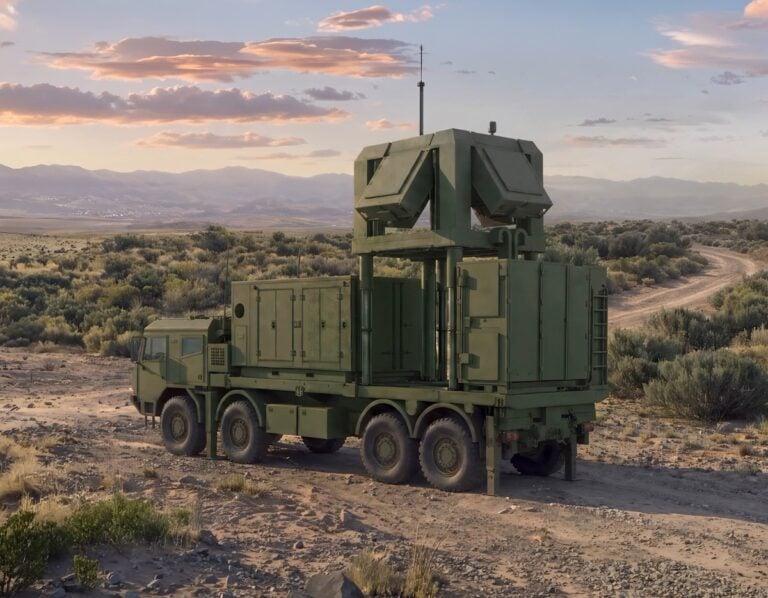
The MTR family combines high mobility with ultra-rapid deployment and redeployment. Indra said this is important for quickly changing position and avoiding enemy fire.
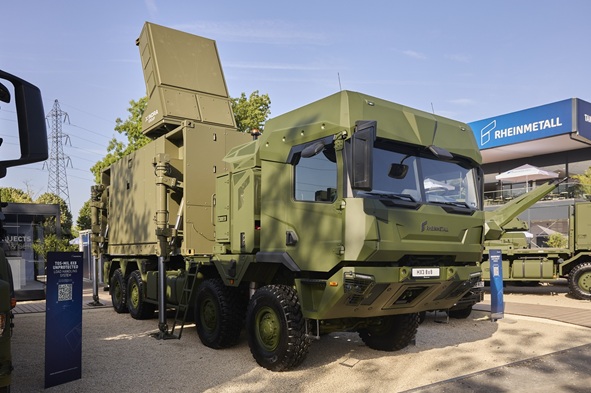
The system is designed for multiple missions. It can perform counter-battery, air surveillance and coastal surveillance functions.
Indra said this versatility allows armies to adapt quickly to changing situations. It also reduces the number of systems that need to be deployed, lowering the logistical footprint.
The radar family uses active electronically scanned array technology and a fully digital architecture. It also provides 4D capabilities to accurately track projectile trajectories.
Indra said operating modes optimised for different threats place the MTR family among the most advanced systems on the market. The use of gallium nitride electronics increases power, efficiency and resilience in extreme operating conditions.
“The MTR radar family has been designed from the ground up to adapt to an operational environment that has undergone profound transformation,” said Juan José Rodríguez, Business Development Manager for Land Systems at Indra. “In this environment, the emergence of new threats, such as drones and very high-speed missiles, demands maximum agility and precision in detecting and tracking targets for neutralization, while the proliferation of sensors capable of revealing the system’s presence makes it necessary to remain in constant motion by changing position.”
The MTR family is available in two configurations. Indra said they are adapted to the different operational needs of countries and armies.
The MTR 5 is a medium-range radar mainly designed for counter-battery missions. It is intended to counter artillery, projectiles or drones, and can also perform air or coastal surveillance tasks by switching mode.
The MTR 5 includes a control position. This allows it to operate autonomously or be integrated into a radar network.
The MTR 10 is the longer-range version. It is optimised for air surveillance and is directly dependent on air command-and-control systems.
Indra said the MTR 10 can operate as a reinforcement or gap filler for airspace surveillance coverage. It can also be associated with Ground-Based Air Defence systems, either in Surface-to-Air Missile Operations Centre roles or in weapon system command and control.
Indra said it is continuously evolving the radar family. The company said this is intended to give users access to advanced technological capabilities and help them maintain operational advantage on the battlefield.
The MTR radars are fully integrated with Indra’s Ground-Based Air Defence Command and Control systems, known as SBAMD-AIRDEF SAMOC. Indra said this creates a complete solution for detecting, tracking and responding to different types of threats.