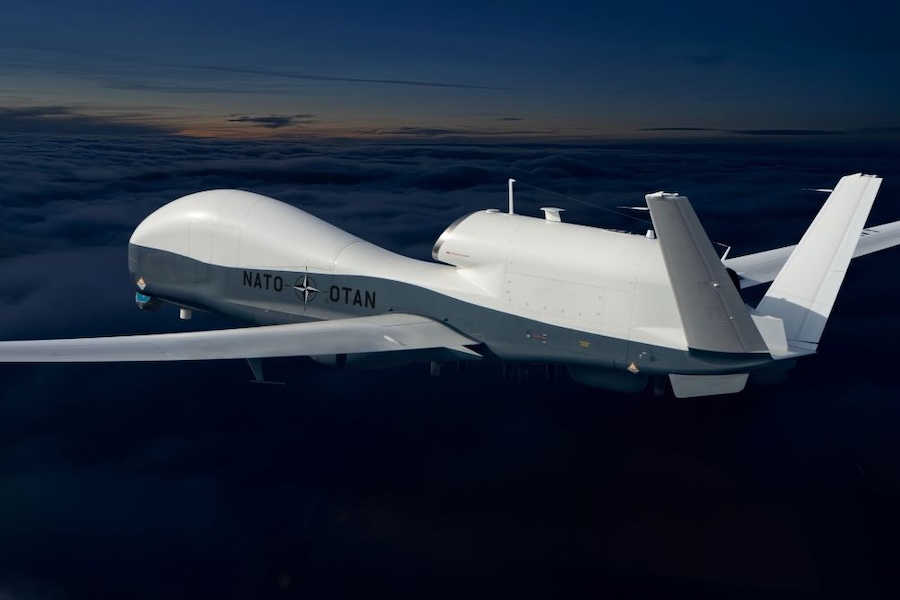
The partnership reflects NATO’s push to strengthen high-altitude maritime surveillance at a time when allied demand for persistent intelligence and monitoring capacity is rising. Northrop Grumman said the effort is intended to support the future expansion of the ISR Force fleet and improve alliance-wide operational integration.
Under the MOU, Northrop Grumman and Airbus will assess how their respective capabilities could support the Triton aircraft and associated ground systems. Potential areas of work include airborne and ground-segment communications, data processing, exploitation and dissemination, and command-and-control services.
The companies are also working with a broader group of European industrial partners to shape a full-service proposal for the capability. Coordination is ongoing with KONGSBERG Defence & Aerospace of Norway, Insta Advance of Finland, Terma of Denmark and Exence of Poland.
“Our collaboration with Alliance members on the expansion of NATO’s ISR Force will bring the most advanced ISR capabilities to the Alliance, bolstering its regional security and enhancing Europe’s defense industrial base,” said Jane Bishop, vice president and general manager, Global Surveillance, Northrop Grumman. The comment underscored the dual purpose of the effort: expanding NATO surveillance capacity while deepening the role of European industry in the programme.
Northrop Grumman said the planned partnerships build on more than a decade of cooperation around NATO’s current RQ-4D Phoenix fleet. That existing industrial and operational base is expected to help support a demanding implementation schedule for any future Triton capability.
The wider industrial team is intended to combine established relationships with complementary technical expertise across the Alliance. Northrop Grumman said the approach would foster new opportunities for European partners while drawing on capabilities already used by the NATO ISR Force.
The proposed Triton expansion would give NATO a more capable high-altitude maritime surveillance fleet to support alliance operations and decision-making. The MQ-4C is being positioned as part of a broader effort to keep NATO ISR capabilities modern, reliable and responsive.
The cooperation also highlights how defence companies are aligning with NATO’s changing operational requirements through transatlantic industrial partnerships. For Northrop Grumman and Airbus, the agreement creates a framework to pursue a programme that could link advanced U.S. surveillance technology with European industrial participation.