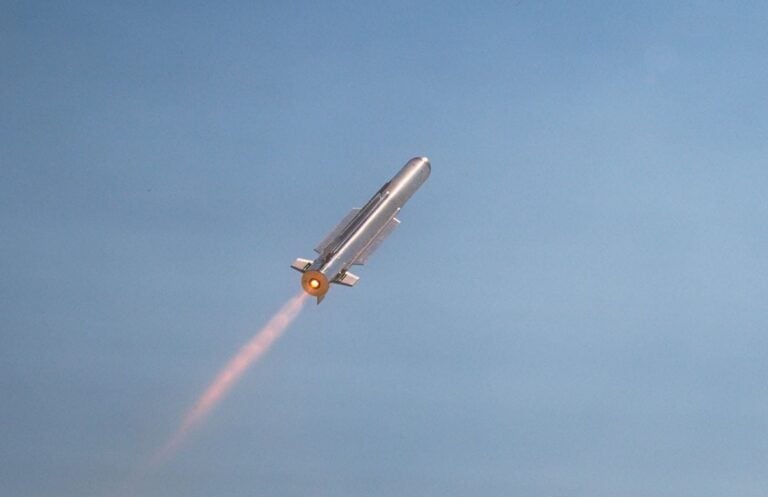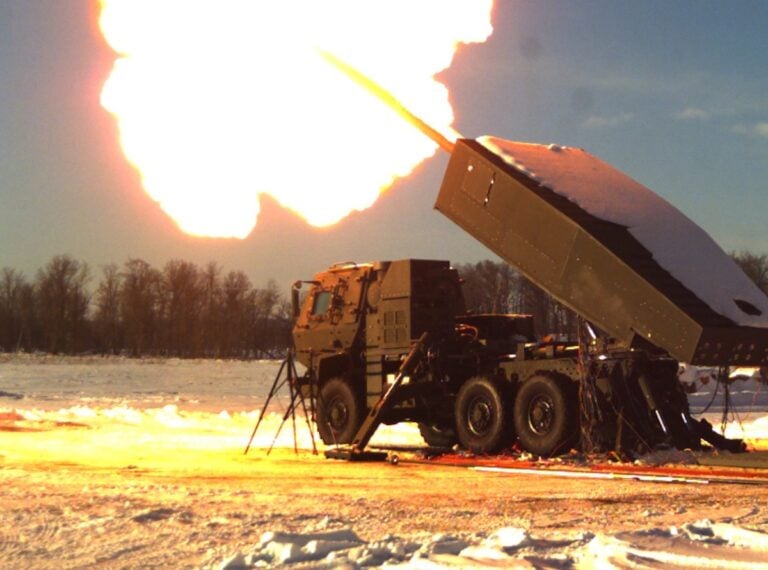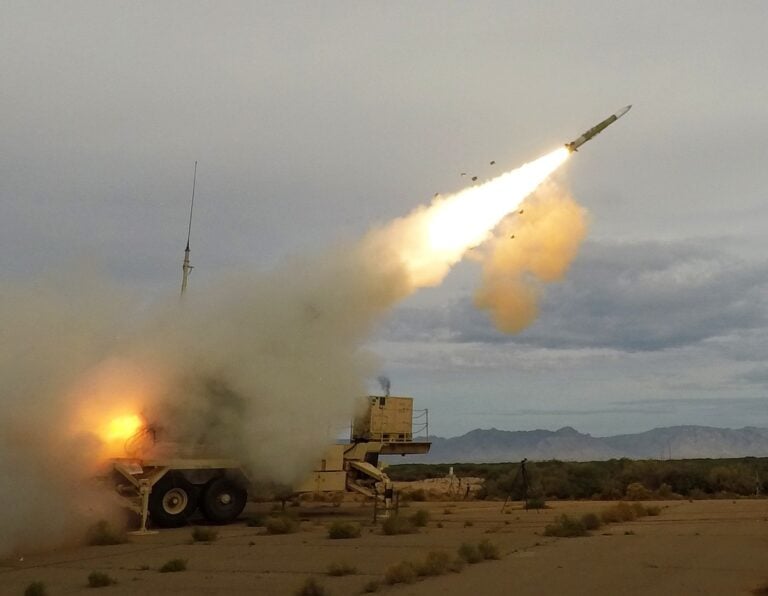

During the demonstration, Raytheon launched multiple guided missiles from its soldier-portable Command Launch Assembly. The company said each shot demonstrated the interceptor’s ability to detect, track and defeat Army-simulated aerial threats through direct hits and target destruction.
The system combines precision optics in the launcher and missile seeker with a highly loaded grain solid rocket motor manufactured by Northrop Grumman. Raytheon said the combination significantly extends the interceptor’s engagement range beyond current systems.
“Raytheon’s NGSRI saw farther and locked faster, demonstrating superior target acquisition, longer range and greater lethality than Stinger – which is already the world’s most in-demand and shoulder-fired air defense system,” said Tom Laliberty, president of Land and Air Defense Systems at Raytheon. “Our NGSRI solution builds on Stinger’s historic global success by being easier to build and field, resulting in a more capable, affordable and rapidly producible weapon.”
Raytheon said it has conducted several company-funded tests over the past year to prove and refine the NGSRI design. It has also completed two incremental demonstrations under contract with the U.S. Army.
The Army’s NGSRI program is intended to field a short-range missile that can be launched from either a vehicle or a shoulder-fired system. Raytheon said it is working to ensure the new interceptor is fully interoperable with both new and existing mounted platforms.
The company is drawing on more than 60 years of air defense experience and its role as the manufacturer of Stinger missiles and launchers. It said modular design and automated manufacturing are intended to shorten development timelines and support faster production.
Raytheon described NGSRI as a future shoulder-launched air defense missile for the U.S. Army and Marine Corps. The company said the system reflects its broader work in integrated air and missile defense, advanced sensors, interceptors, hypersonics and missile defense across land, air, sea and space.