
Taiclet disclosed the production target during Lockheed Martin’s second-quarter 2026 earnings call. He said the company had funded both systems before receiving formal orders.
“I just said to both teams, ‘Build 1,000 of these,’” Taiclet said. He later clarified that the instruction covered 1,000 units of each system.
Lockheed Martin would seek deployment opportunities with the U.S. Army and Marine Corps. Taiclet also identified special operations forces as a potential customer.
The company would pursue export approval if U.S. orders did not emerge. Taiclet said Lockheed Martin could then market the systems to international customers.
Grizzly is a containerized launcher used within the Sanctum counter-UAS system. Lockheed Martin moved the system from concept to successful live-fire testing in less than 45 days.
Taiclet said the project combined existing components for a new mission. The system includes a battle manager, radar, launcher and JAGM missiles.
JAGM is the successor to the Hellfire missile. Taiclet said Lockheed Martin produces tens of thousands of those weapons for the Army.
The Army also holds tens of thousands in its inventory, he said. That production scale could support the system’s use against large numbers of drone threats.
The Sanctum package uses a small transportable radar from Fortem Technologies. The company is backed by Lockheed Martin Ventures.
Lockheed Martin connected that radar with its command system and the Grizzly launcher. Taiclet said the company repurposed an existing high-volume missile for the counter-drone role.
Taiclet said containerization had become a major development priority. Drone and cruise-missile threats are increasingly dispersed across wider areas.
Defensive systems must move quickly by truck, ship or helicopter, he said. They must also operate without permanent infrastructure.
Taiclet identified air bases and stadiums as potential protected sites. Containerized systems could be transported to a location and placed into operation quickly.
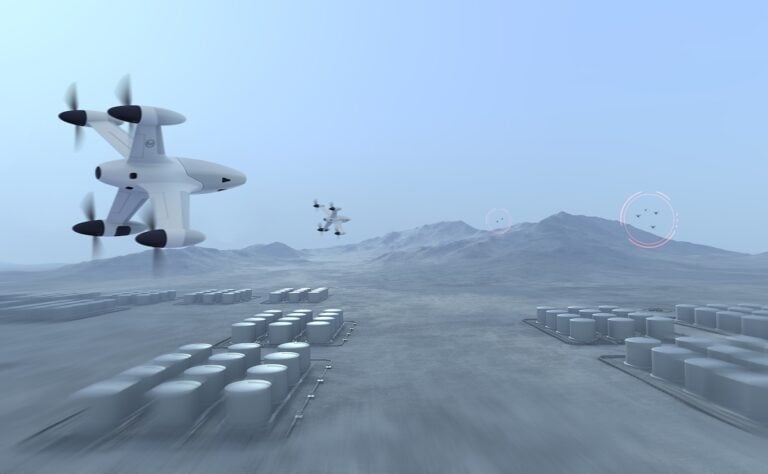
MORFIUS uses a high-power microwave instead of a missile. Taiclet described it as a large quadcopter carrying the microwave payload.
The aircraft uses artificial intelligence to detect hostile drones. It can recognize radar, lidar and electronic-warfare signatures programmed into the system.
MORFIUS can approach a target without direct human control. It then activates its microwave payload to disable the drone’s electronics.
Taiclet said MORFIUS could conduct as many as 50 engagements on one battery charge. The aircraft would then return for recharging.
Grizzly and MORFIUS were created by advanced-development teams within Lockheed Martin’s Missiles and Fire Control business. Taiclet compared those groups with the company’s Skunk Works model.
The approach allows Lockheed Martin to develop systems before the Pentagon completes its standard acquisition process. Taiclet said the company intends to have products available when military customers are ready to buy.