The laboratory demonstration marked the first automated mission-control exchange between the two aircraft systems. It used an open architecture and a standardized interface for machine-to-machine planning and execution.
During the test, the P-8A system sent an intelligence request to Triton. Triton used artificial intelligence algorithms to collect, process and share the requested maritime data.
The exchange showed how the platforms could coordinate missions without relying entirely on manual operator inputs. Northrop Grumman said the approach could reduce workloads and accelerate commanders’ decisions.
The demonstration used the Universal Command and Control Interface. The standard is based on Open Mission Systems and the Autonomy-Government Reference Architecture.
Aircraft and systems using the same interface could exchange information across U.S. and allied forces. The companies said the common standard could make cross-platform integration faster and less expensive.
“MQ-4C Triton and P-8A are the backbone of the U.S. Navy’s maritime patrol and reconnaissance force, delivering complementary capabilities unmatched by any other platforms. This demonstration underscores the flexibility of our systems, our unwavering industry investment and the strength of our industry relationships,” said Jane Bishop, vice president and general manager, global surveillance division, Northrop Grumman.
Northrop Grumman said the demonstration forms part of its investment in capabilities for U.S. and international customers. The company is seeking to expand cooperation between surveillance aircraft and other military platforms through shared digital standards.
“This Poseidon-Triton teaming demonstration unlocks real-world capability and interoperability for the U.S. and allies. We’re investing so that current and future global P-8A operators can expand the scope and effectiveness of their missions with low risk, evolutionary enhancements on the most advanced maritime patrol and reconnaissance aircraft already in service,” said Tory Peterson, vice president, Boeing P-8 Program.
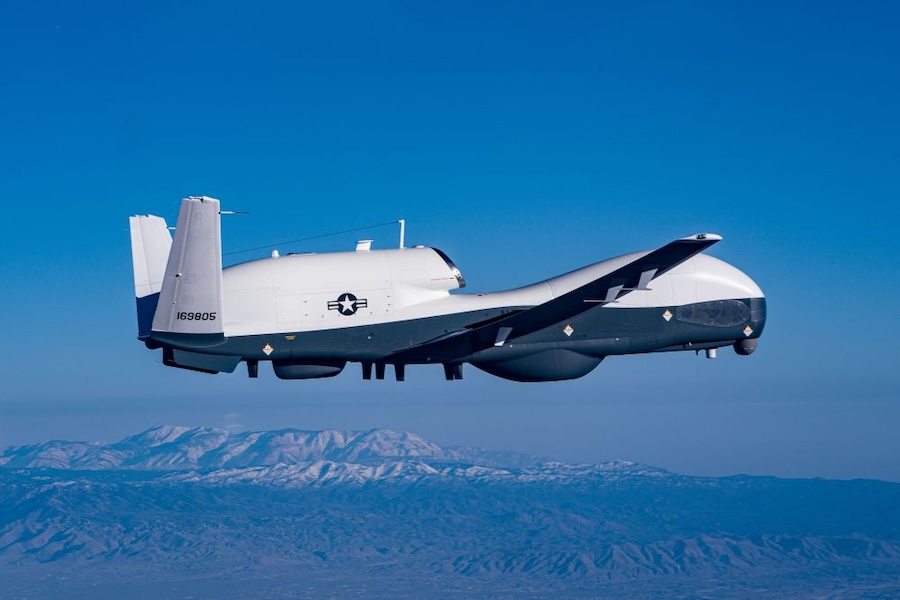
The MQ-4C Triton supports intelligence, surveillance, reconnaissance and targeting missions. Its mission set also includes maritime patrol, signals intelligence and search and rescue.
Northrop Grumman builds Triton for the U.S. Navy and Royal Australian Air Force in Palmdale, California. The aircraft provides persistent surveillance intended to support operational planning and joint military missions.