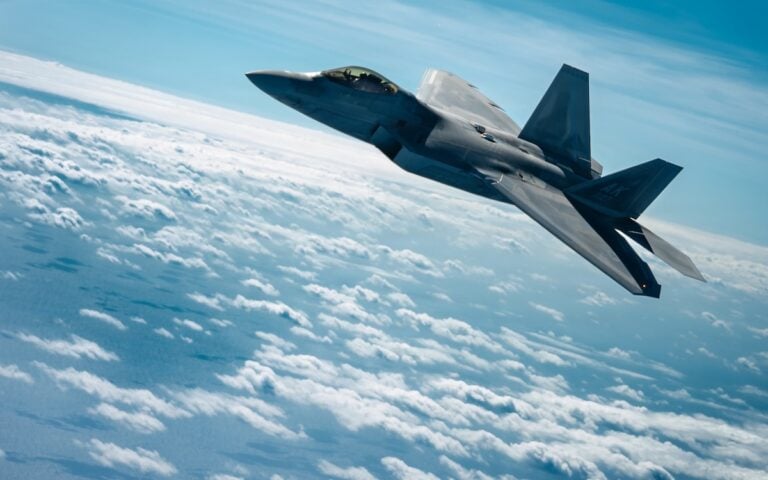

The proposal, released on November 16, provides for 29 F-35As and 18 F-15EX Eagle IIs. That purchase would remain below the Air Force’s stated goal of acquiring 72 new fighters a year.
Adding five F-35As to the base request would cost $704 million, largely offset by $618.7 million in savings from removing six F-15EXs. The Eagle II purchase would fall by 25%, from the requested 24 aircraft to 18.
The committee would leave just over $2 billion for F-15EX procurement and add $245 million in advance funding. It did not specify how the advance funding would be used, the magazine reported.
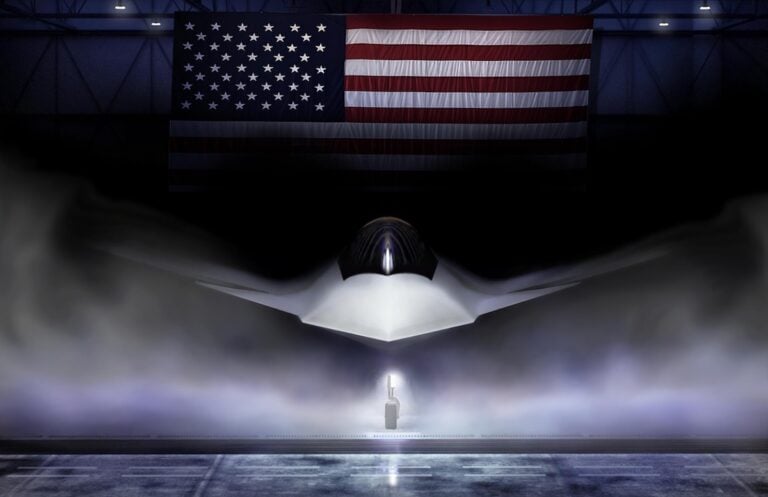
The bill would cut $603 million from proposed F-47 research and development spending. That would reduce funding for the next-generation fighter from about $5 billion to $4.4 billion.
For the Collaborative Combat Aircraft program, the committee would reduce one proposed funding allocation from $1.37 billion to $711 million. Separately, fiscal 2027 procurement funding would fall from more than $996 million to nearly $848 million.
Advance procurement funding for CCA purchases in fiscal 2028 would decline from $150 million to $120 million. The bill would also reduce advanced development and prototyping funds from $214 million to nearly $50 million, a $164 million cut attributed in budget documents to “misaligned acquisition phasing.”
The restrictions on multiyear procurement would extend beyond fighter aircraft to the Joint Advanced Tactical Missile, Lower Tier Air and Missile Defense Sensor and Air-Launched Rapid Response Weapon Increment 1 hypersonic program. The committee approved multiyear authority for the KC-46 Pegasus tanker and Guided Multiple Launch Rocket System program.
The committee said the rejected requests either “did not request sufficient fiscal year 2027 discretionary funding, the program is not adequately funded over the [Future Years Defense Plan], or the program has not proven an ability to manufacture at scale.” Its explanatory statement cited those funding and production concerns as reasons for withholding the requested authority.
The proposed bill would increase several F-35 modernization and support accounts despite denying multiyear purchasing authority. It includes $11.1 billion across Air Force, Navy and Marine Corps procurement, modification and sustainment accounts, plus $2.9 billion for research, development, test and evaluation.
An additional $205 million would fully fund Lot 6 of the F-35’s upgraded APG-85 radar. The committee also proposed $223.7 million more for sustainment and $300 million for spares and repair parts.
The bill would add $243.8 million to fully fund the Engine Core Upgrade program. It would also provide increases of $89.8 million for the Power Thermal Management Upgrade and $500 million for Block 4 upgrades, fully funding those efforts.
The nearly $1.1 trillion defense proposal falls short of President Donald Trump’s $1.5 trillion Pentagon spending goal. The White House had sought that total through a $1.15 trillion base appropriations bill and a separate $350 billion reconciliation bill.
Source: Air & Space Forces Magazine.