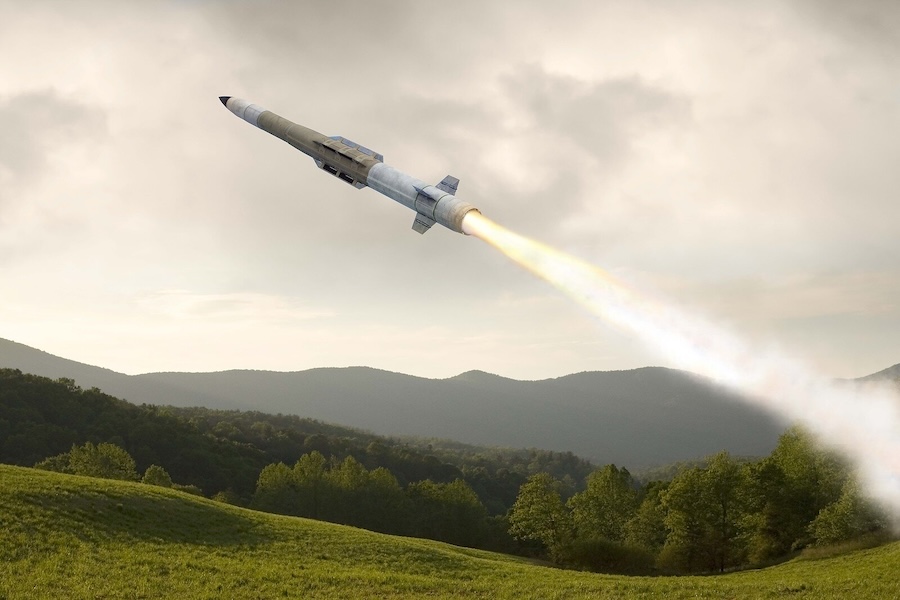
Taiclet presented ACE as a response to rising interceptor costs. He said PAC-3 MSE offers more capability than some targets require.
The company wants to better align interceptor performance with each threat. Taiclet described that approach as “target weapons matching.”
“We use PAC-3 missiles, or our military uses PAC-3 missiles for a wide range, the MSE missile, for a wide range of targets,” Taiclet said. “It has more capability than some of those targets require at a higher cost.”
Lockheed Martin began the ACE effort without a formal government solicitation. The company moved before receiving a request for information or proposals.
“We know we need a PAC-3 missile that maybe not as expensive and not as sophisticated,” Taiclet said. He asked whether Lockheed Martin could provide two-thirds of MSE capability for half or even one-third of the price.
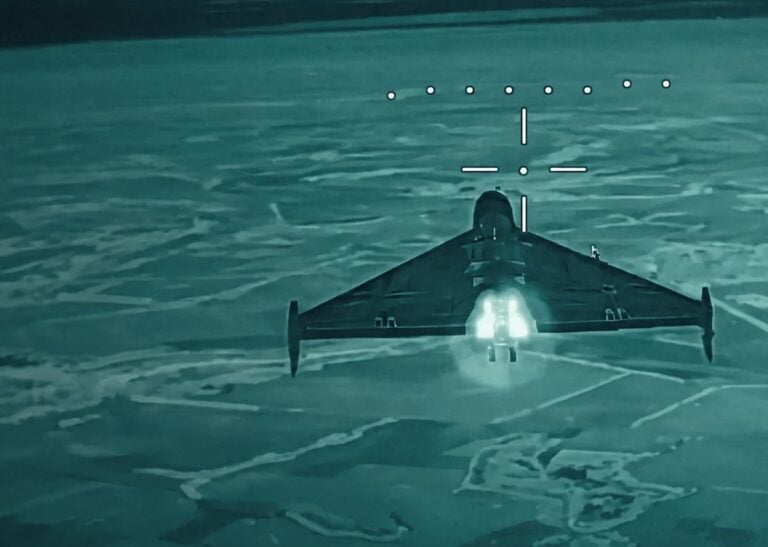
ACE would address targets that do not require MSE’s full performance. Taiclet identified drones, cruise missiles and short-range ballistic missiles as intended threats.
PAC-3 MSE would retain the higher-end mission. Taiclet said it can intercept long-range and high-speed ballistic missiles.
He also said MSE can defeat hypersonic missiles. That capability has been demonstrated against maneuvering threats in Europe, according to Taiclet.
“The PAC-3 MSE can hit long range, high speed, almost intercontinental ballistic missiles,” Taiclet said. “It can also defeat hypersonic missiles, and that’s been demonstrated in Europe.”
The planned split reflects growing pressure on air-defense economics. Lower-cost threats can force militaries to expend more capable and expensive interceptors.
Taiclet said Lockheed Martin wants both a cost match and a capability match. The company is investing in design and manufacturing before orders arrive.
“We want to get an economic match, cost to cost, and also the target weapons match,” Taiclet said. He described advance investment as part of a broader change in how Lockheed Martin develops weapons.
The company is also preparing a major increase in PAC-3 MSE output. Taiclet said the U.S. government has asked Lockheed Martin to triple production.
Lockheed Martin is seeking the fastest and most efficient production ramp possible. Taiclet said the government is providing greater flexibility on requirements to support faster expansion.
“We’re being asked to triple PAC-3 MSE production,” Taiclet said. He added that the company was using every available option to raise output quickly and efficiently.
The two variants would give customers different options within the PAC-3 portfolio. MSE would address advanced threats, while ACE would focus on lower-cost and more numerous targets.