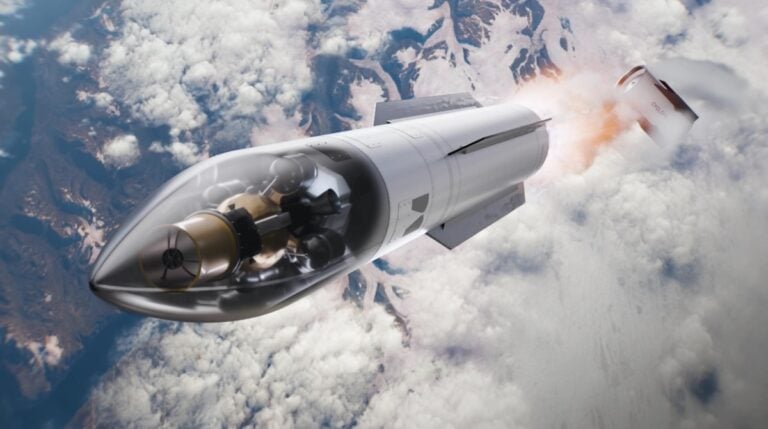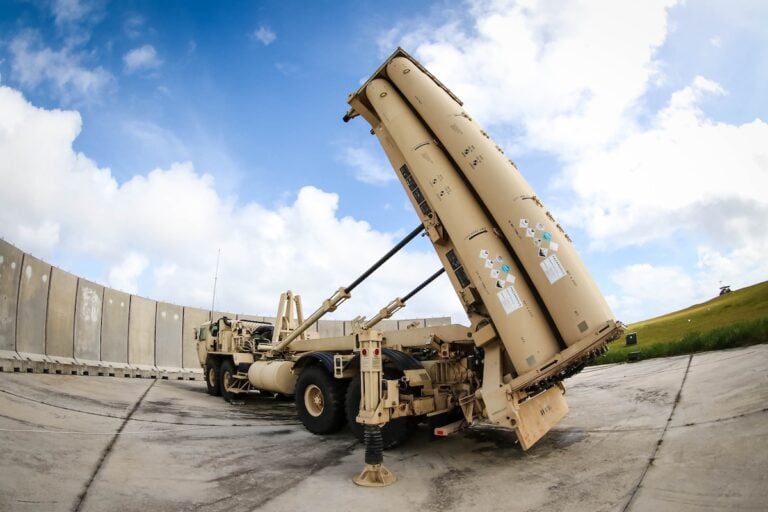

“The historic NATO commitments secured by President Donald J. Trump will strengthen global security and power American industry,” Taiclet said. “Lockheed Martin will support this effort by expanding missile sustainment capacity in Europe through the establishment of a new PAC-3 Missile Maintenance Facility, by partnering with Rheinmetall to establish European production of ATACMS and through other initiatives.”
“These investments deepen transatlantic industrial cooperation, strengthen our partnerships and reinforce credible deterrence for the Alliance.” The comments followed Lockheed Martin announcements during the NATO Summit Defense Industry Forum in Ankara on PAC-3 sustainment and ATACMS co-production in Europe.
In one announcement, Lockheed Martin welcomed the commitment of the United States, Germany, the Netherlands, Poland and Sweden to explore a dedicated PAC-3 Missile Maintenance Facility in Europe. The company said the joint government-to-government agreement was signed during the NATO Summit Defense Industry Forum, part of the 2026 NATO Summit in Ankara.
Lockheed Martin said the proposed PAC-3 facility would strengthen NATO’s integrated air and missile defense readiness by providing in-region maintenance and sustainment capabilities. The facility is intended to help keep PAC-3 missiles ready, reliable and rapidly deployable against evolving threats.
The proposed facility would support NATO allies operating PAC-3 Missile Segment Enhancement interceptors and PAC-3 Cost Reduction Initiative interceptors. Lockheed Martin said it would contribute experience in missile production, sustainment, engineering and supply-chain management to support the facility and the allied nations using PAC-3 capabilities.
The company also said demand for PAC-3 continues to grow worldwide, driven by its combat-proven performance. Lockheed Martin said a framework agreement with the U.S. Department of War was established in January to triple PAC-3 MSE production capacity, followed in April by a $4.7 billion U.S. government contract to continue accelerating production this year.
In a separate announcement, Lockheed Martin and Rheinmetall said they had signed a memorandum of understanding addressing immediate demand for locally produced munitions in Europe. The companies said the agreement was the next step toward establishing a joint venture to create the first European center of excellence for manufacturing, integration and distribution of ATACMS across NATO and allied European forces.
“This partnership marks a watershed moment for European security and allied industrial cooperation. By combining Lockheed Martin’s unmatched missile expertise with Rheinmetall’s manufacturing excellence, we’ll deliver combat-proven capabilities faster and more efficiently to our allies,” said Jay Pitman, president, Lockheed Martin International.
Lockheed Martin said the ATACMS project is supported by the United States and German governments. The company said co-producing ATACMS missiles in Europe would support local capability, increase allied deterrence and contribute to economies on both sides of the Atlantic.
Rheinmetall’s Unterluess site in Germany is expected to be used for ATACMS production. Lockheed Martin said production of rocket motors and guided missile components at the site is scheduled to begin as early as 2027.
The company said ATACMS has demonstrated operational effectiveness, precision and mission reliability through extensive combat employment. Lockheed Martin also said it would continue operating its current ATACMS production line in Camden, Arkansas, until the transition is complete.
Taiclet’s statement framed the PAC-3 and ATACMS efforts as part of a broader response to NATO commitments announced during the summit. Lockheed Martin said the initiatives are intended to deepen industrial cooperation across the Atlantic and reinforce deterrence for the Alliance.