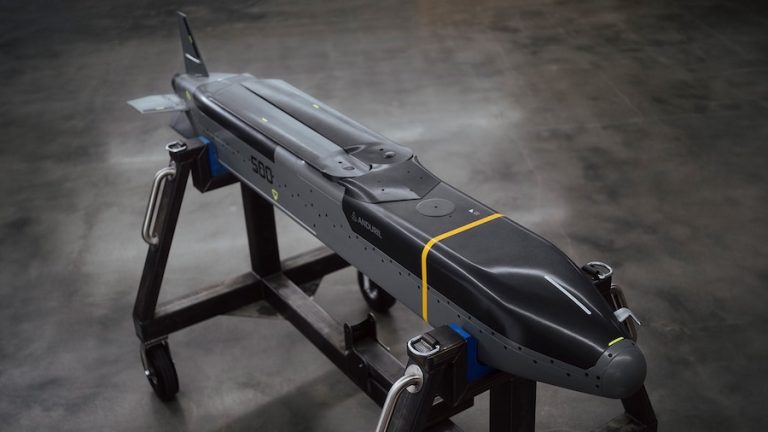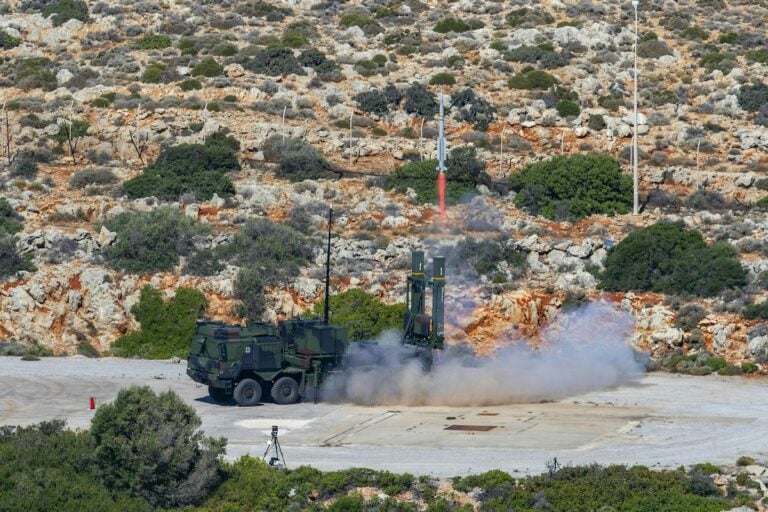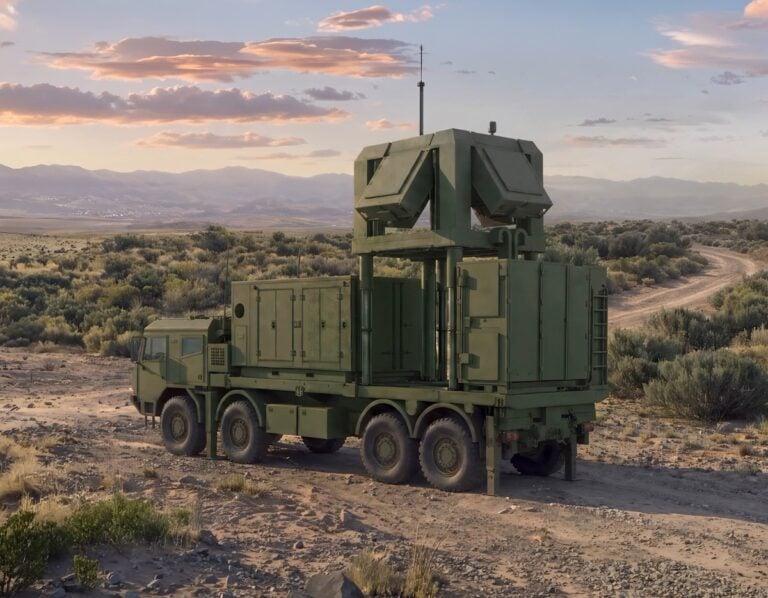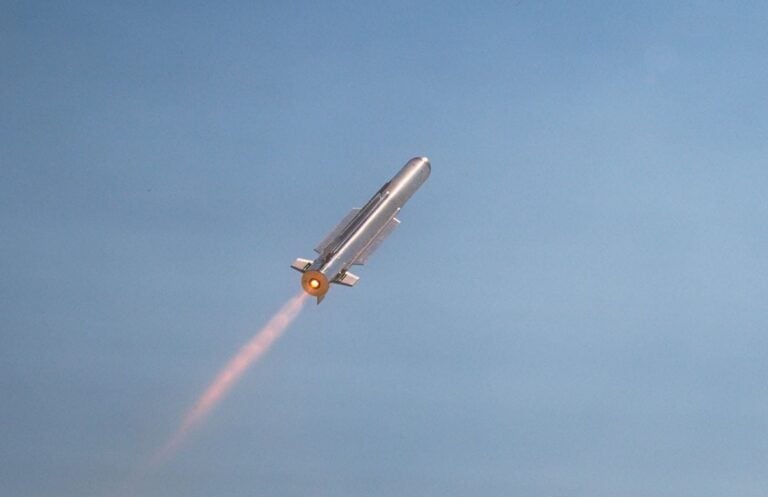
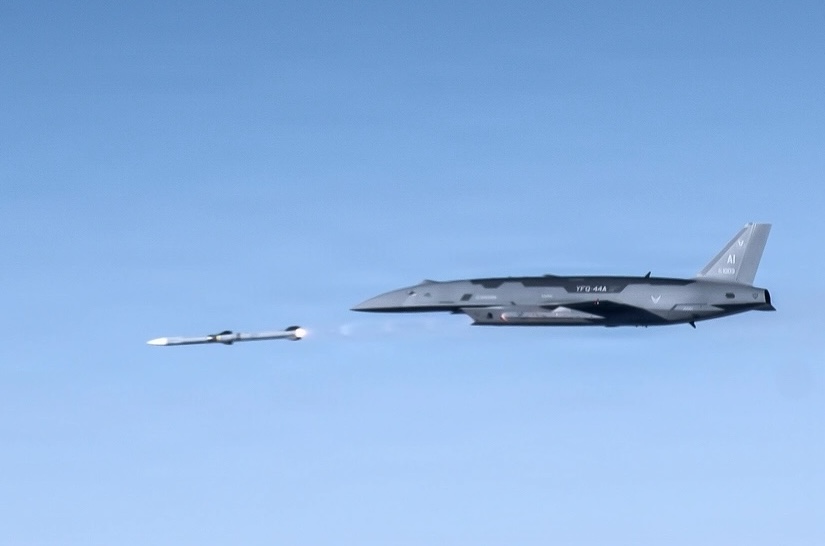
The test follows a phased development campaign that began earlier this year with inert weapons carriage evaluations. Those flights were used to verify aircraft handling before later work validated data link integration between the aircraft and the weapon system.
“This live-fire test is an important next step in the development of Collaborative Combat Aircraft,” said Air Force Chief of Staff Gen. Kenneth S. Wilsbach. “We’re one step closer to delivering capabilities to the warfighter.”
The Air Force is developing Anduril’s FQ-44A and General Atomics Aeronautical Systems’ FQ-42A as the first increment of Collaborative Combat Aircraft. That initial increment is focused on air-to-air missions, with the broader CCA concept intended to add lower-cost combat mass alongside crewed aircraft.
We’re one step closer to getting CCA to the warfighter with this live fire test! pic.twitter.com/1jAsIiXzVa
— General Ken Wilsbach (@OfficialCSAF) July 15, 2026
Anduril said the test demonstrated an engagement sequence supported by its autonomous Lattice software. After takeoff from Edwards, the software received target information, a human operator directed the YFQ-44A to strike the target, and the aircraft fired the missile as instructed.
“This was more than a simple weapons release test,” said Mark Shushnar, vice president of autonomous airpower at Anduril. “It demonstrated an end-to-end, beyond-line-of-sight strike against a simulated target.”
The Air Force stressed that human oversight remains central to the CCA program. The aircraft will not autonomously employ weapons, and the decision to release any weapon remains exclusively with a human operator who maintains command and control of the platform.
New test footage: first missile shot from YFQ-44A.
YFQ-44A executed an end-to-end, beyond-line-of-sight strike against a simulated target.
The test, executed out of @EdwardsAFB, represents an important step in turning CCA into an operational capability. pic.twitter.com/70cRIs6uXJ
— Anduril Industries (@anduriltech) July 15, 2026
“Moving from inert carriage earlier in the year to this weapon release demonstrates program maturity, allowing us to validate our digital integration models with actual data,” said Gen. Dale White, Department of War direct reporting portfolio manager for Critical Major Weapon Systems. “These tests provide operational validation that Collaborative Combat Aircraft can execute the weapon employment sequence autonomously within pilot-defined parameters, accelerating capability delivery to the warfighter.”
The live-fire event was supported by the Air Dominance Combined Test Force from Edwards’ 412th Test Wing. The team includes active-duty military personnel, government civilians and contractors working to refine and validate the models needed for safe live-fire testing.
The CCA program is part of a wider Air Force push to field semi-autonomous systems that can extend the reach, awareness and survivability of U.S. airpower in contested environments. Air Force officials have said CCAs could support missions including strike, reconnaissance, electronic warfare, communications and decoy operations, while the service ultimately seeks a fleet of about 1,000 aircraft.