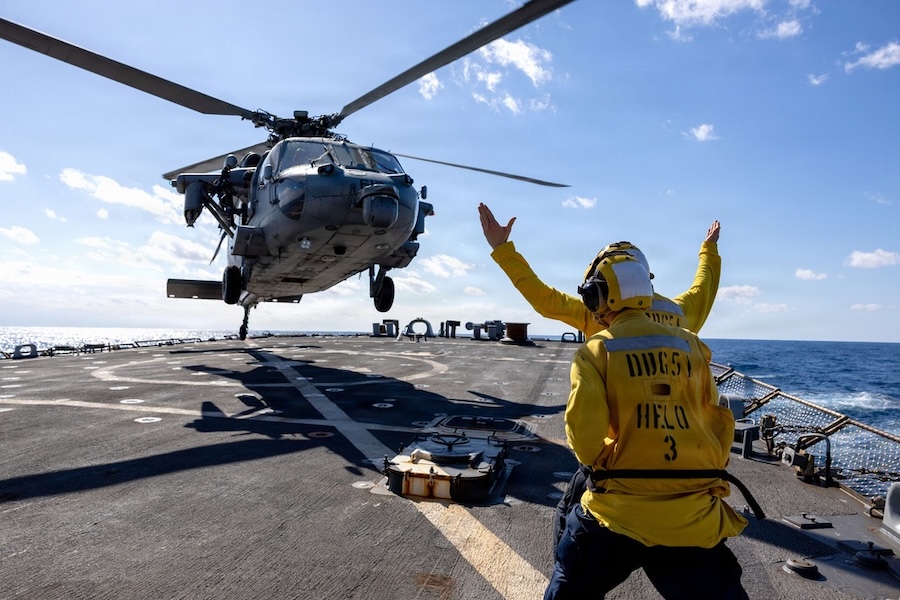
The MH-60 Seahawk serves as the Navy’s primary helicopter platform for anti-submarine warfare, anti-surface warfare, search and rescue, medical evacuation and vertical replenishment missions. Lockheed Martin said the logistics effort was carried out under a seven-year, $2.3 billion performance-based contract supporting more than 500 helicopters operated by the Navy, Coast Guard and allied partners.
The agreement covers 1,048 critical aircraft components and includes support from Derco, a Lockheed Martin company specialising in aircraft component repair and sustainment. According to the company, the programme was designed to improve aircraft readiness rates while reducing long-term operational costs.
Paul Klevan, supply chain solutions director at Naval Supply Systems Command Weapons Systems Support, said, “This award validates what we know to be true: logistics is the lifeblood of combat power.”
“The extraordinary success of the H-60 team means more H-60 Seahawks on the flight line, more mission-capable helicopters in the air and a more lethal force ready to answer our nation’s call,” Klevan added. “Their work ensures our warfighters have the decisive edge they need to deter our adversaries and win in a conflict.”
Lockheed Martin said material availability under the contract increased from 68 percent to 92 percent, contributing to higher mission-capable rates across the fleet. The programme also integrated sustainment support for the MH-60R helicopter’s Airborne Low Frequency Sonar anti-submarine warfare system.
The company stated that all backorders for ALFS sonar components were eliminated, helping ensure uninterrupted sonar system availability. Lockheed Martin added that negotiations connected to the programme generated more than $700 million in savings compared with the original proposal, with an additional $197.5 million in expected cost avoidance over the duration of the contract.
Field Service Representatives deployed alongside Navy personnel also contributed to faster on-site repairs and reduced aircraft part cannibalisation, according to the company. Lockheed Martin said these measures reduced logistics-related costs by more than $32.5 million.
Ali Ruwaih, vice president of Sikorsky Maritime Systems at Lockheed Martin, said, “Delivering 92 percent material availability and eliminating all ALFS sonar back orders for the MH-60R demonstrates how performance based logistics turns supply chain excellence into combat power.”
“By partnering with the Navy, driving cost avoidance and embedding repair experts directly with our warfighters, we keep more helicopters mission ready, protect our carrier strike groups and give the Navy the decisive edge it needs today and well into the future,” Ruwaih added.
Lockheed Martin said the programme improved parts availability, removed sonar sustainment bottlenecks and increased operational readiness across the Seahawk fleet. The company added that the logistics effort strengthened the Navy’s ability to maintain mission-ready helicopter forces for global operations.