Headquartered in Oeiras, Portugal, STRIKFORNATO directed the exercise across NATO’s southern and south-eastern flanks. The Alliance said Neptune Strike 2026 demonstrated the integration of advanced maritime strike capabilities within a complex multi-domain operational environment.
NATO said the exercise involved carrier strike groups, amphibious strike groups and land, air and maritime forces from across the Alliance. The activity was designed to improve operational coordination between Allied nations while reinforcing collective deterrence and defence capabilities.
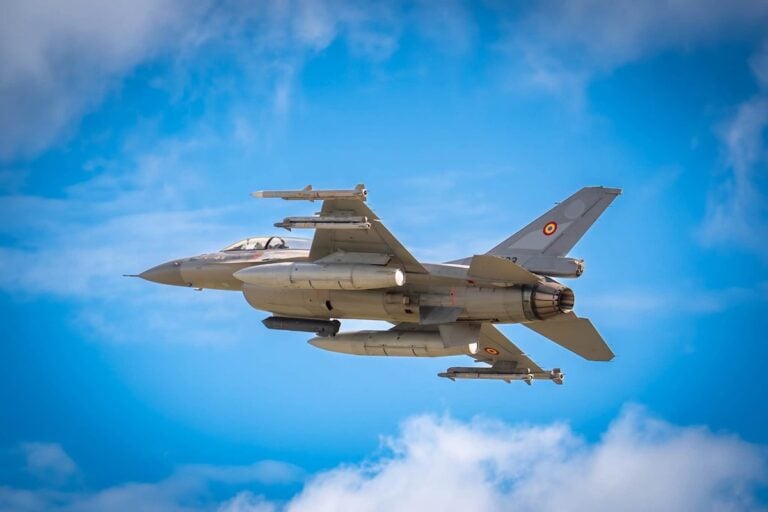
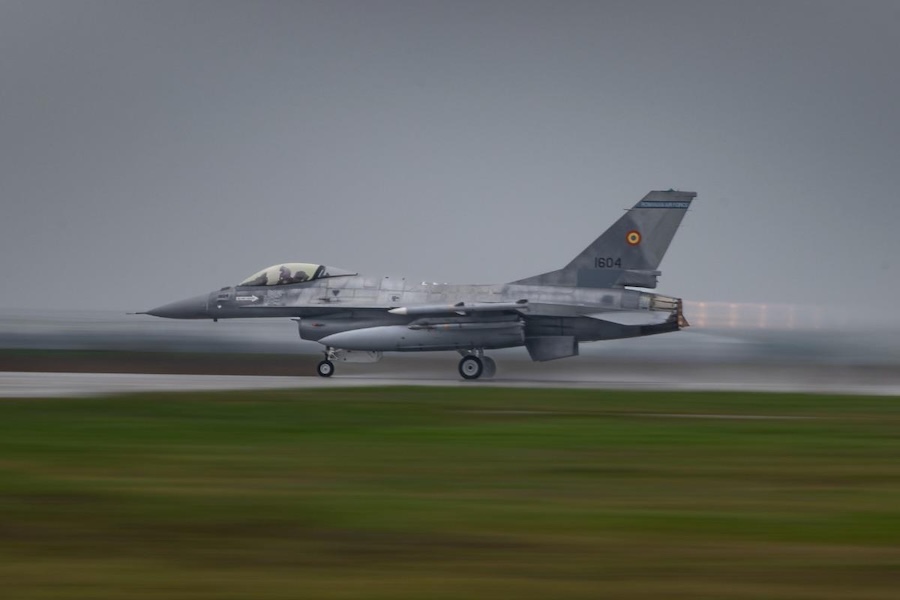
As part of the exercise, Allied Air Command contributed Royal Air Force Typhoon fighter aircraft and Romanian F-16 jets conducting integrated air operations. The RAF Typhoons are currently deployed to Romania under NATO’s Eastern Sentry enhanced Vigilance Activity as part of the Alliance’s enhanced Air Policing mission.
The integrated air operations focused on aligning tactics, procedures and command-and-control arrangements between Allied air forces. NATO said the training enabled British and Romanian aircrews to operate as a single coordinated force while improving interoperability across the Alliance.
The British and Romanian aircraft also operated alongside forces from Albania, Bulgaria, France, Greece, Montenegro, Portugal and Türkiye. NATO said the cooperation allowed participating crews to rapidly integrate operational procedures and communication structures.
“Being pre-deployed in Romania on our own eVA mission, Eastern Sentry, provided a unique level of efficiency,” said a Royal Air Force pilot participating in the exercise. “NEPTUNE STRIKE allowed us to step aside from routine operations and train together against complex challenges, proving that we can integrate seamlessly with our counterparts at a moment’s notice.”
NATO said Allied aircraft maintained a visible and continuous presence over international airspace in the Black Sea region during the exercise. The Alliance added that these activities directly support its broader 360-degree approach to deterrence and defence across all operational theatres.
According to NATO, the exercise also reinforced the effectiveness of other enhanced Vigilance Activities operating near the Alliance’s eastern flank, including Eastern Sentry. The participation of RAF Typhoon and Romanian F-16 aircraft was intended to validate NATO’s ability to conduct coordinated multinational air operations rapidly and effectively.
The Alliance said Neptune Strike forms part of a wider network of enhanced Vigilance Activities that also includes Eastern Sentry, Arctic Sentry and Baltic Sentry. NATO stated that the activities collectively demonstrate the Alliance’s ability to protect Allied territory across maritime, land and air domains.
NATO added that the exercises highlight the commitment of all 32 Allied nations to collective defence and regional stability. The Alliance said the operations demonstrate that member states remain prepared to operate together in response to evolving security challenges across Europe and its surrounding regions.