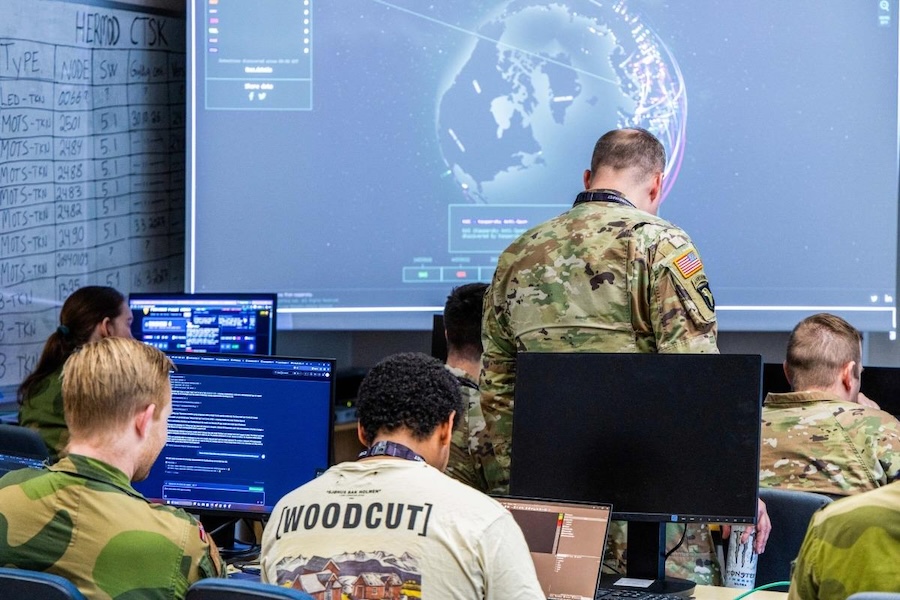
Organised annually by the NATO Cooperative Cyber Defence Centre of Excellence, the exercise involved nearly 4,000 participants. The event is designed to strengthen cyber defence capabilities, improve multinational cooperation and accelerate innovation among allied and partner nations.
The exercise simulated real-time cyberattacks targeting critical infrastructure and national information technology systems. Participants were required to defend systems including 5G infrastructure, satellite management networks, power grids and electronic voting platforms.
The NATO team was led by NCIA through its NATO Cyber Security Centre. It also included technical and non-technical experts from the NATO Support and Procurement Agency and the NATO Airborne Early Warning and Control Force.
This marked the first time the joint NATO team partnered with Norway and Iceland in the exercise. Cooperation between the participants began in September 2025.
The team combined expertise in cyber threat intelligence, incident response, legal advisory work, digital forensics and malware analysis. Norway and Iceland also contributed experience in working with private industry to protect critical infrastructure and manage crises.
Ahead of the exercise, preparation workshops were held in Belgium, Norway and Iceland. NATO said the sessions were designed to strengthen cooperation and ensure participants could train together effectively.
“Locked Shields has evolved from a small-scale technical competition to the largest live-fire cyber exercise in the world,” said Slawomir Roginski, Exercise NATO Team Lead from NCIA’s NATO Cyber Security Centre.
“The exercise has transformed into a cooperative model, where different nations gather to exchange their unique experience and work together in the field of cybersecurity,” he added.
This year marked the 16th consecutive Locked Shields exercise involving NCIA. NATO said the training also provided an opportunity to test new tools and technologies, including artificial intelligence.
NCIA said it will continue working with allied nations to strengthen cyber skills and protect NATO’s digital infrastructure. The agency said the exercises help ensure the alliance’s networks remain secure in high-pressure environments.