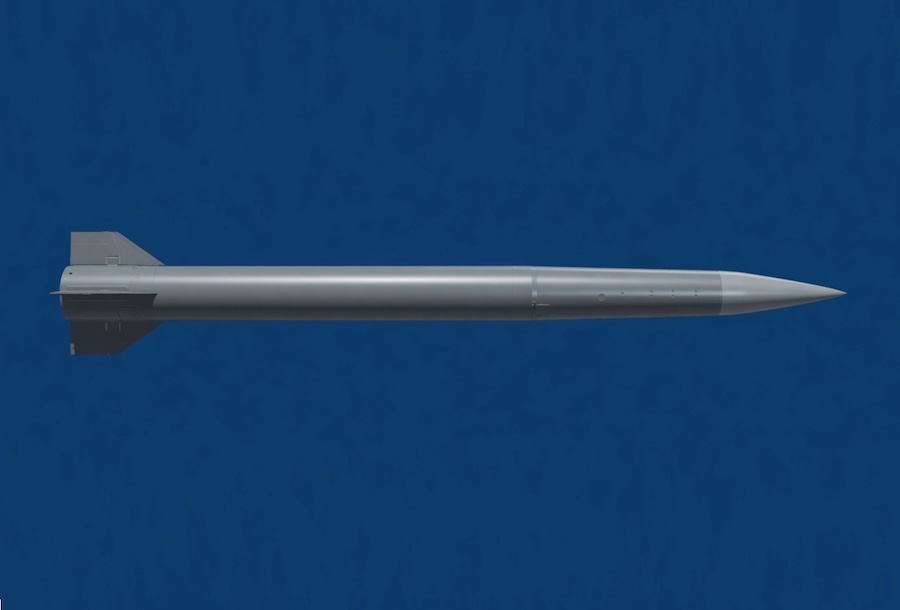
The information was published by Denys Shtilierman, co-founder and owner of Fire Point. According to the company’s plans, the FP-7.x missile is being developed as a lower-cost air defence effector, with a target price below $1 million.
Fire Point first announced plans in early April to develop an air defence interceptor for cheaper engagement of ballistic missiles. The concept is intended to provide an alternative to Patriot interceptors, which are expensive and limited in availability because of U.S. policy constraints and insufficient production capacity.
Despite attempts to hinder us and many distractions, our caravan is moving forward. Fire Point is joining the anti-ballistic coalition.
Soon, interceptor missiles will be in the skies not only over Ukraine, but over all of Europe.
For more details, see the presentation I’ve… pic.twitter.com/j0RLpvGvIr
— Denys Shtilierman (@DenShtilierman) May 14, 2026
The company has indicated that the missile will be only one element of a wider air defence system. Ukraine is therefore seeking cooperation with foreign partners, especially in Europe, for radar stations, command systems and communications equipment.
The project is also expected to be supported by a new solid rocket fuel production facility in Denmark near Skrydstrup air base. Ukraine began cooperation with Germany in April to accelerate work on the Freya project, while Fire Point has also partnered with MBDA to support refinement of the FP-7.x missile.
Shtilerman said the first interception attempt using the FP-7.x is planned for the end of 2027. The missile is expected to reach speeds of 1,500 to 2,000 metres per second, broadly comparable to the PAC-3 MSE interceptor.
The FP-7.x will be larger than the American interceptor, with a length of 7.25 metres and a body diameter of 0.53 metres. Its diameter will reach 1.15 metres when including the fins, and the missile body is expected to be made from composite materials.
The missile is planned to use a guidance system based on an infrared seeker. The use of a semi-active radar seeker from Diehl Defence has also not been ruled out.
Ukraine plans to integrate the missile into a broader air defence architecture. Ukrainian industry is expected to develop lightweight and mobile missile launchers for the system.
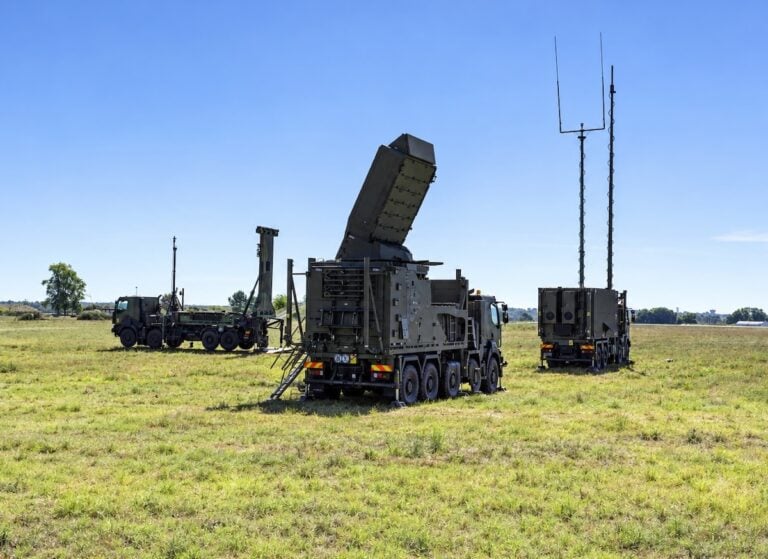
For early warning radars, Ukraine is considering systems including Sweden’s Giraffe 8A/4A, France’s Ground Master 400 and Germany’s TRML-4D. For fire-control radar options, the Danish GFTR-2100/48 and Italian Kronos Land systems have been mentioned.
The command system is expected to be based on the Fire Distribution Center from Norway’s Kongsberg. The full system is intended to operate through the Link 16 data exchange protocol.