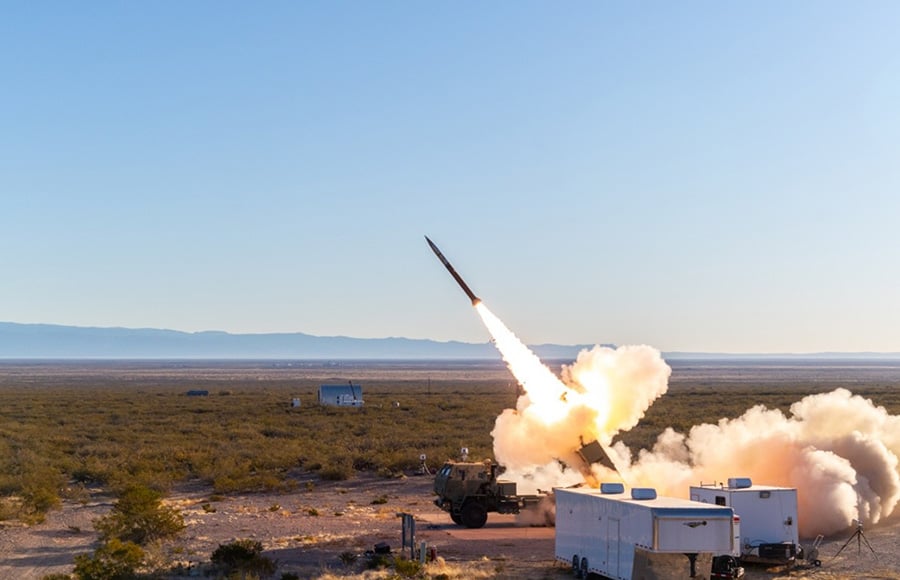
The Army granted Milestone C approval, signaling readiness for production and deployment, according to Lockheed Martin. The company said its focus is shifting from testing the technology to manufacturing and delivering the rockets at scale.
Both the Alternative Warhead and Unitary Warhead variants completed operational testing following flights in September and October. Soldiers fired multiple rockets in succession from an M270A2 launcher at White Sands Missile Range in New Mexico.
The program would give U.S. and allied operators greater range without requiring an entirely new launcher system. Sabrina Barnes, vice president of Lockheed Martin Precision Fires Rockets, said that compatibility was a key part of the weapon’s value.
“The value of ER GMLRS is not only the additional range. It is the ability to add capability within an existing precision fires architecture – an approach that provides a common foundation for U.S. and international operators,” Barnes said.
Lockheed Martin said it is expanding production capabilities and strengthening supply chains to meet demand for precision munitions. It did not disclose production targets, delivery schedules or an operational fielding date.
The company is also expanding capacity across its precision-fires portfolio as the United States and allied nations invest in additional munitions capability. The portfolio includes GMLRS, ATACMS and the Precision Strike Missile, which serve different ranges and missions while sharing elements of a common launcher ecosystem.