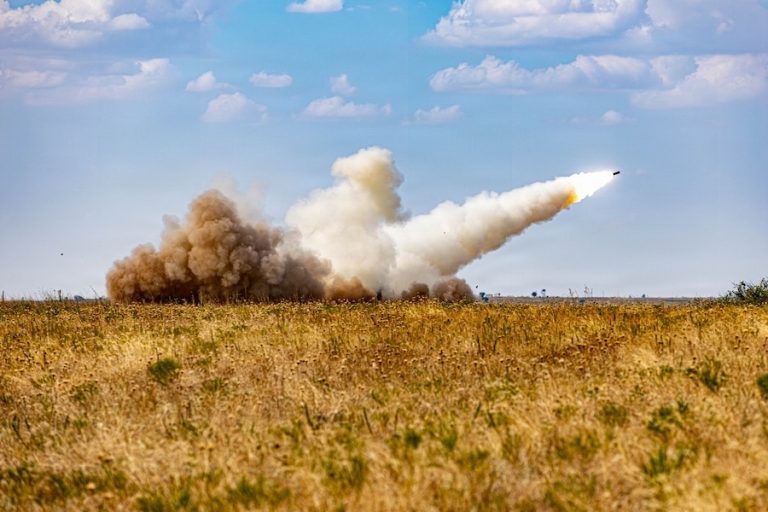
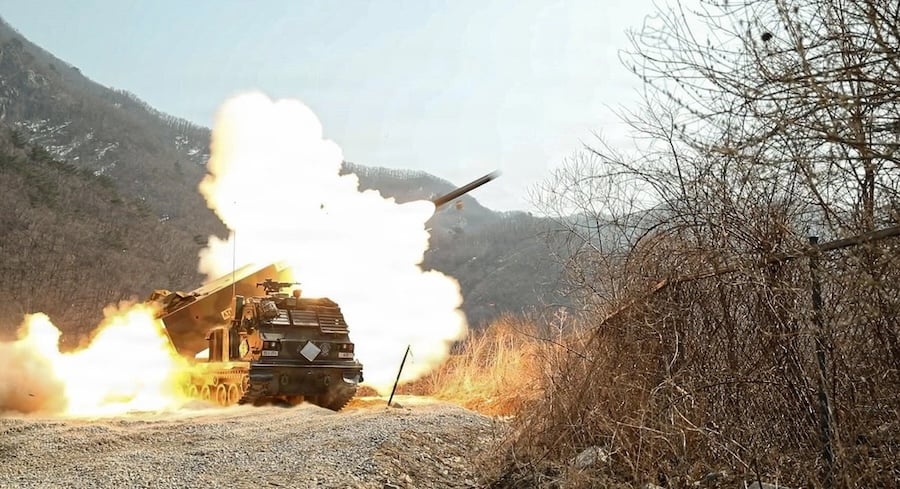
The investment is designed to preserve the M270’s battlefield role while integrating it more closely into the Army’s evolving fires architecture. The upgraded launchers will operate alongside HIMARS, joint-force units and allied systems rather than function as stand-alone platforms.
The M270A2 and M142 High Mobility Artillery Rocket System offer different combinations of mobility, protection and capacity. Both are built around the Common Fire Control System and use the same family of precision weapons.
That weapons portfolio includes GMLRS, Extended-Range GMLRS and the Precision Strike Missile. The shared architecture reduces differences in training and logistics while giving commanders more choice in how they employ each launcher.
The M270A2 provides the protection and carrying capacity of a tracked platform. HIMARS provides a lighter wheeled option with greater road mobility, making the two systems complementary within a common fires structure.
The M270A2 package includes a new engine, an Improved Armored Cab and the Common Fire Control System. Compatibility with next-generation weapons is intended to keep the launcher aligned with the wider precision-fires portfolio.
Interoperability also extends to U.S. allies and partners that operate M270 and HIMARS systems. The common fire-control and weapons architecture supports closer coordination across U.S. services and multinational forces.
The recapitalization goes beyond extending the operating life of existing launchers. It is intended to keep the M270A2 connected to joint and allied operations in a multidomain battlefield.
Source: Lockheed Martin.