The initiatives cover missile maintenance, regional manufacturing, launcher sustainment and supply chain expansion. They are focused on increasing the availability of critical systems while building more resilient defense production capacity across Europe.
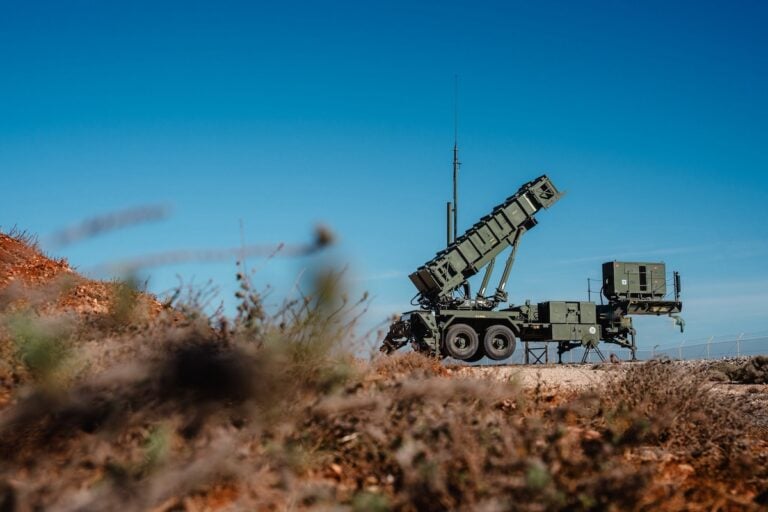
At the NATO Summit Defense Industry Forum in Ankara, Türkiye, the United States, Germany, the Netherlands, Poland and Sweden signed a joint statement of intent to explore a PAC-3 Missile Maintenance Facility in Europe. Lockheed Martin said the proposed facility would support in-region sustainment, recertification and repair, keeping PAC-3 missiles ready, reliable and rapidly deployable.
The company also signed a memorandum of understanding with Rheinmetall, with support from the U.S. and German governments. The agreement advances plans for the first European center of excellence for the manufacturing, integration and distribution of ATACMS for NATO and allied European forces.
Lockheed Martin said these projects reflect a shared NATO recognition that deterrence depends not only on capability, but also on speed, readiness and industrial partnerships. The company said demand from Europe and other allied customers continues to accelerate across integrated air and missile defense and tactical missile portfolios.
The company said it was the first in the industry to announce a framework agreement for munitions acceleration under the U.S. Department of War’s Acquisition Transformation Strategy. That agreement is intended to triple production capacity of the combat-proven PAC-3 MSE.
Lockheed Martin said further agreements would quadruple production of THAAD and the Precision Strike Missile, known as PrSM. The company said the direction is clear: customers need greater capacity and faster delivery.
For HIMARS, Lockheed Martin is investing in a build-ahead program designed to accelerate delivery of the combat-proven launcher. The company said the approach can fast-track part of a customer’s launcher requirement, enabling earlier initial operational capability and deliveries ahead of traditional production schedules.
Lockheed Martin also presented HIMARS FLEX as the next evolution of long-range precision fires for European demand. Built on the HIMARS platform, the system is designed to offer more firepower, autonomy and munitions options while retaining precision and deterrence.
The system’s FLEXFires technology allows scalable launcher configurations so operators can match the system to mission needs. Lockheed Martin said HIMARS FLEX can be mounted on a C-130-compatible chassis, adapted for maritime lift operations or fielded in land-based variants.
The company said customer-choice configurations would allow users to integrate the launcher onto an indigenous chassis and select their own munition mix. The system can also integrate autonomous reload capabilities, tailoring it to specific operational requirements.
Lockheed Martin said it is scaling precision fires production through European partnerships, stronger sovereign manufacturing and faster sustainment. The company described HIMARS FLEX as a way to turn industrial collaboration into operational advantage.
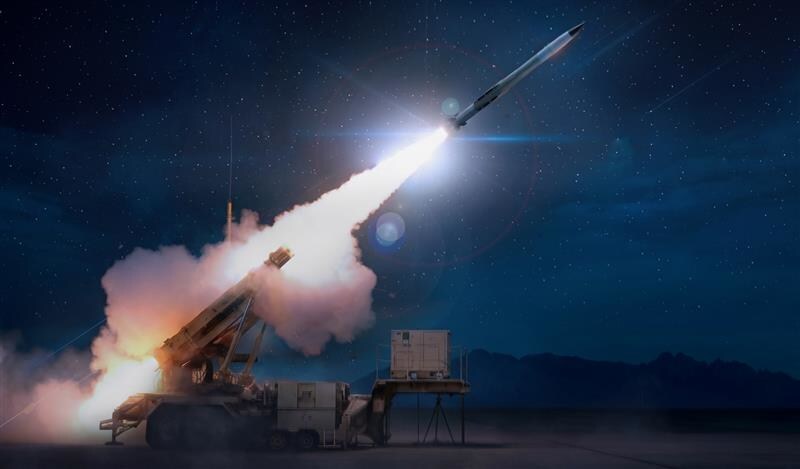
In missile defense, Lockheed Martin is also expanding work around the PAC-3 Affordable Capability Effector, or PAC-3 ACE. The company said PAC-3 ACE is a lower-cost interceptor designed to defeat a wide range of air and missile threats for less than half the unit cost of a PAC-3 MSE.
PAC-3 ACE is based on the proven PAC-3 fire control system and is fully linked to the Patriot weapon system and the Integrated Battle Command System. Lockheed Martin said that foundation is intended to speed development, testing and deployment compared with traditional programs.
The company is also building HIMARS sustainment capacity in Northern and Eastern Europe. Lockheed Martin is partnering with Estonia to establish a HIMARS sustainment center for the Baltic region and is deepening cooperation with Lithuania on security, defense and industrial opportunities.
In Finland, Lockheed Martin is working with technology company Insta to establish Europe’s first maintenance and sustainment capability for the M270A2 and HIMARS MLRS Common Fire Control System. The company said these efforts are intended to improve regional readiness through European partnerships.
Lockheed Martin said supply chain resilience has become a strategic advantage in the current security environment. It is expanding production and strengthening resilience through investments in suppliers, manufacturing capacity and industrial partnerships.
For PAC-3 MSE, the company said it has expanded component production in Spain with Grupo Oesía and Sener. It has also increased supply chain capacity in Germany through an agreement with Diehl Defence.
Lockheed Martin said long-standing partnerships with Polish defense firms further reinforce regional security and the global PAC-3 MSE supply chain. The company said those partnerships support engineering jobs, technology transfer and workforce development.
The broader strategy links production, sustainment and allied industrial cooperation to NATO deterrence. Lockheed Martin said deeper collaboration in Europe is intended to deliver capability at the speed of demand while building the defense industrial base needed for future readiness.