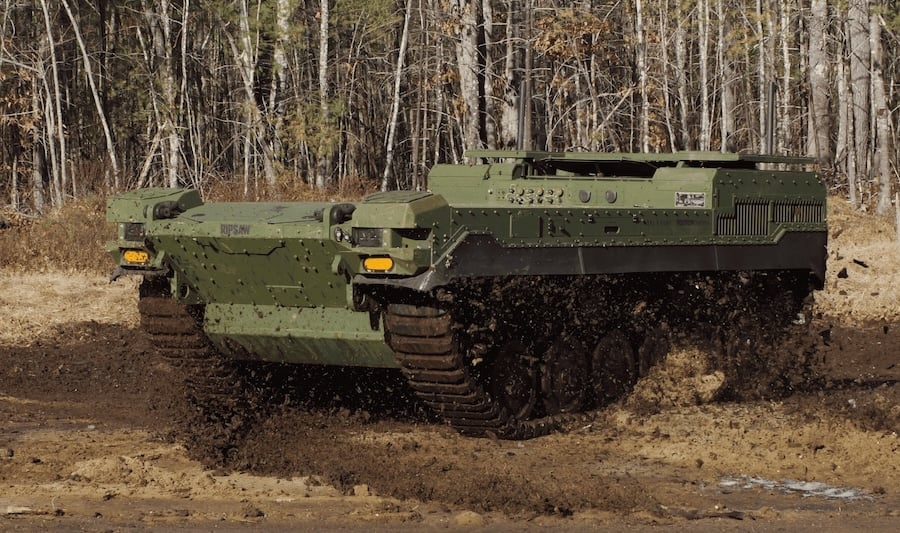
The lab will use the vehicles to test sensors and other payloads, demonstrate potential missions and help the service decide what it needs from future robotic systems.
The M3 has a flat deck that can carry more than 5,000 pounds of payload, and the vehicle can operate at speeds above 30 miles per hour, according to Textron Systems.
Its open, modular design allows the lab to fit different types of equipment to the same platform.
Sara Willett, vice president of programs at Textron Systems, said the work with the lab would help the Marine Corps “advance uncrewed force design and battlefield utility.”
Michael Howe, a senior vice president at Howe & Howe, said the company would work with the service to “develop technologies that fit their specific needs well into the future.”