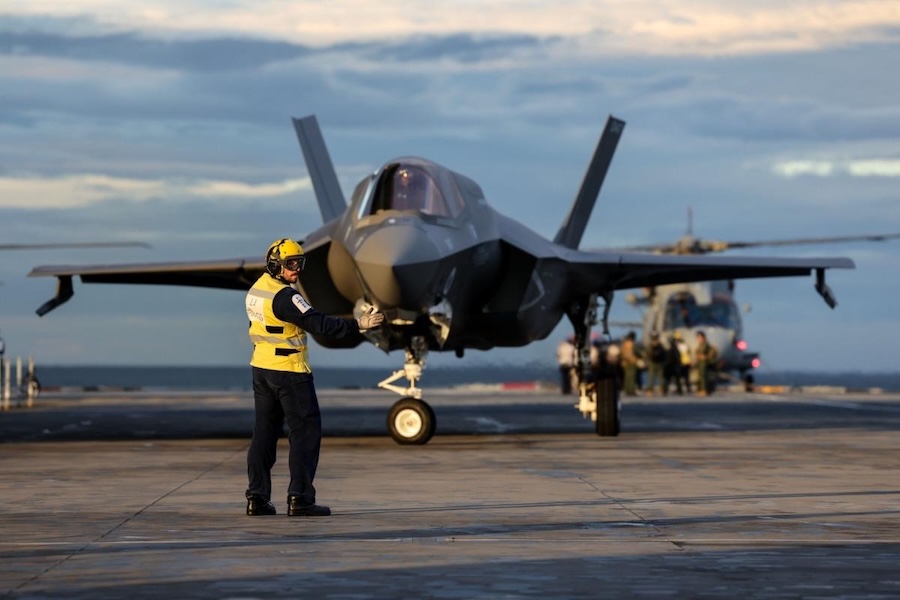
HMS Prince of Wales brings maritime and airpower capability to NATO’s northern flank. Its contribution is centred on F-35B Lightning II aircraft assigned to 809 Naval Air Squadron and Royal Air Force 617 Squadron.
NATO said the F-35B aircraft provide fifth-generation combat capability that can be rapidly projected across the region. The carrier group has participated in multiple Arctic Sentry activities this year.
In May, personnel and assets from the UK Carrier Strike Group took part in Exercise Dynamic Mongoose 2026. NATO described the exercise as its premier annual anti-submarine warfare and anti-surface warfare exercise.
Hosted by Norway and led by Allied Maritime Command, Dynamic Mongoose brought together Allied maritime and air assets. The exercise was intended to improve NATO’s ability to detect, track and counter undersea threats across the North Atlantic and Arctic regions.
The exercise integrated ships, submarines, maritime patrol aircraft and supporting command-and-control elements. NATO said this strengthened the Alliance’s ability to maintain situational awareness and freedom of manoeuvre in the North Atlantic and Arctic.
Dynamic Mongoose also demonstrated how Arctic Sentry synchronises increased activities under a common operational framework. The activity placed the UK Carrier Strike Group within wider NATO efforts to coordinate maritime operations in the High North.
During Exercise Ramstein Flag 2026, aircraft from the carrier group integrated with Allied air forces operating across Finland and the broader northern region. The activity took place under NATO operational command.
F-35Bs operated alongside Merlin and Wildcat helicopters during the exercise. NATO said the aircraft demonstrated the ability to project combat power from the maritime domain into European airspace while working with multinational air assets.
The carrier group also contributed to testing NATO Allied Air Command’s Agile Combat Employment concepts. Activities included air-to-air refuelling and highway-based hot-pit refuelling in Finland.
NATO said these activities helped refine the Alliance’s ability to disperse, sustain and employ combat airpower from multiple operating locations. The work also extended NATO’s operational reach across the High North.
Beyond maritime and air operations, HMS Prince of Wales provides medical support capabilities for sustained operations. Its embarked facilities include Role 2 medical support with emergency surgical capability.
This allows personnel to be rapidly assessed, stabilised and treated before transfer to higher levels of care. NATO said the capability strengthens the Alliance’s ability to sustain operations across the vast distances and austere environments of the Arctic and High North.