
Romania’s long-awaited procurement of next-generation infantry fighting vehicles (IFVs) is drawing increasing scrutiny from defence industry observers, as questions emerge over the transparency of the selection process.
Informed sources say concerns have surfaced regarding whether the programme continues to operate within a fully competitive framework. While no official decision has been announced, some sources warn that early signals perceived as favouring a particular platform could undermine confidence in the integrity of the procurement process.
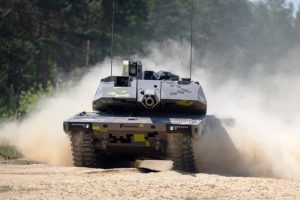
According to a military source who declined to be identified due to the sensitivity of the matter, a team from Germany’s Rheinmetall has recently engaged in requirement-level consultations with Romanian military authorities. The move could be interpreted as paving the way for the selection of Rheinmetall’s Lynx infantry fighting vehicle, currently produced at the company’s manufacturing facilities in Germany and Hungary.
Some observers have raised concerns that operational specifications could be adjusted or potentially downgraded in ways that align more closely with the characteristics of a particular platform, rather than reflecting a strictly capability-driven assessment of Romania’s long-term operational requirements.
Retired Major General Dan Grecu, President of the Association of Businesspeople in Romania (AORR), said that narrowing the competition prematurely could weaken the government’s negotiating leverage.
“Major defence procurement programs should be structured in a way that provides the state with maximum benefit, not only in terms of security, but also with regard to economic, industrial and strategic interests,” Grecu said. “Excluding potential competitors as early as the Request for Information stage means voluntarily giving up negotiating leverage and allowing the supplier to dictate the terms.”
He added that maintaining a competitive bidding process is also critical from a financial perspective, suggesting that even a price difference of just 5% in a program of this scale could represent roughly €150 million in additional expenditure and that negotiating exclusively with a single supplier may not serve Romania’s long-term national interest. This stands in stark contrast to the Romania’s recent fiscal climate, characterized by austerity measures and cuts to military pensions.
For a country seeking to reinforce its credibility as a leading NATO eastern flank state, procurement integrity carries strategic significance.
“The final IFV decision will shape not only the Romanian Armed Forces’ next generation of armoured capability, but also the long-term structure of Romania’s defence industrial ecosystem — and the confidence of international defence industry stakeholders observing the process,” said an industry observer.
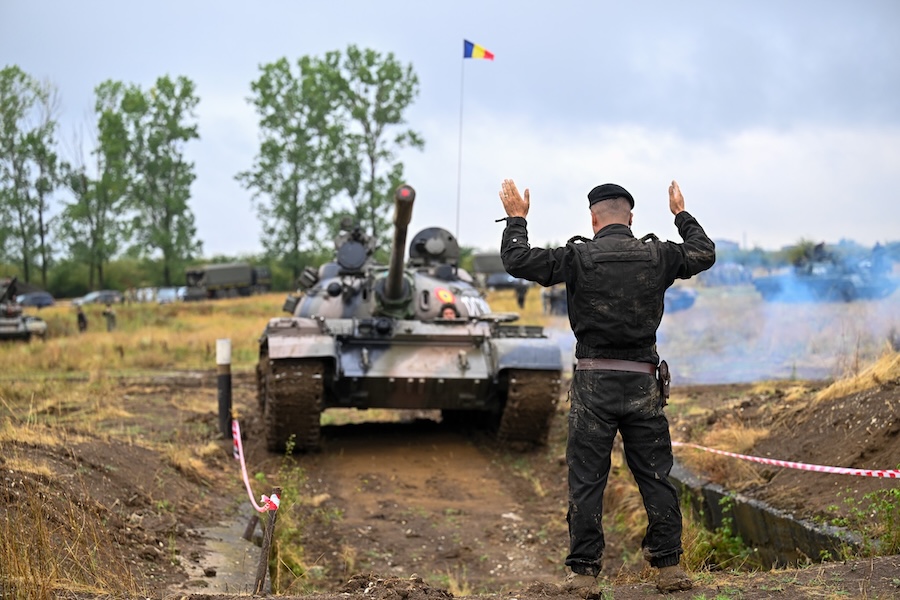
Romania’s MLI (Mașina de Luptă a Infanteriei) program is the country’s long-planned effort to procure next-generation infantry fighting vehicles. The program is aimed at delivering several hundred tracked armoured vehicles to replace ageing Soviet-era platforms still in service with the Romanian Armed Forces.
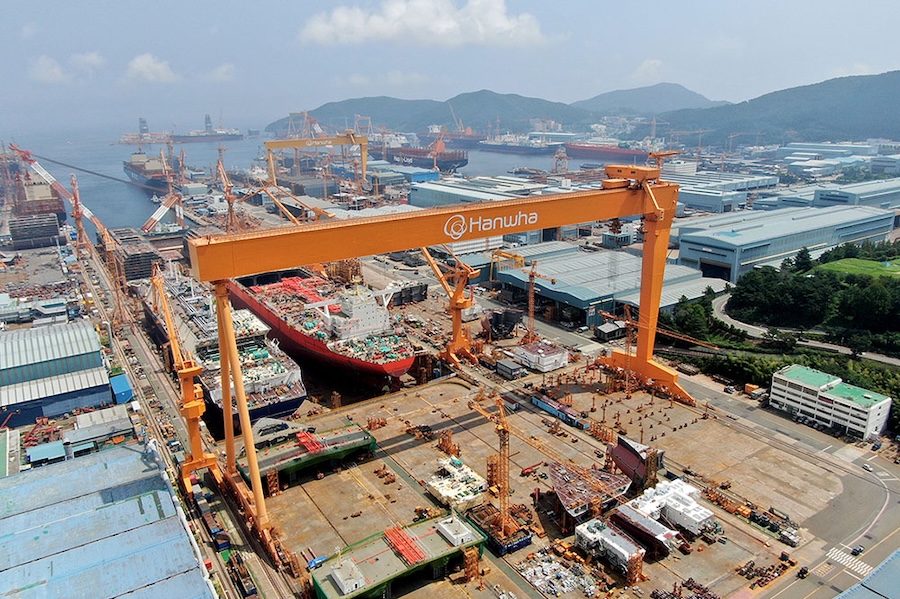
One of the largest land modernisation initiatives currently underway in Eastern Europe, the program has attracted significant international attention, with major defence manufacturers competing to supply the next generation of armoured vehicles while also proposing varying levels of industrial cooperation and local production within Romania. Bidders include Germany’s Rheinmetall with its Lynx IFV, Hanwha Aerospace Romania with the Redback, BAE Systems with the CV90 platform, and General Dynamics European Land Systems with the ASCOD family.
The debate over transparency comes at a time when Romania has increasingly positioned itself as a key NATO state on the Alliance’s eastern flank, assuming a growing role in regional deterrence and defence modernisation. Romanian policymakers have repeatedly emphasised that major defence acquisition programs should generate meaningful domestic industrial value, including local manufacturing, systems integration and long-term sustainment capability.
SAFE financing raises questions over domestic industrial impact
The IFV decision is unfolding against the backdrop of Romania’s intention to utilise the European Union’s Security Action for Europe (SAFE) instrument to support defence procurement financing. The SAFE framework is designed to strengthen EU-based defence manufacturing, but it could indirectly favour suppliers with existing production facilities elsewhere in the European Union rather than in Romania.
While SAFE-backed financing may ease near-term budgetary pressures, it ultimately represents loan-based funding that Romania would need to service over time. Moreover, proposals centred on production outside Romania — even if located within the European Union — may generate relatively lower levels of domestic industrial value compared with models built around deeper localisation, technology transfer and in-country manufacturing.
Speaking at a recent conference hosted by the National Bank of Romania (BNR), Senate Defence Committee President Nicoleta Pauliuc highlighted this concern, questioning how much of the economic value from major defence contracts actually remains within Romania.
“We know what we are buying,” Pauliuc said. “What we do not know is how much money from these contracts actually remains in Romania — not as a promise, but as a measurable contractual commitment. Out of each euro contracted, how many cents reach a Romanian factory, a Romanian engineer, a Romanian supplier?”
Under SAFE rules, at least 65% of contract value must be produced within the European Union. Pauliuc emphasised that while this guarantees European production, it does not ensure that manufacturing, systems integration or long-term sustainment activities will be anchored inside Romania.