The approach combines mission expertise with advanced AI technologies to improve speed and precision. It is aimed at enabling more complex and mission-critical space capabilities.
Over the past five years, the company has supported a range of major space achievements. These include contributing 7.2 million pounds of thrust for lunar missions, delivering record cargo to the International Space Station, extending the life of a commercial satellite through on-orbit servicing, and supporting the most powerful space observatory ever built.
Han Park, Vice President of AI Integration for Space Systems at Northrop Grumman, said: “Northrop Grumman’s legacy in space is built on groundbreaking, first-of-their-kind achievements.” He added: “By combining our unmatched mission expertise with cutting-edge AI technologies, we can advance space capabilities and missions to continue making history.”
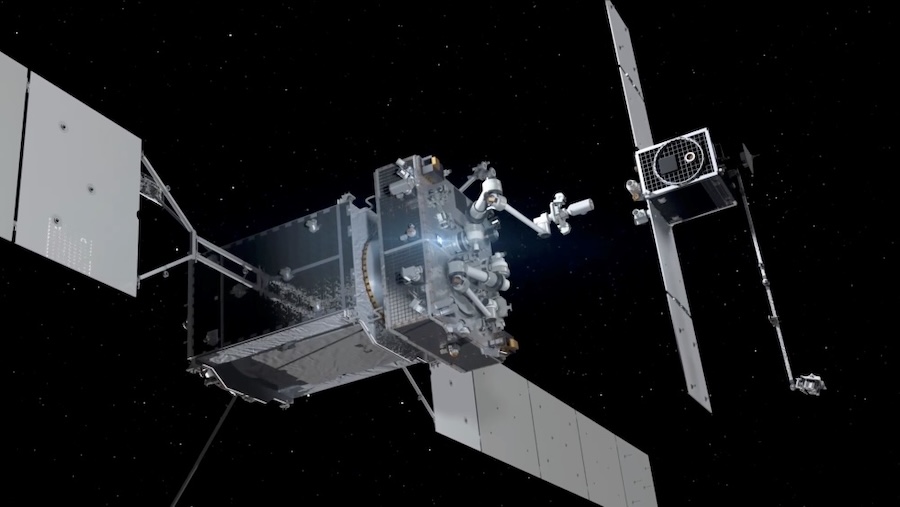
The company is working with Flexcompute, using NVIDIA-powered technology to develop specialised AI models. One such model predicts thruster impingement, a complex phenomenon where exhaust from spacecraft interacts with nearby surfaces.
This capability is important for missions requiring precision, including satellite servicing, docking and space robotics. The AI model enables accurate predictions in seconds rather than days, reducing development time by a factor of 100.
Qiqi Wang, Co-founder of Flexcompute and Associate Professor at MIT, said: “Northrop Grumman continues to build on their bold legacy in space through teaming with companies at the frontier of technological innovation, such as Flexcompute.” He added: “Our collaboration to develop an AI foundation model for problems as complex as plume impingement highlights how the previously unsolvable becomes achievable.”
NVIDIA is providing computational engineering support for the initiative. The collaboration uses NVIDIA PhysicsNeMo to accelerate complex simulations.
Tim Costa, Vice President and General Manager of Computational Engineering at NVIDIA, said: “The industry’s most ambitious space missions now demand a level of speed and precision that traditional engineering cycles can no longer sustain.” He added: “By integrating NVIDIA PhysicsNeMo, Northrop Grumman and Flexcompute are transforming complex simulations like plume impingement from days of compute into seconds of insight, drastically accelerating the path from mission concept to orbit.”
Park said the company is applying AI across the product lifecycle. “Today our industry demands unprecedented speed, and Northrop Grumman is integrating AI across the product lifecycle to meet that challenge,” he said.
He added: “With strategic collaborators, we are compressing decades of work into years, years into months, months into weeks, and weeks into hours to rapidly deliver superior space capabilities.” He said the company is also advancing physical AI for space applications.
“We’re leading in the development and implementation of physical AI for space applications, and we’re working to master and integrate all waves of AI on a path towards superintelligence for aerospace,” Park said. He added: “This is just the beginning. We go everywhere in space. We’re using AI to get there, and we’re bringing it with us to unlock new capabilities.”