The programme involved thousands of hours of engineering work to inspect, maintain and enhance the ship’s critical systems. These included propulsion, stabilisation and wider repair and renewal activity essential for operational deployment.
The work was delivered by a workforce of engineers, technicians and project specialists at Rosyth. The site is one of the largest waterside manufacturing and repair facilities in the United Kingdom.
The programme highlights Babcock’s role in supporting complex naval platforms. It also contributes to sustaining high-value jobs and maintaining specialist skills required for fleet support.
Phil Craig, Managing Director of Marine Programmes at Babcock, said: “This programme of work ensures that the carrier continues to meet the operational demands placed upon her.” He added: “At a time of increasing global uncertainty, the availability and capability of the UK’s aircraft carriers is more important than ever.”
He said the milestone reflects both collaboration and technical expertise. “This milestone reflects both the strength of collaboration and the depth of expertise required to sustain the Royal Navy’s most complex warships.”
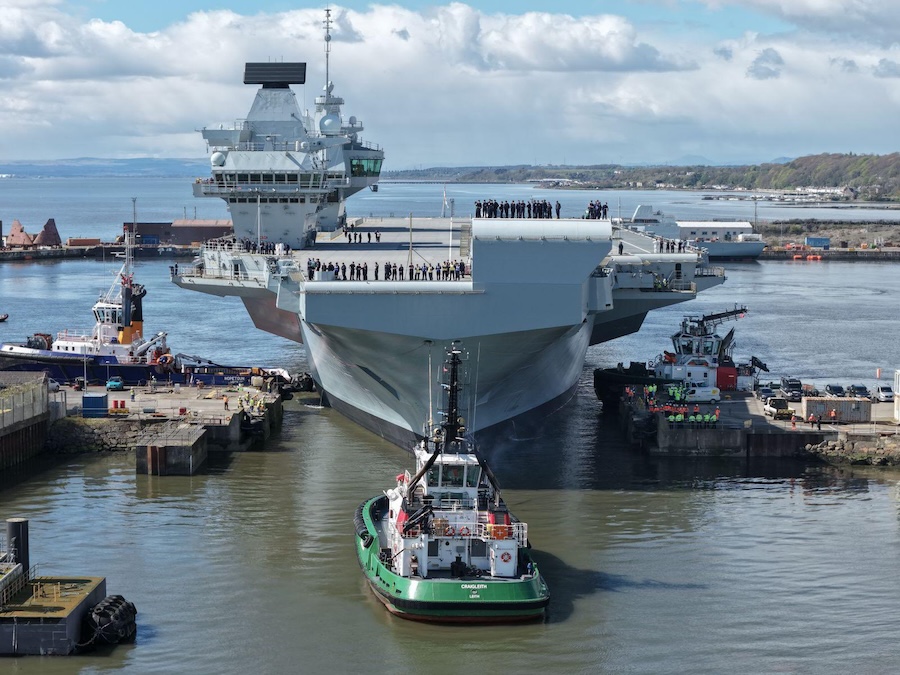
The Queen Elizabeth-class carriers, including HMS Queen Elizabeth and HMS Prince of Wales, each displace around 65,000 tonnes. They are the largest and most complex warships operated by the Royal Navy.
The maintenance period marked the fourth successful dry docking of a Queen Elizabeth-class carrier at Rosyth in seven years. The programme forms part of ongoing efforts to maintain operational readiness.
HMS Queen Elizabeth will now begin a period of sea trials. The carrier is expected to return to front-line duties, supporting the United Kingdom’s ability to project maritime power globally.