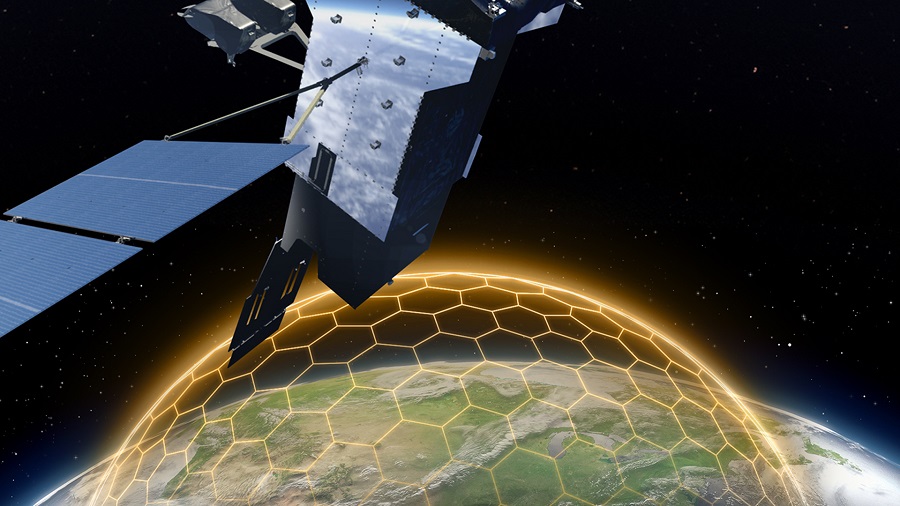



The contracts support development of on-orbit missile interceptors as part of the Golden Dome initiative. The program aims to build a layered missile defense system to protect the United States from advanced threats.
Officials said the Space Force plans to integrate the interceptors into the Golden Dome architecture by 2028. The long-term objective is to deploy a proliferated constellation in low-Earth orbit.
The system is intended to counter ballistic, hypersonic and other advanced missile threats. It will combine interceptors with space-based tracking and artificial intelligence.
The Space Force said: “Proven and formidable U.S. missile defense systems, combined with next-generation space-based tracking and advanced interceptors must be integrated with Artificial Intelligence to counter the speed, maneuverability, and lethality of the threats.” It added: “The [interceptor] program is addressing this gap by developing a proliferated Low Earth Orbit (pLEO) constellation of interceptors capable of boost, midcourse, and glide phase engagements.”
The service previously issued solicitations for prototype systems capable of intercepting missiles during boost and midcourse phases. These contracts expand those efforts by involving a broader set of industry partners.
Participating companies include Lockheed Martin, Northrop Grumman, Raytheon and SpaceX, among others. The program also includes nontraditional contractors to support innovation.
Col. Bryon McClain, Program Executive Officer for Space Power, said: “Adversary capabilities are advancing rapidly, and our acquisition strategies must move even faster to counter the growing speed and maneuverability of modern missile threats.” He added: “Utilizing Other Transaction Authority agreements, we attracted both traditional and nontraditional vendors, while harnessing American innovation, and ensuring continuous competition.”
He said the program will focus on delivering an initial capability within the planned timeline. “With the commitment and collaboration of these industry partners, the Space Force will demonstrate an initial capability in 2028,” McClain said.
Golden Dome Director Gen. Mike Guetlein said affordability will be a key factor in future development. “If boost-phase intercept from space is not affordable and scalable, we will not produce it because we have other options to get after it,” he said.
He also addressed cost estimates for the broader program. “I would say the biggest difference between what they are estimating and what we are building is they’re not estimating what I’m building,” Guetlein said.
The Golden Dome program is expected to require significant long-term investment. Funding requests include nearly $400 million in fiscal year 2027, alongside proposals for additional funding through budget legislation.
Officials said the initiative is designed to maintain a technological advantage against evolving threats. The program’s scale and cost will depend on future decisions regarding the size and deployment of the interceptor constellation.
Source: Space Systems Command (U.S. Space Force).