
Warnick said that strengthening the industrial base means more than meeting immediate needs. “That’s why we’re committed to domestic manufacturing and heavily investing in our U.S. facilities—not just to meet current needs, but to build a strong, flexible industrial base that can quickly respond to future challenges,” he explained. He stressed that the effort stretches across the supply chain and supports thousands of American jobs in the design, development and production of advanced vehicles and systems, including the company’s participation in the XM30 infantry combat vehicle programme.
The XM30, one of two competitors to replace the M2 Bradley Infantry Fighting Vehicle, is being advanced through Team Lynx, a consortium of US partners working with American Rheinmetall. “Team Lynx is the driving force behind our XM30 proposal as one of two competitors to replace the M2 Bradley Infantry Fighting Vehicle and redefine battlefield dominance,” Warnick wrote. He added that each partner brings specialised expertise to the programme, making the collaboration “something truly extraordinary.”
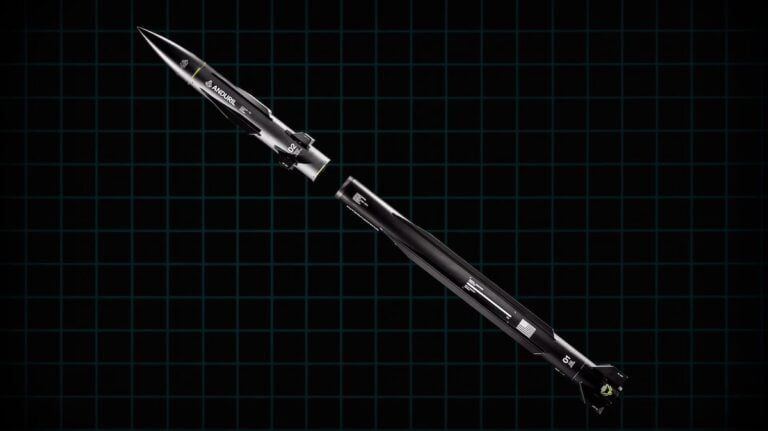
He pointed to contributions from key US companies. Textron Systems is supporting advanced manufacturing for efficient and high-quality production. Raytheon is contributing expertise in weapons systems to strengthen combat effectiveness. L3Harris is providing mission systems including advanced sensors and communications technology. Allison Transmission is responsible for power and mobility, and Anduril Industries is applying artificial intelligence and autonomy. Warnick said, “Together, we’re building a combat system that’s greater than the sum of its parts. It’s a testament to what can be achieved when great minds collaborate toward a common goal. The best part? This synergistic collaboration is happening right here in America, driving innovation and creating jobs across the country.”
Beyond technological capabilities, Warnick highlighted what he called a “sleeves-up partnership” approach with the Army. He stated, “We don’t simply show up with a finished product and say, ‘here it is.’ We believe in a ‘sleeves-up partnership,’ working side-by-side with our military customers to ensure our solutions meet their real-world needs.” He noted that Soldier touchpoints allow personnel to provide direct feedback on designs, while veterans working at American Rheinmetall ensure solutions are “informed by the Soldier, built for the Soldier.”
The CEO also underscored the importance of speeding development and fielding of new systems. He wrote that the company integrates advanced robotics, AI-driven quality control and digital twin technology into manufacturing to streamline production and reduce risks. According to Warnick, this process accelerates upgrades by enabling virtual simulations before physical builds, helping ensure modernised systems keep pace with evolving threats.
Artificial intelligence plays a central role in enhancing the XM30. Warnick explained that AI improves target acquisition, automated systems and predictive maintenance, turning the vehicle into “a truly intelligent battlefield asset that reduces cognitive load and allows Soldiers to focus on mission-critical decisions.” He added that its networked systems enable the platform to act as a mobile command and control centre, allowing real-time data sharing, collaborative targeting and seamless communication with other systems.
He stressed that these developments align with the Army’s vision for next-generation combat, showing that American Rheinmetall is anticipating future needs and building flexibility to adapt as technology evolves. “Every decision we make, every innovation we pursue, is guided by a single question: ‘How does this make our men and women in uniform more lethal, effective and survivable on today’s battlefields?’ That’s not just a business strategy—it’s our passion,” Warnick concluded.
Source: American Rheinmetall.