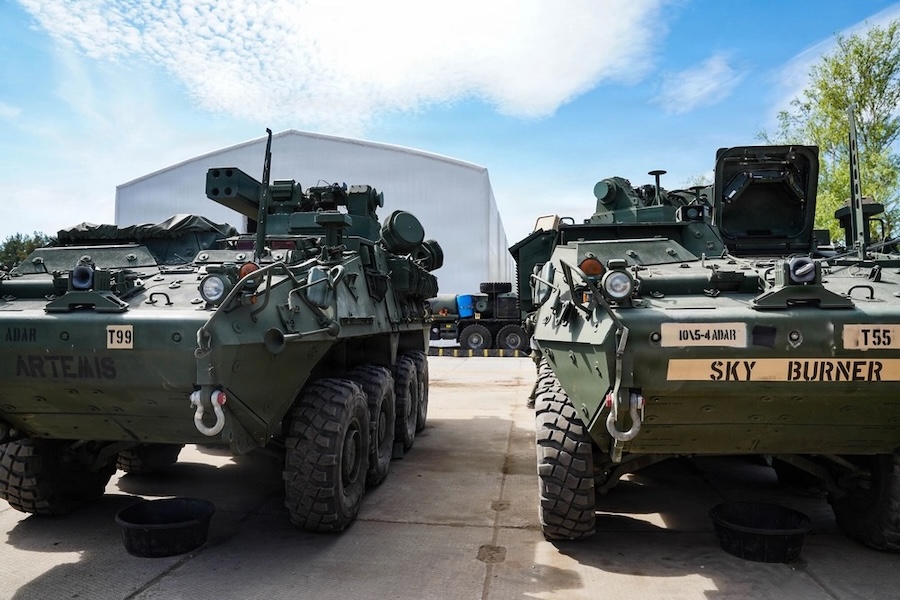
The unit was activated in April 2025 under the 5th Battalion, 4th Air Defense Artillery Regiment, 52d Air Defense Artillery Brigade. The Army said the formation evolved from an experimental platoon into a full battery dedicated to modernizing air defense capabilities at speed.
“T.I.E. Battery was founded as a forward-thinking air defense formation to rise to the challenge of transformation in contact,” said 1st Lt. Jake Licht, commander of the T.I.E. Battery. “Our mission is to capture lessons from the battlefield and bring them directly into training.”
The battery’s main role is to integrate new technologies quickly and adapt tactics in response to real-world air defense threats. According to Licht, the unit gives the Army a dedicated formation for experimentation at a level that did not previously exist.
“Before this, there wasn’t a dedicated formation focused on innovation and experimentation at this level,” Licht said. “By committing Soldiers to that mission, we’re able to rapidly integrate new capabilities and make the force more ready.”
T.I.E. Battery is organised around two main elements: an Innovation Platoon and a Tactical Platoon. The Innovation Platoon studies and develops new concepts, including commercial technologies and internal Army solutions, while the Tactical Platoon tests them in realistic field conditions.
“Our battery is completely dedicated to testing new equipment for Soldiers, by Soldiers,” said 2nd Lt. Owen Hintz, a platoon leader within the Tactical Platoon. “We’re able to get direct feedback at the lowest level and figure out what actually works before anything is fielded on a larger scale.”
The Army said the unit’s bottom-up approach is designed to ensure that the soldiers who will use the equipment directly influence its development. Hintz said this is especially important because junior soldiers are often the personnel who operate such systems in the field.
“At the end of the day, it’s going to be junior Soldiers using these systems,” Hintz said. “So it has to be them who decide if something works or not.”
For enlisted soldiers, the role provides direct involvement in experimentation and feedback. “Our leadership values our opinion,” said Pvt. 1st Class David Trowbridge, an air defense Soldier with T.I.E. Battery. “We get to talk to vendors, test the equipment ourselves and give our opinion before anything moves forward.”
The unit’s work also includes building and modifying systems to better understand how they function. Soldiers in the Innovation Platoon are using 3D printing, soldering and coding to design and assemble drones as part of the battery’s technology development effort.
“We 3D print drone bodies, solder components and build them ourselves,” Trowbridge said. “It gives us a better understanding of how they work, how to use them, and repair them if we ever need to in combat.”
Much of the battery’s current focus is on countering small drones, which the Army described as a growing threat in modern warfare. Hintz said the unit is responding to operational trends seen in conflicts around the world.
“Our battery has a big focus on drones right now because of what we’re seeing around the world,” Hintz said. “The drone threat is something we’ve never seen before, and we need to be able to keep up with it.”
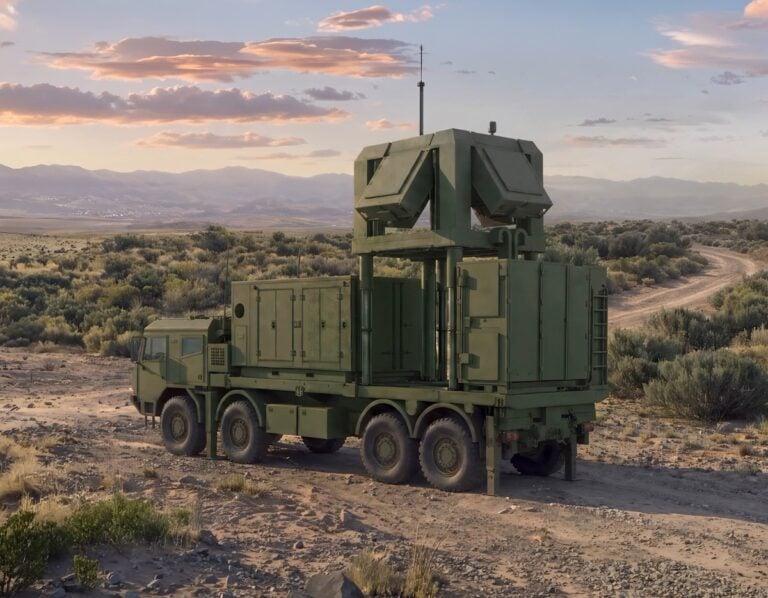
T.I.E. Battery is testing a range of counter-drone capabilities, including passive and active sensors, radar systems, mobile fire team weapons and low-cost interceptor drones. The goal is to identify systems that can detect, track and defeat small unmanned aerial threats efficiently.
“We’re out here to test equipment that can detect and engage small drones effectively,” said Spc. Titirrel Braynen, a SGT Stout gunner with T.I.E. Battery. “The goal is to pick them up early and take them down before they become a threat.”
The Army said the battery is already integrating these capabilities into training with manoeuvre units. T.I.E. soldiers provide technical expertise and operational support while helping other formations understand how to employ new systems.
“We get hands-on with these systems and become experts,” Hintz said. “Then we’re able to help other units understand how to use them effectively.”
Although the battery is relatively small, the Army said it works across a broad set of projects that require soldiers to learn quickly and adapt to new equipment. Hintz described the personnel assigned to the unit as carefully selected and highly adaptable.
“Our Soldiers are extremely agile, and hand picked” Hintz said. “They’re able to learn new equipment quickly and apply it in a tactical environment.”
For soldiers assigned to the Army’s first T.I.E. Battery in Europe, the mission is also tied to shaping future air defense operations. “We’re trying to pave the way for future air defenders,” Braynen said. “Not just for air defense, but for the Army as a whole.”
The Army said T.I.E. Battery is intended to serve as a model for rapid innovation by testing, refining and delivering capabilities that meet changing battlefield requirements. “If you don’t put equipment in the hands of Soldiers, you’re not going to know if it really works,” Hintz said. “That’s what we’re here to do.”