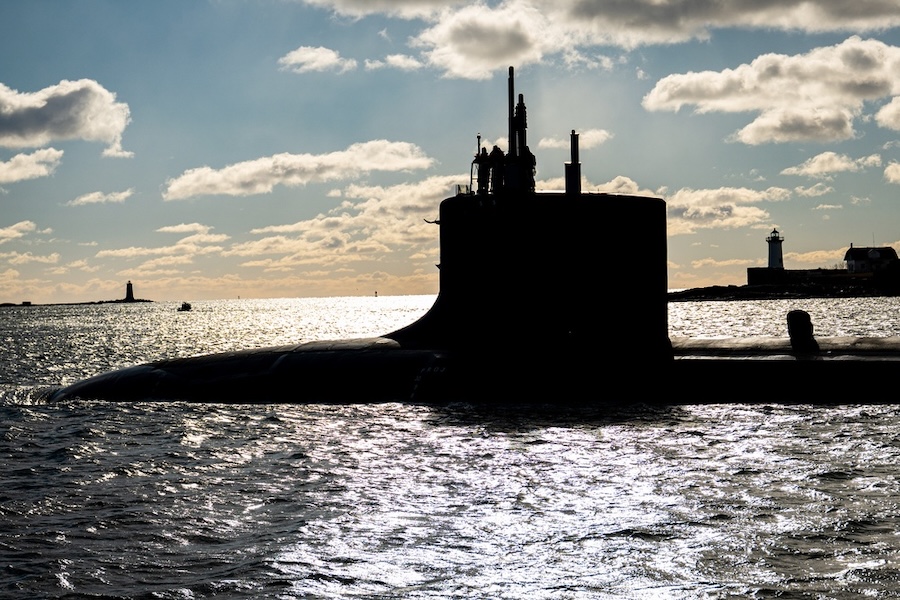
Australia’s Deputy Prime Minister and Minister for Defence, Richard Marles, announced the selection as part of broader efforts to prepare Australian industry to sustain and upgrade submarine combat systems domestically. Under the arrangement, Lockheed Martin Australia will work with the Australian Submarine Agency and ASC Pty Ltd, Australia’s sovereign submarine sustainment partner, to establish the technical workforce, industrial partnerships and infrastructure needed to support the submarines’ combat systems over their operational lifecycle.
The combat system forms a central element of a submarine’s operational capability, supporting lethality, effectiveness and survivability. According to the Australian government, the combat system integration partner will play a critical role in implementing and testing system upgrades while supporting Royal Australian Navy crews in maintenance and repair activities.
The government said Lockheed Martin Australia’s appointment would complement long-standing cooperative programmes between Australia and the United States focused on submarine combat systems and armament integration. Officials said the arrangement is intended to ensure Australia’s future fleet incorporates the latest technologies while maintaining an operational advantage in the undersea domain.
According to the Australian government, an estimated 100 additional jobs are expected to be created at Lockheed Martin Australia through the programme, with initial work to take place in Western Australia. The government said it will now begin developing an initial services contract with the company, expected to run for approximately two years.
Marles said: “AUKUS is on track and happening now.”
“The selection of the preferred Combat System Integration Partner is another significant milestone for Australia’s future fleet of Virginia class submarines,” he added. “By making these decisions now, we are ensuring our local industry and naval workforce is equipped with the skills it needs to operate and maintain conventionally-armed, nuclear-powered submarines which will protect our nation and keep Australians safe.”
Jeremy King, chief executive of Lockheed Martin Australia and New Zealand, said: “We are honoured to be selected as the preferred strategic partner to deliver this vital sovereign capability in partnership with the Australian Defence Force and Australian Industry.”
“The AUKUS Pillar 1 nuclear-powered submarine pathway—including combat system integration and sustainment—reinforces the industrial partnership of Australia, the UK and the US, securing a stable, open Indo-Pacific for generations. This critical capability empowers the Royal Australian Navy and its allies to maintain undersea superiority in the region,” King added.
Lockheed Martin said it will immediately begin expanding sovereign workforce capabilities through knowledge transfer and technical training based on decades of experience supporting submarine combat systems for the U.S. Navy and allied fleets. The company currently employs a combat systems integration workforce of more than 140 personnel supporting the Royal Australian Navy’s Hobart-class destroyers and future Hunter-class frigates.
King said: “Lockheed Martin Australia recognises the magnitude of this tri-nation endeavour. Our vision is to deliver enduring, cost-effective undersea dominance for Australia’s nuclear-powered submarine fleet – achieving this through deep partnership with the Commonwealth, industry, academia, and the navies of Australia, the United Kingdom and the United States.”
“By harnessing the full force of our sovereign and global combat systems integration experience and committing every necessary resource, we will deliver with excellence to support the realisation of Australia’s nuclear-powered submarine mission,” he added.
Pat Conroy said the programme would support long-term industrial development and workforce growth in Australia. “AUKUS will be the greatest industrial endeavour ever undertaken in Australia, generating around 20,000 jobs as part of a future made in Australia,” Conroy said.
“It will provide opportunities for Aussie workers to develop important technical skills and knowledge, strengthening our sovereign defence industry,” he added.
Stephanie C. Hill, president of Rotary and Mission Systems at Lockheed Martin, said: “We are committed to delivering this vital capability in partnership with the Australian Defence Force and Australian industry.”
“Drawing on decades of experience as the U.S. Navy’s submarine combat system integrator, we’re confident that our expertise will enable seamless interoperability between the Australian and U.S. navies, ensuring the SSN fleet is equipped to meet the evolving needs of the Indo-Pacific region,” Hill added.