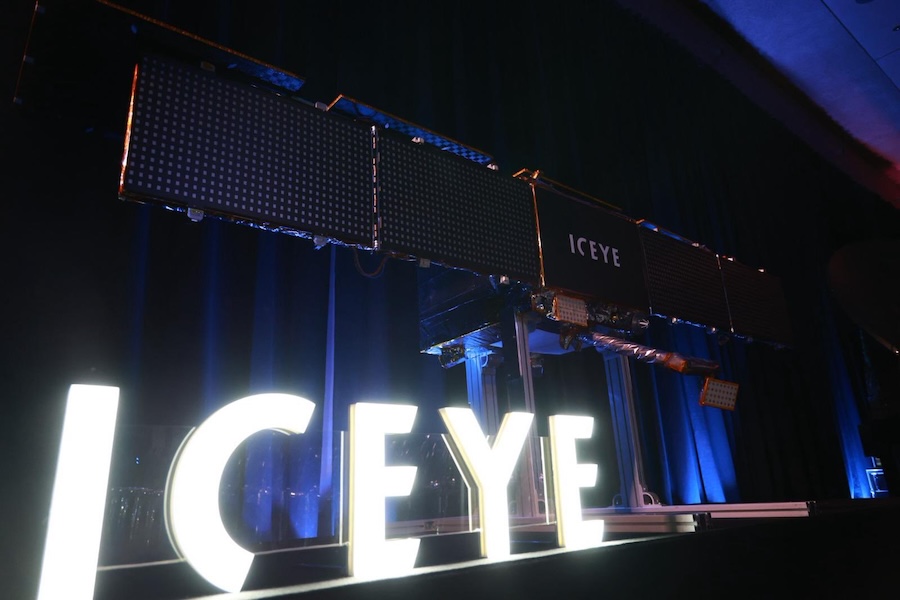
The approximately €200 million contract between ICEYE and Poland’s Ministry of National Defence was signed in May 2025, with independent operations beginning one year later under the country’s Geospatial Reconnaissance and Satellite Services Agency, known as ARGUS. During the implementation period, ICEYE built and launched four synthetic aperture radar satellites, including delivery of the programme’s initial three-satellite baseline within ten months of contract signing.
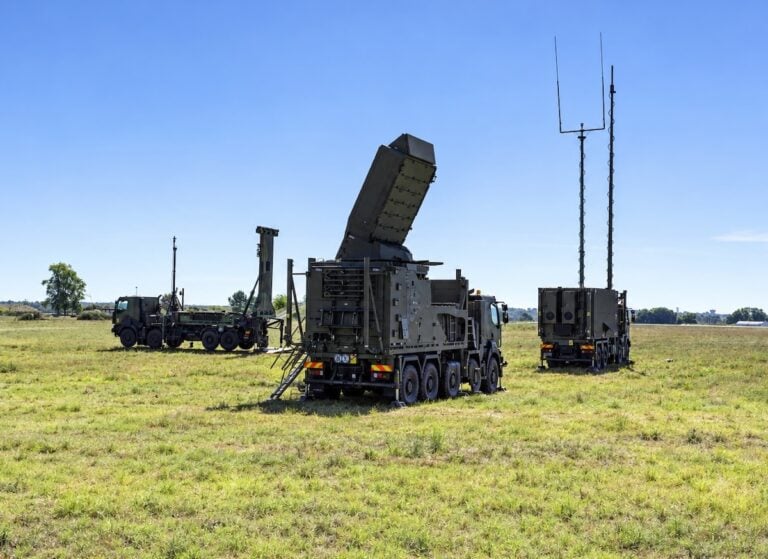
The programme was delivered through cooperation between ICEYE, acting as consortium leader, and Wojskowe Zakłady Łączności Nr 1, part of the Polska Grupa Zbrojeniowa, which provided the ground segment and mobile infrastructure. Polish military operators have completed training and now independently operate the satellite constellation.
Władysław Kosiniak-Kamysz said: “The handover of the POLSARIS satellite radar reconnaissance system to the Polish Armed Forces marks another important step in developing Poland’s modern intelligence-gathering capabilities.”
“We are investing in technologies that strengthen our security, information autonomy, and rapid response capabilities. Thanks to satellite Earth observation systems, the Polish military is gaining a tool of strategic importance,” he added.
According to ICEYE, the satellite system gives Poland full independence in radar-based reconnaissance, enabling imagery collection anywhere in the world regardless of time of day or weather conditions. Each satellite carries synthetic aperture radar capable of producing imagery with a resolution of up to 25 centimetres and can support missions ranging from wide-area surveillance to detailed observation of selected targets.
The constellation, now operated by ARGUS, was given the name POLSARIS through a public competition organised at the end of 2025. According to the Ministry of National Defence, the name was selected for both the clarity of its acronym, meaning Polish SAR Intelligence System, and its cultural reference to the novel Solaris by Polish writer Stanisław Lem.
Rafał Modrzewski, chief executive officer and co-founder of ICEYE, said: “We are proud to provide the Polish Armed Forces with a capability that strengthens their reconnaissance capacity and adds a new, space-based dimension to operations.”
“This success reflects close cooperation between the customer and supplier, built on trust, focus, and determination. Reaching operational readiness within one year of contract signing sets a new global benchmark. I believe that what we have achieved together in Poland can serve as an example for all of Europe – proof that ambitious space programs can be delivered on our own terms, to our own standards, and at the right pace,” Modrzewski added.
Leszek Paszkowski, head of ARGUS, described the system’s operational launch as a significant milestone for Poland’s defence capabilities. “The entry of the MikroSAR system into operational use is a significant moment in building the sovereign satellite reconnaissance capabilities of the Polish Armed Forces,” Paszkowski said.
“This is not only another stage in the development of Poland’s space capabilities, but above all a real strengthening of our reconnaissance and command support systems. Our own source of radar imagery, available regardless of the time of day or weather conditions, gives the Polish Armed Forces new opportunities to plan, respond, and operate in a dynamically changing security environment,” he added.