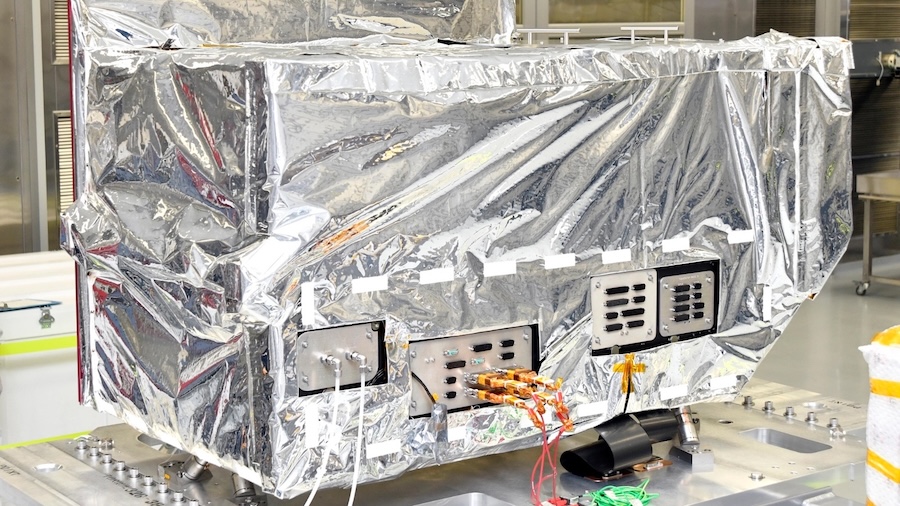
The NGP programme is designed to provide the U.S. Space Force with enhanced missile warning, technical intelligence and battlespace characterisation capabilities. The recently delivered components will support the assembly of the mission payload, known as Flight Unit 1, which is expected to enter its next development phase before launch.
According to BAE Systems, the sensor subassembly forms a key element of the payload and includes optics, a pointing mechanism, control electronics and an electrical bus interface connecting the spacecraft. The sensor system controller interfaces directly with the space vehicle, receiving commands, transmitting telemetry and managing power control and conversion for sensor assembly components, including high-accuracy mirror direction.
Thai Sheridan, vice president and general manager of Military Space for BAE Systems Space & Mission Systems, said: “We met multiple challenges across a multiyear timeframe to successfully deliver our components for the next stage of full payload assembly.”
“This program will provide essential next-generation defense and intelligence capabilities for the Space Force,” Sheridan added.
BAE Systems said the hardware was originally developed for the geosynchronous Earth orbit element of the programme but was later adapted for the NGP mission. The company stated that the design flexibility enabled the programme to meet demanding schedule requirements.
The company is also building a second flight unit for the NGP mission, which remains on schedule for delivery in support of an expected launch in 2030. According to BAE Systems, the programme is intended to strengthen the Space Force’s long-term missile warning architecture through advanced space-based sensing capabilities.