Woodburn made the comments during BAE Systems’ first-half 2026 earnings call. He said drones, counter-drone systems and autonomous capabilities were attracting increased investment and new competitors from outside the traditional defence industry.
“Areas such as drones, counter-drone systems, and autonomous capabilities are attracting significant investment in innovation,” Woodburn said. He added that producing equipment able to operate reliably in demanding military environments remained “an exceptionally complex challenge”.
BAE Systems plans to compete by combining operational knowledge with software, specialised hardware and systems-integration expertise. Woodburn also pointed to the group’s ability to increase production when customer demand requires greater scale.
“We’re not simply developing individual technologies,” he said. “We’re delivering mission-ready capabilities that work in real-world contested environments.”
The company’s autonomous-air portfolio covers systems ranging from low-cost, attritable aircraft to Collaborative Combat Aircraft. Woodburn said BAE Systems was concentrating on differentiated uncrewed capabilities where its software, operational understanding and industrial scale could provide an advantage.
He cited Taranis, the company’s long-range deep-strike uncrewed aircraft, as evidence of that approach. Woodburn said the system was “operating effectively in some of the most demanding and contested battlefield conditions in the world”.
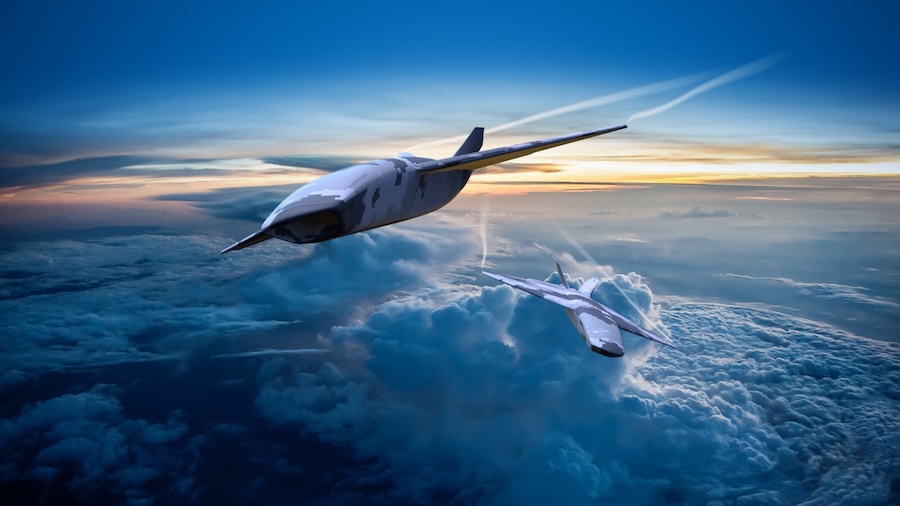
Woodburn also highlighted Brontanax, BAE Systems’ Collaborative Combat Aircraft unveiled at the Farnborough Airshow. He said the programme had been “entirely self-funded”, demonstrating the group’s willingness to invest in new capabilities before firm customer demand emerges.
The chief executive presented autonomous systems as complementary to major military platforms. He said drones and other uncrewed capabilities would operate alongside larger and more complex systems rather than replace them.
Woodburn returned to that argument when discussing the UK’s Defence Investment Plan. He said autonomous systems were an increasingly important part of warfare, but nuclear submarines and other major platforms still delivered capabilities that unmanned systems could not provide.
“It’s that combination that we should be focused on,” Woodburn said. He described the plan’s allocation for drones and autonomous systems as a significant increase from previous funding levels.
BAE Systems expects complex, high-end platforms to remain the larger commercial opportunity. Affordable mass systems represent a smaller market, but Woodburn said the segment was growing rapidly and would contribute to the group’s long-term outlook.