The demonstrations included an integrated gun system and a complete electronic warfare engagement chain. Operators used the system to identify changing drone threats and coordinate responses in real time.
One architecture for detection and engagement
BATS, or BAE Systems Anti Threat System, is a software-defined solution combining detection, intelligence data fusion and analysis, command and control, decision support and countermeasures. Its modular design accommodates current and future BAE Systems sensors and effectors alongside equipment from other manufacturers.
The architecture is intended to support scalable, layered defence while retaining meaningful human oversight. Operators make decisions based on the context and nature of the threat.
Trials covered three operational scenarios
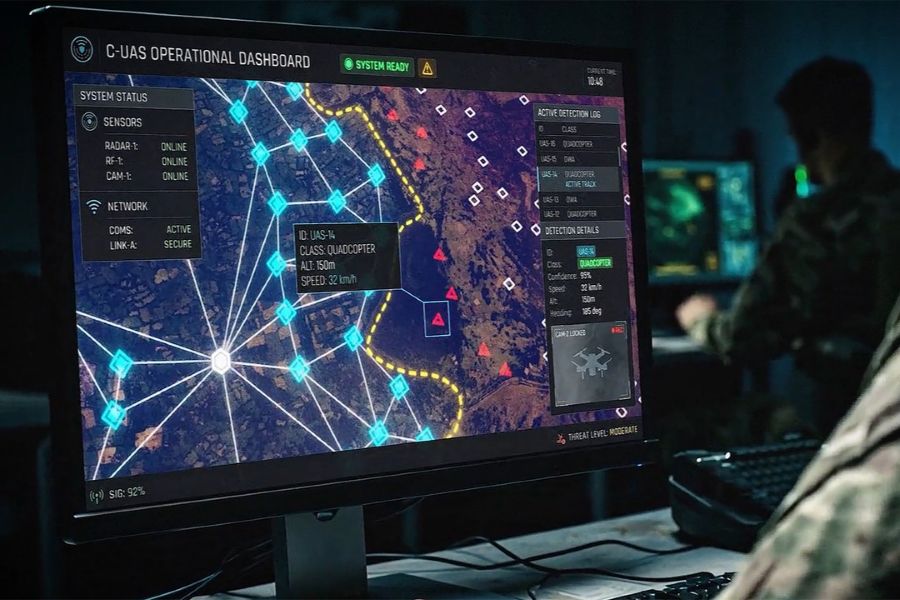
The first scenario tested whether information from multiple sensors could be combined into a common operational picture. Operators detected, identified and tracked airborne objects while distinguishing threats from non-threatening activity.
The second scenario demonstrated the integration of electronic warfare systems and software-defined radio technology. Operators applied non-kinetic countermeasures to confirmed targets in near real time.
The third scenario tested the full detection-to-engagement process in a more complex tactical setting. Operators confirmed different categories of drones and selected an appropriate effector for each threat.
Reducing workload and sharing threat information
BATS is designed to reduce cognitive workload by giving operators one integrated system for detecting, confirming and countering drones. The trials demonstrated coordination of those functions with the available response options.
The tests also examined secure sharing of threat information between multiple locations to support future network-centric operations. This is intended to provide a broader airspace picture and improve coordination and responses across dispersed sites.