The Ministry of Defence said the investment would deliver the production increase set out in the 2025 Strategic Defence Review. It forms part of a wider reprioritisation of the Defence Nuclear Enterprise on a scale not seen since the end of the Cold War.
The enterprise is managing hundreds of projects across two submarine construction programmes, another class in design, a replacement warhead and a new nuclear fuels programme. Delivering them simultaneously requires extensive upgrades to Britain’s manufacturing capacity, specialist workforce and supporting infrastructure.
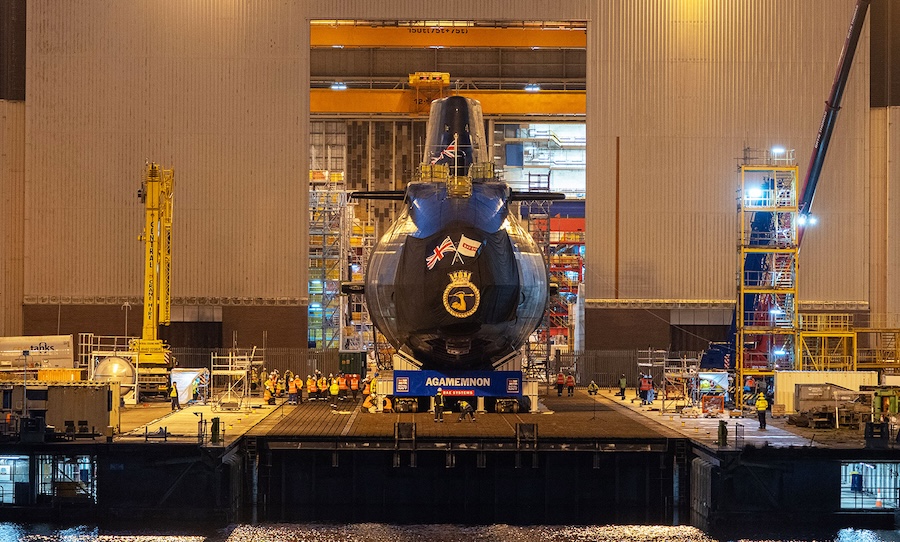
BAE Systems’ Barrow-in-Furness operation remains the centre of submarine construction, employing approximately 13,500 people. The site builds all of Britain’s nuclear-powered submarines and will produce both the Dreadnought class and the future SSN-AUKUS fleet.
Four Dreadnought-class ballistic missile submarines will replace the Vanguard fleet from the early 2030s and maintain Britain’s Continuous At Sea Deterrence. The programme will support more than 30,000 UK jobs at its peak and is described by the Ministry of Defence as the country’s largest engineering project.
Dreadnought is being delivered through an alliance involving the Ministry of Defence, BAE Systems and Rolls-Royce. At more than 150 metres long, the boats will be the largest submarines ever operated by the Royal Navy and will be capable of launching Trident II D5 ballistic missiles.
Britain is also completing the nuclear-powered and conventionally armed Astute-class attack submarines while developing their SSN-AUKUS successor with the United States and Australia. The government plans to increase the Royal Navy’s attack submarine fleet to as many as 12 boats.
SSN-AUKUS is expected to become operational by the late 2030s and support 21,000 jobs across the UK. The wider AUKUS partnership is also expected to generate multi-billion-pound investment in British industry while helping Australia develop its submarine industrial base.
The production expansion reaches beyond final assembly at Barrow. Rolls-Royce Submarines employs around 4,000 people at its main reactor development and manufacturing site, while Sheffield Forgemasters produces specialised castings and forgings used in submarine reactor cores.
Submarine maintenance is concentrated at HMNB Devonport and Babcock’s Devonport Royal Dockyard, where approximately 8,000 people work across naval and industrial operations. The sites provide deep maintenance, refuelling, defuelling and through-life support.
Rosyth Dockyard employs about 850 people and dismantles submarines that have left service, working alongside Devonport. The Submarine Delivery Agency has another 2,500 personnel responsible for managing the delivery of Britain’s submarine programmes.
The scale of the investment is driving demand for additional scientists, engineers and skilled trades. Britain’s Defence Nuclear Enterprise currently supports an estimated 47,600 jobs, with workforce demand expected to reach around 65,000 by 2030.
The government and its partners aim to double defence nuclear apprentice and graduate intakes. Their plans provide for 22,000 apprenticeships and 9,000 graduate positions over the next decade, alongside training for welders, electricians and mechanical fitters.
More than 6,000 UK-based companies participate in the defence nuclear supply chain, with significant investment concentrated in north-west and south-west England and western Scotland. The government is also backing local development through initiatives including the £200 million Barrow Transformation Fund.
Britain plans multi-billion-pound research and development spending across the Defence Nuclear Enterprise over the next decade. It is also seeking closer coordination with the civil nuclear sector on investment, skills and supply chains as submarine production expands.