
The UK Government published the commitments in its UK Space Strategy on 8 September 2026. The document sets priorities through 2030 and longer-term objectives to 2035, supported by more than £7.8 billion in funding to 2029/30 across civil and defence activities.
Military requirements for space control
The policy reflects a change in how Britain assesses the military importance of space. The strategy describes a domain that supports operations on Earth but is also a place where British interests face direct threats.
States are investing in capabilities to disrupt, degrade or deny space-based services and project power through space. Military, civilian and commercial users increasingly share infrastructure, making the resilience of satellites, ground systems and supply chains a wider national security requirement.
Britain’s response is framed around its Control of Space Requirement. This combines the ability to maintain freedom of action and manoeuvre, protect UK and allied space interests, and deny adversaries the same freedoms.
The government intends to establish an integrated approach to meeting that requirement across all orbital domains. It will use military, diplomatic, regulatory and legal measures to deter threats and protect national interests.
The strategy explicitly states that effective space control operations will be both defensive and offensive in nature. They will require the integration of Space Domain Awareness, command and control, and layered response options.
The operational sequence is to understand activity in space, assess its implications, decide on a response and act in time to protect national interests. The government links credible space control to stronger deterrence, reduced opportunities for coercion and greater resilience for services supporting military operations.
The £880 million commitment covers ISR and space control together, rather than providing a separate budget for offensive capabilities. The document does not identify particular weapons or methods for denying adversaries freedom of action.
Connecting civil technologies with defence capabilities
Delivery will draw heavily on space surveillance and in-orbit servicing, assembly and manufacturing technologies. The government intends to align civil activity in these areas with defence requirements while supporting commercially viable businesses.
The Ministry of Defence and the Department for Business, Innovation, Science and Trade will establish a roadmap connecting these technology programmes. Forthcoming updates to defence space policy will set out the links between surveillance, in-orbit capabilities and space control.
The roadmap will also address specialist operational expertise and dedicated organisations capable of delivering space control effects. Those organisations will be expected to integrate their capabilities into wider joint military and allied operations.
Space surveillance and sovereign command systems
Space Domain Awareness provides the information needed to detect, track, characterise and assess objects and activities in orbit. The strategy identifies it as a foundation for space control and an essential component of the Digital Targeting Web.
Britain wants surveillance systems that remain interoperable with allies while meeting national sovereignty requirements. By 2035, it aims to have nationally separable capabilities supporting sovereign military and civil operations and reducing dependence on others.
Nationally separable capability means retaining the technical ability to operate critical systems independently when necessary. Under this approach, Britain can contribute to international or commercial projects while preserving the ability to use essential capabilities on its own.
The government is committing £274 million in civil funding to Space Domain Awareness during 2026/27–2029/30. This includes £85 million for the National Space Operations Centre to improve monitoring of the space environment, collision warnings and early warning of missile launches.
The centre already provides analysis for military operations worldwide. In 2025, its Military Operations team analysed and reported more than 1,950 missile warning events and 305 global launch attempts, producing more than 25,000 space products.
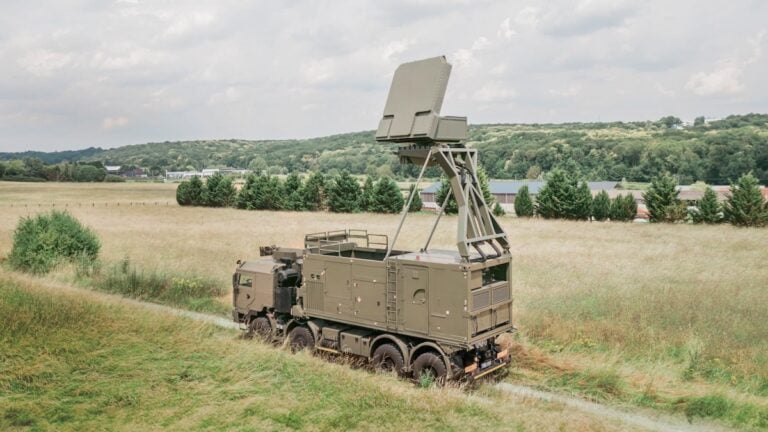
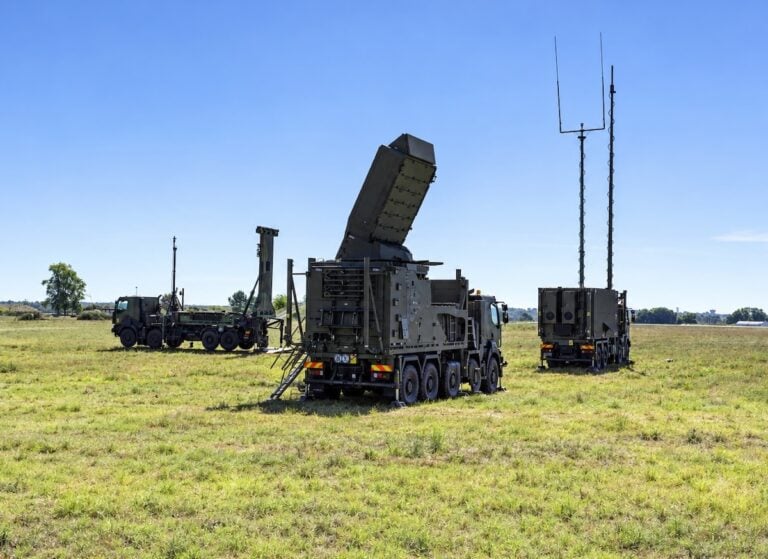
Further defence activity includes the Deep Space Advanced Radar Capability, operated jointly with the United States and Australia. The programme will deliver ground-based radars to improve awareness of objects in deep space and orbit.
BOREALIS will provide a sovereign command and control data processing system supporting government decisions. Its planned functions include analysing, interpreting and verifying complex data, alongside tasking sensors.
In-orbit servicing and the 2035 military objective
In-orbit servicing offers another source of technologies relevant to defence. It includes the ability to maintain, move, repair and build spacecraft, extend satellite operating lives, refuel ageing assets and remove debris.
By 2030, Britain aims to have demonstrated rendezvous, proximity operations and docking technologies for servicing missions and contributions to space control. It also plans an integrated programme of civil and defence activity supporting asset life extension, defence requirements and responsible operations in space.
The longer-term objective is a significantly expanded set of military space capabilities by 2035. These are intended to support nationally separable space control and meet allied defence needs.
The government has committed £117 million in civil funding to in-orbit servicing, assembly and manufacturing during 2026/27–2029/30. This comprises up to £77 million for a national active debris removal mission and £40 million for technology demonstrations and capability development.
Funding will prioritise capabilities with credible routes to commercialisation and a strong contribution to defence and national security. The government expects industry to establish flight experience, secure repeatable commercial missions and turn technological progress into sustainable revenue.
Procurement and cooperation with allies
The procurement model will change alongside the technology investment through the introduction of an Enterprise Space Category across government. The approach will provide clearer routes to contracts and a published demand pipeline, helping suppliers assess future opportunities and investment requirements.
The government will also consider acting as an anchor customer where it has clear capability requirements. Its wider industrial policy favours fewer, higher-value grants and requires evidence of previous research impact before repeat business funding.
Britain will pursue these capabilities alongside cooperation through NATO, the Combined Space Operations Initiative and Operation OLYMPIC DEFENDER. The strategy combines the objective of independent national action with closer integration of military space capabilities among allies.
Source: UK Space Strategy.