
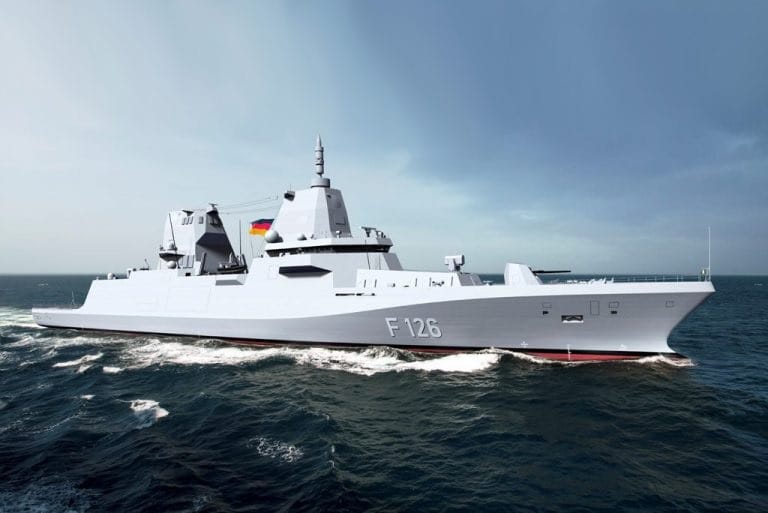
The decision was taken because of major delays, steep cost growth and what the ministry assessed as unpredictable programme risk. The F126 frigates, previously known as Mehrzweckkampfschiffe 180 or MKS180 multi-purpose combat ships, were intended primarily for anti-submarine warfare.
Construction had been awarded to the Dutch shipbuilding group Damen Schelde Naval Shipbuilding, now Damen Naval. Damen won the tender and signed a contract with the Federal Office of Bundeswehr Equipment, Information Technology and In-Service Support on 19 June 2020.
The contract included an option for another two ships, and that option was later exercised. The vessels had been expected to enter service from 2028, with the sixth ship closing the programme in 2033.
The first four ships were expected to cost about €4.6 billion, while the two additional vessels were expected to cost about €2.5 billion. The final programme cost was later expected to reach about €10 billion.
With a displacement of about 10,000 tonnes and a length of 166 metres, the ships would have been comparable in size to destroyers. They were intended to become the largest combat units built in Germany since 1945.
Damen, originally selected as the prime contractor, was not able to keep to the agreed schedule and budget. As a result, the Federal Ministry of Defence began a detailed assessment in 2025 of a possible change of prime contractor to Naval Vessels Lürssen B.V. & Co. KG.
NVL is now part of the Rheinmetall AG industrial group. The assessment found that continuing the project in its current state would involve significant additional costs.
A contract with NVL to build six F126 frigates would have cost about €15.2 billion. Additional costs would also have included services already provided under the previous agreement with DSNS and necessary supply and support contracts.
Those factors would have raised the overall cost of the programme to more than €18 billion, or about PLN77.2 billion. Much of the equipment and many systems had already been ordered.
If the general contractor were changed, the federal government would also have had to waive possible compensation claims against the previous contractor. The ministry viewed that as inconsistent with responsible management of budget funds, while the level of those claims is now subject to legal analysis.
The cancellation leaves the German Navy with an operational gap in anti-submarine warfare capability. To address the problem more quickly, Berlin plans to move to an available solution rather than continue the F126 programme.
Under the ministry’s plan, the German Navy would receive eight MEKO A200 DEU frigates instead of six F126 ships. Inspector of the Navy Vice Admiral Jan Christian Kaack said these ships would allow the navy to perform its core anti-submarine warfare mission and meet NATO commitments.
The ministry intends to present the basis for a decision on the purchase of MEKO A200 DEU frigates to the Bundestag Budget Committee as soon as possible. The ships are likely to receive the Klasse F128 designation.
The purchase price for the first four MEKO A200 DEU frigates would be about €6.3 billion. An option for four additional ships could be exercised by the end of 2026 for about €5.3 billion.
The roughly 5% increase in MEKO costs compared with the original planned amount resulted from the conversion of an industry estimate into a binding contractual offer from TKMS. TKMS is the shipbuilder with which the contract is expected to be concluded.
MEKO A200 frigates are already operated by the navies of South Africa, Algeria and Egypt. South Africa operates four ships that entered service in 2006-2007, Algeria operates two from 2016-2017, and Egypt has four from 2022-2023, with the last still under construction.
The configuration of the combat system for the German version has not yet been disclosed. The planned move to MEKO A200 DEU is intended to replace the cancelled F126 programme while restoring anti-submarine warfare capability within a more predictable procurement path.