
The announcements were made during Hanwha’s BC Innovation Day in Victoria, British Columbia. The event brought together more than 250 participants representing more than 100 companies, organisations and institutions from Canada and Korea.
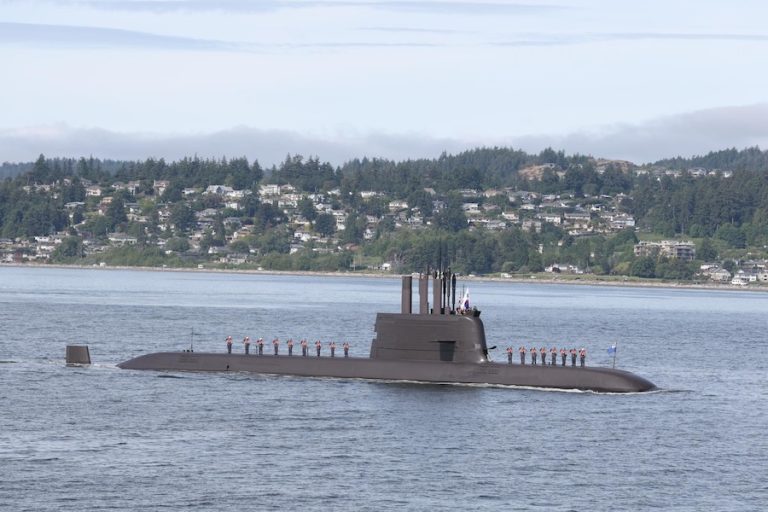
The event took place two days after the arrival of the Republic of Korea Navy’s KSS-III submarine at CFB Esquimalt. Hanwha said the arrival demonstrated that the submarine is tested, proven, in service, in active production and positioned as a low-risk and fast-delivery option for the Canadian Patrol Submarine Project.
The event included participation from Ki-Mo Lim, Ambassador of the Republic of Korea to Canada, British Columbia officials and representatives from Canada’s defence, industrial, academic, energy and technology sectors. Hanwha said the partnerships cover areas including critical minerals, energy, advanced manufacturing, Arctic technologies, artificial intelligence and digital infrastructure.
“Canada possesses exceptional strengths across shipbuilding, Arctic research, advanced manufacturing, energy, artificial intelligence, and critical minerals,” said Hee Cheul (Charles) Kim, President & CEO of Hanwha Ocean.
“Through these partnerships, we are proud to deepen our collaboration with Canadian industry, academia, and research organizations while supporting innovation, workforce development, industrial growth, and stronger Canada–Korea cooperation,” Kim said.
The agreements include industry and strategic investment cooperation with Defense Metals, Azure Sustainable Fuels and Skeena Data Centres. They also include research and innovation cooperation with Canadian universities and technology organisations focused on Arctic technologies, autonomous systems, advanced manufacturing, maritime engineering and workforce development.
Hanwha Ocean and Hanwha Corporation Global Division signed an MOU with Defense Metals to explore rare earth supply cooperation, strategic investment opportunities and downstream collaboration in Canada. Hanwha Ocean also signed an MOU with Azure Sustainable Fuels to explore potential investment opportunities linked to sustainable aviation fuel technologies.
Hanwha Energy USA Holdings and Skeena Data Centres signed an MOU to explore cooperation on digital infrastructure and energy development projects in British Columbia. This includes possible investment in data centre facilities and related energy infrastructure.
Hanwha Ocean also signed MOUs with Novarc Technologies, Simon Fraser University, the University of British Columbia, Ocean Networks Canada and the University of Victoria, Memorial University of Newfoundland, and the University of Waterloo. The areas of cooperation include welding automation, AI-enabled manufacturing, Arctic-capable vessel technologies, intelligent automation, underwater and Arctic surveillance, and advanced materials.
Hanwha Ocean, Memorial University and Canada’s National Research Council also announced a collaborative research agreement. The work will focus on underwater sensing technologies related to ship-ice interaction monitoring and Arctic maritime operations.
Hanwha said it now has agreements in place with more than 70 Canadian companies, institutions, universities and research organisations. The company said that, if selected for the Canadian Patrol Submarine Project, its approach is projected to support more than $70 billion in trade and investment, more than 25,000 jobs annually and more than $100 billion in gross domestic product.
Hanwha Ocean said its KSS-III submarine meets and exceeds all requirements for the Canadian Patrol Submarine Project. The company said the submarine offers underwater surveillance capability, Arctic deployability, extended range and endurance, stealth, persistence and lethality across Canada’s three oceans.
The KSS-III is a diesel-electric submarine class that integrates air independent propulsion technology and lithium-ion battery systems. Hanwha said the platform also includes acoustic quieting technologies and a combat system architecture able to deploy weapons including torpedoes and cruise missiles.