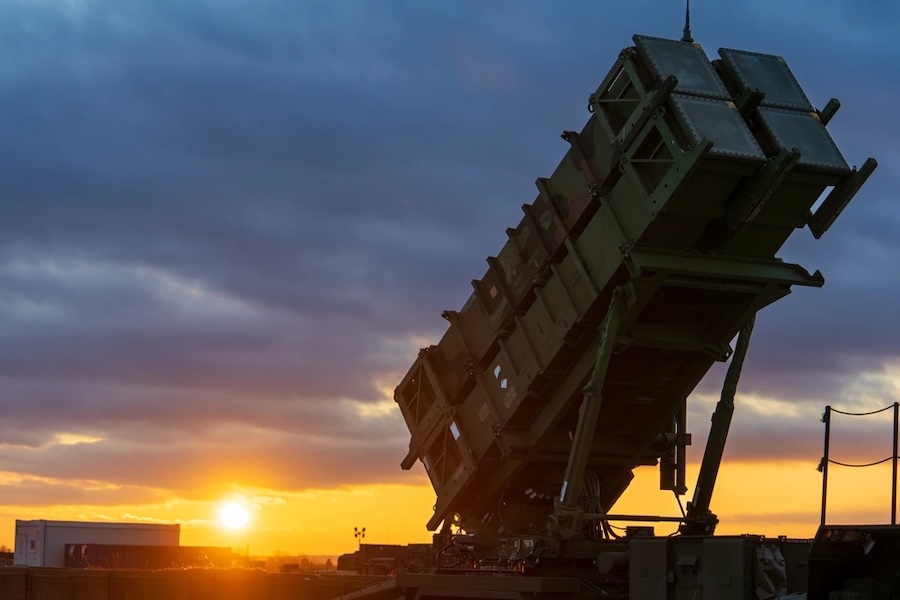
The latest step came on August 3, when the Pentagon signed two multiyear framework agreements with Northrop Grumman covering critical components for Patriot Advanced Capability-3 Missile Segment Enhancement, or PAC-3 MSE, and THAAD interceptors. The agreements are valued at $2 billion for PAC-3 MSE components and $1 billion for THAAD components.
The Patriot agreement is focused primarily on increasing supplies of solid-fuel rocket motors and ignition devices, while the THAAD arrangement is intended to expand component deliveries over seven years. Northrop Grumman said the agreements are designed to accelerate deliveries of critical production-chain components and address bottlenecks that have constrained missile output.
Northrop Grumman has already expanded propulsion capacity through internal investments made since 2021. The company said it doubled rocket-motor capacity at its Utah facilities, nearly tripled capacity at Allegany Ballistics Laboratory in West Virginia and increased rocket-motor capacity at Elkton, Maryland, by 25%.
The new agreements also require Northrop Grumman to establish another PAC-3 MSE rocket-motor production facility and increase component supplies for THAAD. According to the Pentagon, the measures are expected to support a threefold increase in Patriot interceptor production and a fourfold increase in THAAD interceptor output.
The push follows a separate multiyear contract signed with Lockheed Martin on July 29 with a maximum value of $58.62 billion for PAC-3 MSE production. The new funding is intended to allow Lockheed Martin to triple production capacity for complete PAC-3 MSE interceptors by the end of 2030.
Lockheed Martin also plans to expand employment at its Camden, Arkansas, facility, where PAC-3 MSE final assembly is conducted. The workforce is expected to increase by about 50%, from 1,200 employees to roughly 1,850.
The production expansion comes amid rising demand driven by the war in Ukraine, increased procurement by NATO members and other U.S. partners, and the need to restore American inventories. The source states that Patriot remains the only Western system capable of effectively intercepting Russian ballistic missiles in Ukraine, pushing demand for PAC-3 MSE interceptors well beyond earlier production plans.
Pressure on inventories increased further during the 2026 war with Iran, when U.S. forces used significant numbers of interceptors to defend bases and deployed forces in the Middle East. Rebuilding those stocks has become a Pentagon priority alongside efforts to strengthen the supply chain by expanding capacity and bringing additional component suppliers into production.
The broader expansion is intended to restore U.S. missile inventories while maintaining support for Ukraine and meeting a growing number of export requirements. Taken together, the Northrop Grumman and Lockheed Martin programs represent a major increase in U.S. industrial capacity for Patriot and THAAD air and missile defense interceptors.