“Meeting evolving threats requires delivering critical defense capabilities at greater speed and scale,” RTX said in a social media statement. The company said the production effort advances framework agreements established with Boeing and the Department of War.
“RTX is working alongside Boeing and the United States Department of War to speed production of key SM-3 components—advancing the framework agreements signed earlier this year.” The agreements cover production of components for the SM-3 Block IB and Block IIA interceptors.
The Department of War said the frameworks are intended to increase production of both variants, which underpin the Aegis Ballistic Missile Defense System. Boeing will drive component manufacturing as the companies and the government work to accelerate the production pipeline from factories to the fleet.
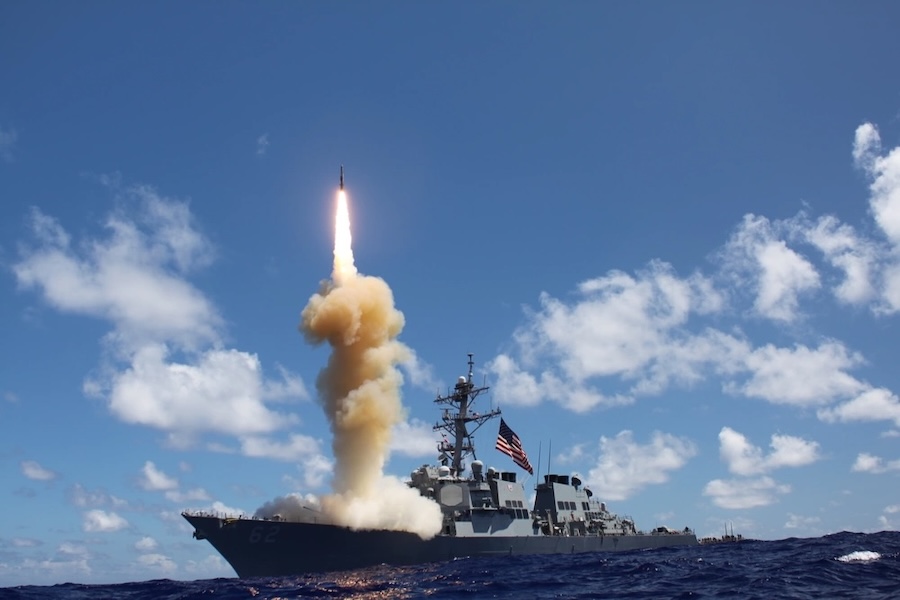
“The SM-3 family of interceptors plays a critical role in the US Navy’s missile defense mission, helping protect the fleet against ballistic missiles and other advanced threats,” RTX said. The company’s statement places faster industrial output at the center of its work with Boeing and the U.S. government.
The SM-3 Block IB and Block IIA are ship-fired interceptors that form a major part of U.S. sea-based missile defense at home and abroad, according to the Department of War. The new framework agreements are designed to raise production of components needed to support higher interceptor output.
“These agreements ensure our Warfighters get the munitions they need to win,” said Michael P. Duffey, Under Secretary of War for Acquisition and Sustainment. “We are stabilizing our supply chains, expanding munitions production and putting our entire defense industrial base on a wartime footing.”
The Department said the agreements were enabled by its Acquisition Transformation Strategy, which is intended to reduce administrative barriers and expand engagement with suppliers across the industrial base. RTX’s statement highlights the resulting push to increase SM-3 component production and speed delivery of missile defense capability to the U.S. Navy.